Replacing Turnbuckles with Lanyards

ducked

Well-Known Member
Joined
6 Oct 2024
Messages
1,654
Location
Tainan, Taiwan
Visit site
Looking for specification information on replacing turnbuckles with lanyards. Search engines mostly find ship model and other largely irrelevant applications.

There are of course quite a few Youtube video’s using Dyneema, etc, with all-Dyneema etc rigs, some of which use lanyards in standard thimbles rather than spendy Colligo deadeyes, but, as is normal with Youtube videos, these are fact-light,

I dont intend installing fully synthetic rigging and I would prefer to use polyester for the lanyards unless its essential to use Dyneema etc.

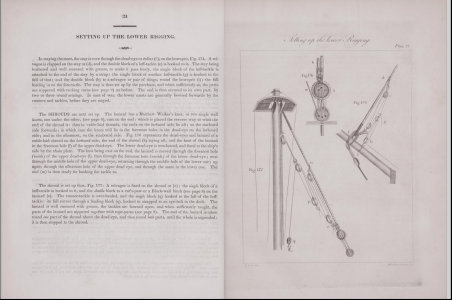
Closest to a word-is-worth-a-thousand-pictures specification reference I’ve found so far is (rather well hidden) here:-

Chainplates: Key to Securing Your Mast Rigging

This has a table of lanyard turns for different lanyard diameters against wire diam but it seems oddly incomplete, since it only goes up to 5 mm wire/lanyard size, and it does not specify the material used for the lanyards, (or the wire, though that is probably less critical)

Any better source known?

I dont have The Riggers Apprentice, which I suppose might be expected to cover it.

Does it?
 
Last edited:
The use of lanyards seems like a good idea. Especially for an older style wooden boat. (where it would look right) However more difficult to set up rig tension. I am not a fan of large rig tension.
I imagine a smaller size of lashing rope would allow for more turns so in a sense not such a great concern. I imagine 3mm cord perhaps 6 or more turns for a 25ft boat. 6mm rope would make a quite bulky lashing even with just 4 turns. I would think (again small boat) that a largish thimble on the wire end with a stainless steel ring shackled to the chain plate would give space for enough turns of cord. Or perhaps a large shackle on chain plate and use the smooth bow of the shackle to take cord.
I just got locally (Perth west oz) 5mm dyneema for 2 squid a metre would be ideal. I already used it for back stay and winch cable on trailer.
Just a few thoughts. I will stick with my existing turn screws on 21fter. ol'will
 
Last edited:
I had a Wharram catamaran for a while, they all use lanyards so info might be available from that source. Polyester seems to work fine but I imagine that Dyneema would be better, not just for the obvious non-stretch aspect but because you could use smaller diameter line, which would slide more easily through any given deadeye while tensioning up. I might be inclined to serve or parcel the whole thing when done to keep the UV off whatever line you use.
 
I had a Wharram catamaran for a while, they all use lanyards so info might be available from that source. Polyester seems to work fine but I imagine that Dyneema would be better, not just for the obvious non-stretch aspect but because you could use smaller diameter line, which would slide more easily through any given deadeye while tensioning up. I might be inclined to serve or parcel the whole thing when done to keep the UV off whatever line you use.
I thought of using a bit of PVC tubing for UV protection. Should allow easier inspection, and sheets should slide freely on it.
 
Many many moons ago, I also built a Wharram catamaran with friends and we also used lanyards on the rigging just as #4 says. As specified on the plans but I cannot remember the details but do know we used the blue polypropylene rope which was much cheaper than polyester rope. Bought it in full reels - 600 ft ?
 
Many many moons ago, I also built a Wharram catamaran with friends and we also used lanyards on the rigging just as #4 says. As specified on the plans but I cannot remember the details but do know we used the blue polypropylene rope which was much cheaper than polyester rope. Bought it in full reels - 600 ft ?
Interesting. If that'd do the job I would use it,. I like cheap.

I'm unclear, though, how tranferrable Wharram practice is to rigging in general which may be designed with more tension built in.

OTOH a monohull reduces rigging loads somewhat by heeling.

I believe sunlight does eat polypropylene but I would make an attempt to protect whatever I used, (even dyneema) anyway.
 
One approach is to spend a bit more money on the arrangements for the forestay, to make sure that the line can slide really freely with enough turns to give the required purchase. Then set up the shrouds first, and pull in the tension from the forestay.
 
Interesting. If that'd do the job I would use it,. I like cheap.

I'm unclear, though, how tranferrable Wharram practice is to rigging in general which may be designed with more tension built in.

OTOH a monohull reduces rigging loads somewhat by heeling.

I believe sunlight does eat polypropylene but I would make an attempt to protect whatever I used, (even dyneema) anyway.
Wharram used polypropylene purely on cost grounds. Rig tensions were low, no spreaders, everything brutally simple. It worked ok there, but you’ll never see a Wharram making decent progress to windward. You’ll never get decent forestay tension. We all like cheap, but as I’m sure you’re aware, there is always ‘too cheap’. Decide how important your rig tension is before going that route. If your mast needs to be kept in column, try it at your peril.

Having a purchase on the forestay could work well, but not if there’s a bit of polypropylene knicker elastic on the shrouds. It’ll just keep stretching.
 
Just help finish a Sharpie 600. Dyneema for the stays, tensioned with polyester cord lashings(woven cover over strands) The polyester is much easier to secure, as Dyneema is quite slippery. The short lashings and multiple passes avoid the stretch. Covered them with some hose tube. Used ss thimbles for the Dyneema
 
I use 5mm prestretched 8 plait braid for my lanyards. This has a breaking load of 600kg. I use a captive 13mm shackle to run the lanyards through to increase the bend radius and make 4 turns, 8 lengths. This gives a total of 4.8t but I reduce by 50% to give myself a factor of safety to allow for bend radius and UV degradation. This is comparable to the breaking load of my stays. I change this every few years, about £20 a time.

To help tension I use a bit of tallow on the ropes and a stainless bar with a hole in to pull with.

BUT, this is on a gaff rigged boat and not sure if the rig tension would be sufficient on a more conventional set up, but you could use the forestay as already mentioned. It also takes a while to set up each season.

I have considered dynema but can see no benefit for my set up as I get the strength I need from polyester
 
I haven't tried it with Dyneema but the appeal for me would be that it's skinny and slippery, so with the same hardware it would be easier to get higher tensions. It's slippery to hold too, but that's easily solved by taking a few turns round a short piece of batten and using that for a handle.
 
If you've already got turnbuckles why do you want to replace them with lanyards? Turnbuckles very rarely wear out whereas lanyards very definitely degrade.
Thought I'd replied to this but lost it somehow.

I'll probably only try it if the (galvanized) bottle screws show faults when I get a close look at them back in the UK, which they might because they have been in contact with stainless steel for an unknown but probably long period.

Its quite likely though that aluminium component damage (i.e the mast) will take priority. There are probable sources of corrosive flue gases in the area (iron foundry, oil refinery, and the last coal fired power station in Scotland, now closed down) and I noticed that the window frames were quite badly eroded at the drain points

I think it might still be worth looking into and maybe trying out lanyards as a potential part of an emergency (or at least reactive) repair, which might involve shroud shortening, since shrouds tend to fail at swages.
 
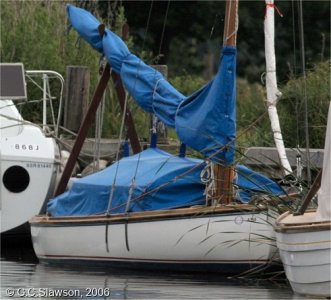
Many traditional boats of the broads use lanyards . Right from the days of linen / hemp/ cotton bits of string
1748360983218.jpeg
As this Broads yacht shows.

.
Many now use polyester, I use 2mm dyneema on my little boat, which reminds me, one needs replacement, as it's now fraying a bit.
 
Top