
Replacing seacocks, what type to use

BartW

Well-Known Member
Joined
9 Oct 2007
Messages
5,236
Location
Belgium
www.amptec.be
While the boat is on the dry this winter, we have been inspecting all our thru hulls and seacocks, and have a few concerns,

It appears that all the through hull fittings are still original, so 26 yo !!!, but most of them look ok, (after grinding, …)
I think they are all bronze.
Many valves have been replaced in the past, some of them several times (also by me)
and now again, quite a few need replacement;

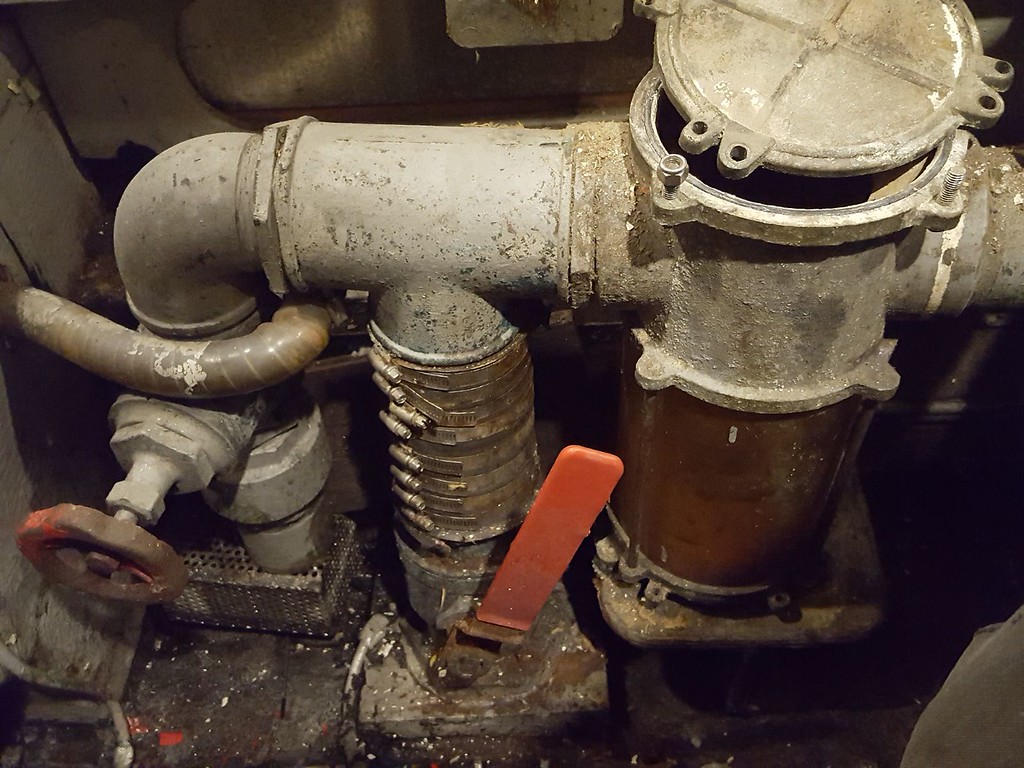
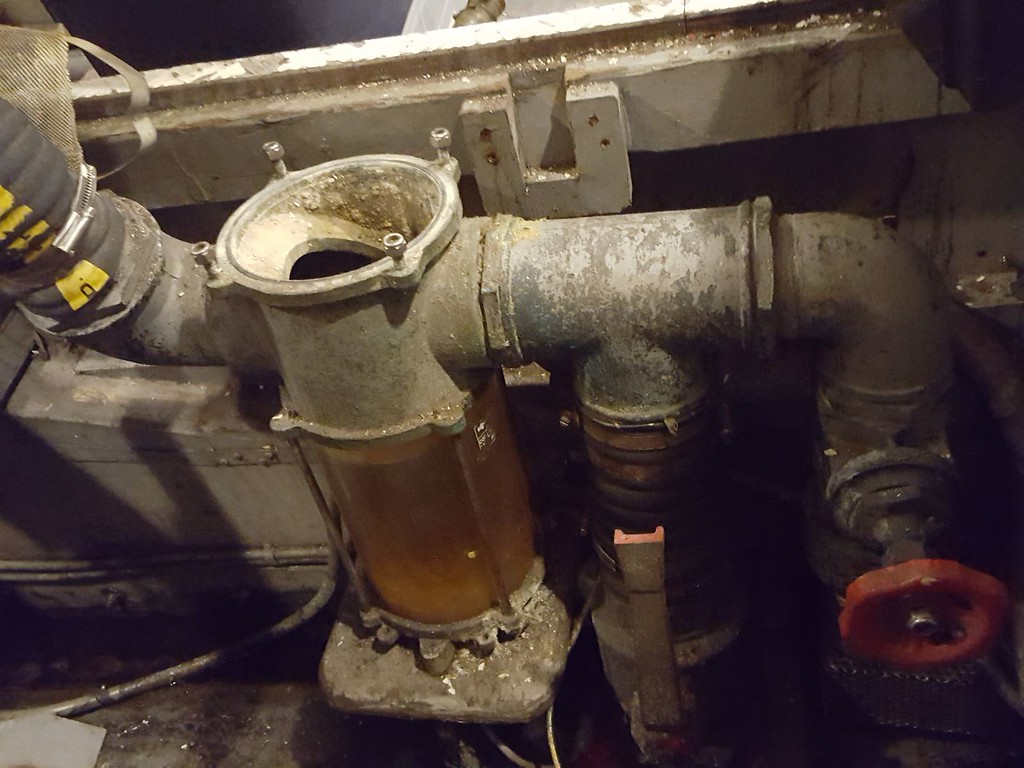
The seacocks “assembly” from the engines (through hull, strainer, valves, + extra deviation and valve for bilge pump out) don’t look corroded,
But:
the strainers ‘inserts’ are worn and broken, (no spare parts available any more),
some of the strainer cover screws are damaged / bend
the bowl is from glass
the valves are really sticky, one is blocked
it all looks old and worn, ...


questions:

1. While reading a lot about DZR, Brass, … is Bronze considered the best for thru hulls and valves ?
Is Guidi the preferred brand ?
2. I have a quote to replace the complete “engine seacock assembly” of 4000 euro does that sound ok, for the whole lot for 2 engines (the pipes are bigg, about 70mm diameter )
3. Should I consider to replace “all” the through hulls or just leave the ones that don’t look bad, how can I be really sure they are OK ?
 
questions:

1. While reading a lot about DZR, Brass, … is Bronze considered the best for thru hulls and valves ?
Is Guidi the preferred brand ?
2. I have a quote to replace the complete “engine seacock assembly” of 4000 euro does that sound ok, for the whole lot for 2 engines (the pipes are bigg, about 70mm diameter )
3. Should I consider to replace “all” the through hulls or just leave the ones that don’t look bad, how can I be really sure they are OK ?

I think you're right to replace the whole engine intake.
1. Yes and yes - well Guidi, Maestrini and seaflow and Perko are the good brands (and there may be others) if you want ordinary ball valves. I always just buy bronze, not DZR brass. To check prices the UK online supplier is asap-supplies

2. Feels expensive but I guess its probably right if they are doing a very thorough job. I would insist on seeing an exact spec for what they are fitting though. I would also fit a T valve for the bilgewater pick up, as it is simpler, uses less space, and easier to use in emergency. The gate valve set up that you have there is pretty horrible! And incorrect use of your two valves can sink the boat, whereas with a T valve that can't happen because it will never allow the sea to be connected to the bilge

3. There's no reason bronze wont last 26 years or 2x that so if you can see close up that a valve or thru hull is ok then you don't need to change it. If any doubt about condition or what metal it is made of* then obviously change it

*Remember that in the Med there are lots of chandlers who ONLY sell brass. They have shelves full of brass and say "non" if you ask for bronze or DZR. So with a second-hand boat I would be very careful to make sure there is no brass. Full marks to Canados if they built the boat in 100% bronze but someone might have changed/added a seacock later

While you are doing the job remember to add freshwater flusher points :encouragement: ----->

FWflush.jpg

photo-7.jpg
 
Last edited:
Just another 2c, B: I'd replace all those awful jubilee clips (why so many, btw?) with the much better heavy duty type which you can see in JFM pic of his engine strainers.
Not sure if there's a specific name for them, but I think you see what I mean if I call them HD type.

Another point (arguably even more geeky) is that you'd better fit any pair of jubilee clips in a crossed manner.
Again, jfm pic of his engine strainers shows how to do it properly.
And also the first pair of clips after the curve on the genset strainer: they are non-HD, but they are cross-fitted, which is the right way to use them.
Btw, the next pair (the one with the terminal protected with red tape) isn't crossed, for some reason that I fail to understand, aside from guessing that whoever fitted them didn't think about it... :rolleyes:
 
I think you're right to replace the whole engine intake.
1. Yes and yes - well Guidi, Maestrini and seaflow and Perko are the good brands (and there may be others) if you want ordinary ball valves. I always just buy bronze, not DZR brass. To check prices the UK online supplier is asap-supplies

2. Feels expensive but I guess its probably right if they are doing a very thorough job. I would insist on seeing an exact spec for what they are fitting though. I would also fit a T valve for the bilgewater pick up, as it is simpler, uses less space, and easier to use in emergency. The gate valve set up that you have there is pretty horrible! And incorrect use of your two valves can sink the boat, whereas with a T valve that can't happen because it will never allow the sea to be connected to the bilge

3. There's no reason bronze wont last 26 years or 2x that so if you can see close up that a valve or thru hull is ok then you don't need to change it. If any doubt about condition or what metal it is made of* then obviously change it

*Remember that in the Med there are lots of chandlers who ONLY sell brass. They have shelves full of brass and say "non" if you ask for bronze or DZR. So with a second-hand boat I would be very careful to make sure there is no brass. Full marks to Canados if they built the boat in 100% bronze but someone might have changed/added a seacock later

While you are doing the job remember to add freshwater flusher points :encouragement: ----->
]

thanks !
good idea about the flusher point ! will do

for the T-valve, can that be straight on the thru hull fitting ?
or would you install a ball valve on the thru hull fitting first ?

regarding ball valves in general (quite a few to replace, mostly steel handle corroded)
what is best practice: bronze ball valve with stainless steel handle ?

J, you have SS strainers for the engines, any particular reason ? why not bronze ?
 
Just another 2c, B: I'd replace all those awful jubilee clips (why so many, btw?) with the much better heavy duty type which you can see in JFM pic of his engine strainers.
Not sure if there's a specific name for them, but I think you see what I mean if I call them HD type.

Another point (arguably even more geeky) is that you'd better fit any pair of jubilee clips in a crossed manner.
Again, jfm pic of his engine strainers shows how to do it properly.
And also the first pair of clips after the curve on the genset strainer: they are non-HD, but they are cross-fitted, which is the right way to use them.
Btw, the next pair (the one with the terminal protected with red tape) isn't crossed, for some reason that I fail to understand, aside from guessing that whoever fitted them didn't think about it... :rolleyes:

fully agree on both points,

I have used these HD jubilee clips on the fuel hoses to the bladder tanks,
cross fitted jubilee clips, have been doing that since many years, on all "risky" connections

this engine intake we've never looked at nor changed anything so far.
 
When you say "crossfitting" do you mean "offsetting" or "clocking" (like you would with a piston ring)?

both;
- fit one jubilee clip in the other direction,
- make sure the screws from the two clips are on opposite sides from the pipe / hose
just like in Jfm's 2nd pic (the clips over the green label)
 
I'm thinking of adding a new seacock this year.
We don't have a water maker and I thought I'd put the seacock in in case I can get the capital request past SWMBO for the rest of the water maker!!

From conversations on the other recent threads, I was/am tempted to stick a plastic one in.
The prices are much the same so the choice is just preference.
What do people on here think - lets be specific - Maestrini Bronze or Tru Design Plastic?

BTW Princess are amongst those boat builders who don't bond their seacocks.
 
both;
- fit one jubilee clip in the other direction,
- make sure the screws from the two clips are on opposite sides from the pipe / hose
just like in Jfm's 2nd pic (the clips over the green label)

Ah ok (I can't see JFM's pics as its blocked on our network). In the case of 2 clips I can see the 180 / opposite logic. I suppose >2 clips is rather rare!
 
From conversations on the other recent threads, I was/am tempted to stick a plastic one in.
The prices are much the same so the choice is just preference.
What do people on here think - lets be specific - Maestrini Bronze or Tru Design Plastic?

BTW Princess are amongst those boat builders who don't bond their seacocks.

On our Karnic, we had 2 broken plastic thru hull fittings (for deck drainage; exposed to sun light)
might have been bad quality plastic fittings, but since then I have a bad feeling with plastic.

Canados, bond all their bronze seacocks.
 
On our Karnic, we had 2 broken plastic thru hull fittings (for deck drainage; exposed to sun light)
might have been bad quality plastic fittings, but since then I have a bad feeling with plastic.

Canados, bond all their bronze seacocks.

Bart, the 'plastic' seacocks that we refer to are actually composite and therefore totally different so the ones that you may have seen fail on your Karnic. I suggest that order of preference might be:

1) Bonded bronze
2) Composite
3) Non-bonded Bronze

Hurricane and I are currently in the 3) category and I would be interested to know if people agree with the order above.
 
Bart, the 'plastic' seacocks that we refer to are actually composite and therefore totally different so the ones that you may have seen fail on your Karnic. I suggest that order of preference might be:

1) Bonded bronze
2) Composite
3) Non-bonded Bronze

Hurricane and I are currently in the 3) category and I would be interested to know if people agree with the order above.

Actually, going back to JFM's point on the other thread, any galvanic corrosion would happen within the fitting (assuming that the ball valves use metals with different noble values) and not as a result of the lack of bonding.

I'm of two minds.

Does anyone have experience of Tru Design's ball valves.
For example, are they easier to operate than bronze ball valves?
That might sway my decision.
 
Actually, going back to JFM's point on the other thread, any galvanic corrosion would happen within the fitting (assuming that the ball valves use metals with different noble values) and not as a result of the lack of bonding.

JFM's point surely is that ... with bonded seacocks it doesn't matter that the that bronze bodied ones have nickel plated brass balls as the bonding protects them. If you don't have bonding then you have a potential case of galvanic corrosion.
 
JFM's point surely is that ... with bonded seacocks it doesn't matter that the that bronze bodied ones have nickel plated brass balls as the bonding protects them. If you don't have bonding then you have a potential case of galvanic corrosion.

Corrosion is caused by a flow of electricity between two dissimilar (nobally dissimilar) metals.
I'm not sure that bonding them will stop electricity flowing between the ball and the bronze casing.
And this is the point where people disagree.
I think we would need to know how the electricity flows through a seacock when it is bonded.
Maybe it would flow from the ball into the casing and then onto the anode through the bonding.
But maybe it wouldn't and thats probably where people disagree.

Likewise, I'm always confused with the use of shaft anodes.
It doesn't make sense to me to have the anode in the middle of the circuit - especially if the shafts are bonded into the ships galvanic system.
It seems to me that electricity can then flow in all directions.
I believe that most systems are like ours and the anode is at the end of the circuit with stainless steel in the middle and bronze at the end (props).

Of course, your point is that all this goes away with plastic!!
 
My new Coronet in 1973 had bronze skin fittings but Italian brass gate valves, ugh, nothing bonded and the gate valves seized, as they do. Maybe that was all that was commercially available at that time? My current Princess had unbonded OEM brass stuff (shame on you!) which did corrode badly, so replaced by me for bonded DZR plus a galvanic isolator. Sometimes the galvanic circuit is caused by your neighbouring boats whose anodes have gone, or maybe you're in a place like Ocean Village with metal pilings all round.
 
Hurricane, Petem is right I think.

Without bonding, you have two different metals in a seacock, immersed in seawater and electrically connected* only to each other on the inside of the boat. As you say, one of them will fizz to the other. But if you add a third metal, namely zinc anode, also electrically connected to the seacock inside the boat, then the anode will fizz towards both metals in the seacock. Hence neither of the two metals in the seacock itself will fizz. That is the case for bonding. I appreciate that there is also a counter case, and both cases are arguably somewhat marginal/hairsplitting.

* Tranona has in the past disagreed, stating that the two metals in a seacock are not electrically connected to each other. I believe his is wrong - they are connected where the ball shaft passes through the seacock body.

As for your watermaker, I would fit bronze. Bronze will last 100 years, and its rate of galvanic decay unbonded is known to be very small. So there is no case that I can see not to use bronze.
Fibre reinforced plastics are probably ok too but my hunch would be that they are physically not as strong and so you have risks relating to mechanical impact on the pipe, snapping them off, perhaps more so in cold weather. All that is just a hunch and I don't have data. I'm just sticking to speccing and buying bronze because I then know 110% for sure that I don't have a problem. The plastic products would need more research but why bother when they are at best a solution to a problem that you don't have if you use bronze.
 
Hurricane, Petem is right I think.

Without bonding, you have two different metals in a seacock, immersed in seawater and electrically connected* only to each other on the inside of the boat. As you say, one of them will fizz to the other. But if you add a third metal, namely zinc anode, also electrically connected to the seacock inside the boat, then the anode will fizz towards both metals in the seacock. Hence neither of the two metals in the seacock itself will fizz. That is the case for bonding. I appreciate that there is also a counter case, and both cases are arguably somewhat marginal/hairsplitting.

* Tranona has in the past disagreed, stating that the two metals in a seacock are not electrically connected to each other. I believe his is wrong - they are connected where the ball shaft passes through the seacock body.

As for your watermaker, I would fit bronze. Bronze will last 100 years, and its rate of galvanic decay unbonded is known to be very small. So there is no case that I can see not to use bronze.
Fibre reinforced plastics are probably ok too but my hunch would be that they are physically not as strong and so you have risks relating to mechanical impact on the pipe, snapping them off, perhaps more so in cold weather. All that is just a hunch and I don't have data. I'm just sticking to speccing and buying bronze because I then know 110% for sure that I don't have a problem. The plastic products would need more research but why bother when they are at best a solution to a problem that you don't have if you use bronze.

Thanks for your view.
I think your point about strength will probably sway the selection towards bronze.
Another point in the bronze favour is that there are bronze skin fittings with integral external strainer/grid/scoop.
The nearest that I can find in plastic is a screw on grille.
 
for the T-valve, can that be straight on the thru hull fitting ?
or would you install a ball valve on the thru hull fitting first ?
Provided you can find a bronze one in your size with 3 positions for the handle: "engine sucks from sea", "centre off", and "engine sucks from bilge", then yes. I don't know if this is available but would expect it is. Otherwise you will need a separate ball valve on the hull fitting. It would be much neater to use just use a single T valve, and it would tidy up your bilge a lot and make more room
 
Top