Replacement for a, fibreglass, release wax

Neeves

Well-Known Member
Joined
20 Nov 2011
Messages
14,073
Location
Sydney, Australia.
Visit site
I'm going to make a little gizmo from fibreglass and I'm simply going to pour, or pack, short strand glass and resin into a mould. I'll 'paint the inside of the mould with resin (which will become the outside of the gizmo) and then simply pack the space with short strand glass fibres and saturate with, more, resin.

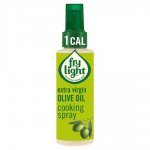
I need a release 'mechanism' and I know I can use packing tape for flat surfaces and should use wax - but I don't have spray on wax, nor inclined to buy some wax if I don't need it. Now I do have WD40 and I do have a spray on coconut or olive oil - would they suffice?

I don't have wax furniture polish either, nor spray on wax for a car, nor aerosol silicone - but raiding the culinary cupboard or finding yet another use for WD40 seemed like options worth exploring.

Jonathan
 
I used WD40 as a release agent and it was a monumental failure. Can't you get a beeswax type candle?
What about some of the sprays you use around the house?

You can use common materials like vegetable oil, mineral oil, cooking spray or petroleum jelly. This is a much cheaper way than commercial mold release agents.

NOTE: Be very careful you don't start a fire as if you lay up too much at once the heat won't have a chance to dissipate and your molding will burst into flames.
 
WD40 wont work, beeswax polish is too soft & liable to cause a stick up, Any other furniture wax or even ordinary parafin wax will do. PVA release agent is always good, its blue & not to be confused with pva glue. Just wipe a thin layer on & let dry.
It guarantees a good release. It isnt worth cutting corners on this as a bad stick up will result in destruction of mould & part.
Most moulders experience this at one time in their career & there is nothing that makes your heart sink more!
 
Most moulders experience this at one time in their career & there is nothing that makes your heart sink more!

I'm thinking it is to be a short career, hence my question. If I was thinking of a career - I'd invest in the real stuff.

I've got some options from the replies - so thanks, many.

I now wonder, academically - why if sewing machine oil, olive oil, etc, etc works - what's wrong with WD40 - as its easy to apply (and I have some). But I also have a light machine oil - so will use that.

Jonathan
 
WD40 wont work, beeswax polish is too soft & liable to cause a stick up, Any other furniture wax or even ordinary parafin wax will do. PVA release agent is always good, its blue & not to be confused with pva glue. Just wipe a thin layer on & let dry.
It guarantees a good release. It isnt worth cutting corners on this as a bad stick up will result in destruction of mould & part.
Most moulders experience this at one time in their career & there is nothing that makes your heart sink more!

I've used plenty of beeswax (sand board wax) as a release agent but only for polyester resin.

(I would only use beeswax when I've run out of PVA and I'm not planning another 120km trip to Perth.
 
I think you'll find the WD40 that you have is not WD-40 Specialist® Anti Friction Dry PTFE Lubricant

Anti-Friction Dry PTFE - WD-40 Australia

Home › Products › WD-40 Specialist
wd40 ptfe mold release spray from wd40.com.au
It's quick-drying and sets as a clear film that won't attract damaging elements like dust, dirt and oil. It also makes an extremely effective mould release ..

Anti-Friction Dry PTFE
 
Last edited:
I think you'll find the WD40 that you have is not WD-40 Specialist® Anti Friction Dry PTFE Lubricant

Anti-Friction Dry PTFE - WD-40 Australia

Home › Products › WD-40 Specialist
wd40 ptfe mold release spray from wd40.com.au
It's quick-drying and sets as a clear film that won't attract damaging elements like dust, dirt and oil. It also makes an extremely effective mould release ..

Anti-Friction Dry PTFE

You are right, its bog standard WD40, economy, twin pack from Cosco. :)

Jonathan
 
Anything runny and non-setting is on a hiding to nothing as a release agent in my experience; for a simple shape lining the mould with cling film is the easiest. Cheap parcel tape isn't bad either.
 
I've used bog standard furniture polish before. But I was making a flat grp panel off of a bit of white on white ply board which was perfectly flat with a shiny surface, would have probably released with no polish .
 
I have no need for hair spray and have not for some decades (and never used it anyway) :). In view of the replies I have been advised we do have some furniture wax, its apparently genuine wax, and I was admonished for never using it (for furniture). The replies suggest liquid coating don't work (maybe why WD40 does not work) and I'll hand apply the furniture polish - and being a mid brown shade I'll see where it has been applied, or not.

I have used packing tape in the past, excellent product, but it really only works on flat surfaces. I have used robust polythene sheeting as well. I have tried cling film but find it difficult to cover 'flat' and the wrinkles hold resin and there is then a need to sand the wrinkles of resin out.

The answer, I think, is a silicone mould - but that's for people making a career from casting resin and as I only need 2 units (at this stage) I'm ..... bodging.

Jonathan
 
Top