
RemovAll for antifoul?

Marakei

Well-Known Member
Joined
4 Jan 2012
Messages
260
Location
Portsmouth
Visit site
I am restoring a Westerly 22. She has bilge keels and draws less than three feet, which means that space is very limited when working under the boat.

I have just stripped the keels back, and now I want to start getting the bottom ready for priming. It has a couple of layers of old primer and antifoul and the thought of being under the boat for hours scraping makes my heart sink.

I wondered whether RemovAll might be a solution and was attracted to it rather than other brands because it is non-hazardous so it should be easier to work with.

But is also expensive and reviews are distinctly mixed. What do people advise?
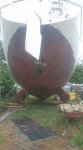
 
I don't know about that paint stripper. I did set out to remove all old a/f from my little boat. With lift keel and being on a trailer I had similar if not worse problems of access/lying on my back scraping. In the end you (I) do what you have the energy to do then just repaint over what mess you have made. The bottom condition is not really so important as other aspects of the boat. You probably have loads of other jobs to do anyway. Boats are for sailing not obsessing over the build up of a/f. However as said I do a lot of tipping of the boat bow down then stern down to get easier access but be careful. good luck olewill
 
I had advice onthis forum to try RemovAll so paid hansomely for a big bucket only to find it was no use at all. I then heard back from the person who advised me that they had just changed the formulation and the new stuff is completely useless.

So tho answer your question : no don't bother, try something else.

Boo2
 
Get it sand blasted.
I had my 31 ft boat done for 200sobs cash
I stood by whilst it was done - with care- no damage to gel coat- i was putting on coppercoat anyway
I primed keel 20 mins after being done Then I spent a day removing isolated patches of antifoul as the chap was very gentle on the boat so left quite a few very thin patches
Ask your marina; a lot have a tame chap who does other jobs who will do it. Do not bother with tales of soda blasting etc. Not needed with care, esp on a westerly. you can always stick on a coat of epoxy primer after if you are worried
 
My advice would be to try an area using different techniques and see what works. Time yourself and double it. The rudder may be a good start.

I reckon the best technique depends on the thickness of the paint and what, if any, priming and prep was done. For scraping the thicker the better.

Don't forget you can get it blasted!
 
Thank you for the helpful replies.

I won't spend any money on Removal, then!

I know blasting is the best way to get a really good result but as I've already done the keels, I don't want to pay just for the hull. I may well have it done when the keels need further attention.

The tipping technique sounds interesting and I will investigate further.

However, it looks like basically I just need to get a decent scraper, get on with it, and as Will says, 'paint over what mess you have made'.
 
Last edited:
I had very good results with Removall 220, which is an orange gel and used to be sold for GRP. I used it on two GRP cars (Daimler and Reliant0m on one aluminium car roof (Citroën) and to strip the topsides of my Hunter 490, which it did beautifully.

When I had to do the underwater bits of the Hunter, Removall 220 was no longer listed for GRPand 620 was recommend instead. I tried it and it was pathetic ... it just about managed the first layer of Trilux but the stuff under that was unmoved. So I tried 220 again and that did the business, except for the deepest layer which I think was two-pack and only came off with heat and a sharp chisel. Horrible job.

Cirrus Systems no longer list 620, so I suspect they have had more feedback along these lines. 220 is still there and I'd recommend it for anything except two-pack (they list 520 for that but I have no idea if it works).

Slobber it on, don't let it dry (choose damp weather) and wait twenty four hours. The paint turns to paste and can be removed with a spatula.
 
I guess it depends on the type of antifouling that has been applied. I tried some very aggressive chemical stripper on Cruiser Uno a few years ago and it did virtually nothing.
 
I guess it depends on the type of antifouling that has been applied. I tried some very aggressive chemical stripper on Cruiser Uno a few years ago and it did virtually nothing.

I bet it also depends on the thickness. Some old boats carry so much paint you could measure the thickness with a ruler.

I scraped because where the paint was flaking it was showing gel coat. So the weakest layer was the same layer I was peeling back to. And where the paint was thickest it came off in one scrape. Not all of it was that easy though :( If I did it again I'd pay someone....
 
I am restoring a Westerly 22. She has bilge keels and draws less than three feet, . . . .. It has a couple of layers of old primer and antifoul and the thought of being under the boat for hours scraping makes my heart sink.

Then don't bother, perhaps? I doubt it will make much difference to the boat speed. It won't be seen once the boat is in the water. You could just give the surface a light scrape/brush/wet rub down (wearing a mask!) to remove anything loose and provide a key for your fresh antifoul.
 
Thank you for the replies.

I was considering the basic scrape the looser stuff off, sand to key approach, but
after JD's recommendation, I have bought RemovAll 220.

I will try it on the bottom of the boat, and also on some other bits of old paintwork. I'm down at the boat next week, so I will report back then on how it does.
 
Last edited:
I was considering the basic scrape the looser stuff off, sand to key approach, but following Jumble Duck's recommendation, I have bought RemovAll 220.

Oo-er. I shall apologise profusely if it doesn't work. Just remember - lay it on thick, don't let it dry out (damp or rainy days are best) and give it longer than they say.
 
Follow up

Here is the follow up to my purchase of RemovAll.

I also found a non-hazardous paint and varnish remover in B&Q called HomeStrip, which I bought for wood, but it said on the container it would remove any paint from GRP.

I applied RemovAll initially in an experimental patch. I covered half of it with clingfilm, to see if it would help to keep it really wet, and left overnight. I also applied an experimental patch of HomeStrip.

Next day I had a scrape with a wallpaper scraper. The HomeStrip worked fairly well. It took off the antifoul and some of the primer.

RemovAll results were mixed. I'd applied it quite thinly in some areas, and that didn't do much. It took off a bit of the antifoul. However, where I'd applied it thickly, it took off both the primer and antifoul. The clingfilm to keep it wet didn't seem to do anything, the thickness seems to be the thing. RemovAll is very gloopy, and easy to apply in a thick coat.

I then plastered RemovAll on the bottom of the boat and on the skeg, and left it for three hours. I would have left it longer, but something seemed to be happening, so I started to scrape.

I was able to remove long strips of damp gloop. It was rather fun, like pulling off scabs. Where it was thickest, it worked the best, and took everything off back to the GRP. It has taken off the antifoul everywhere, but in some places some primer is left. I imagine another application would get it perfect. It maybe should have been left a little longer too.

I didn't get a chance to try the HomeStrip again, but I will have a go next time I go to the boat. I was quite impressed that it did anything, so we'll see.

I am pleased with the RemovAll, as the purpose was to save me hours scraping, and it looks as though it will. I won't get a chance to try the tipping idea also mentioned in the thread, as other boats have come out for the winter, and we are quite jam packed now.
 
Top