Remote boat monitering

I have the Blink XT2 system as well just linked to a home router and a £20 per month Vodafone SIM (no static ip) - works perfectly. However having the Supersail system as well (Forside - Super-Sail) is really helpful - although it does the burglar alarm bit as well, we really use it to check that the shore power is still connected, that the boat's not sprung a leak (water sensors in the bilge), and so on. Yes it costs a fair bit more than the cameras, but as far as I'm concerned, it's worth it even if it just means that I'll never turn up to the boat one day and find the batteries flat because a trip switch went off weeks before and no-one noticed!
 
No, I don't think that a static IP is necessary - if thats what you are saying.
There are loads of IoT devices out there that allow connections like that.
It is quite scary actually.
The way it works is that the IoT device (a camera in this case) connects to an internet server.
This gives the IoT device a two way connection between itself and the server.
Then all you have to do is connect with the same server and you will have all the electronic data necessary to connect to the IoT (camera) device.
The scary bit is that a lot of these cheap IoT devices connect to unscrupulous servers - many are Chinese.
The security risk is that it is possible for the manufacturer of the IoT device to be even more unscrupulous and connect to other devices INSIDE your private LAN/Router.

I have several of these unscrupulous IoT devices but I have put them on their own network outside of my firewalls.
I have one of these cheap cameras on the boat.
Mine cost £25 and it connects to a standard Vodafone SIM only contract running on a 4G router located on the boat.
All I do is run an app on my Android phone to get a two way communication - the app shows live video and plays live audio and the camera can pan and tilt.
I've set it up so that it emails with a photo if there is an intruder.

But, back to your point.
There is no need to have a static IP.
Just any internet connection will do.
true but again depends on what Trev's s/w system will expect/want/demand. I understand Trev wont be using s/w meant to be on dodgy places like boats :rolleyes: with no permanent connection to the internet...
You should be able anyway to setup a dynamic dns and have a permanent connection to your devices if they are not tuned to work off some sort of server.
I'm going through all that atm getting 2 raspberry pi working on board, getting Victron and a selection of NMEA2000 data to my work server on an influxDB where they will be processed/formed and served using something like grafana.
I'm planning to report on that once I get it fully working (currently in pieces :) other on board, other bits here at home and now sorting out server at work)
V.
 
true but again depends on what Trev's s/w system will expect/want/demand. I understand Trev wont be using s/w meant to be on dodgy places like boats :rolleyes: with no permanent connection to the internet...
You should be able anyway to setup a dynamic dns and have a permanent connection to your devices if they are not tuned to work off some sort of server.
I'm going through all that atm getting 2 raspberry pi working on board, getting Victron and a selection of NMEA2000 data to my work server on an influxDB where they will be processed/formed and served using something like grafana.
I'm planning to report on that once I get it fully working (currently in pieces :) other on board, other bits here at home and now sorting out server at work)
V.
Yes Vas sure
But virtually ALL the cheap cameras that you can buy on Ebay have the ability to connect without a static IP.

BTW
I built a Raspberry Pi system a couple of years ago and installed it in Sant Carles Marine about 18 months ago.
It is a Live AIS Station which is constantly receiving AIS signals from around Sant Carles and streaming the data into Marine Traffic and Vesselfinder.
Here is a link to the data that it has recently sent to Vesselfinder.
Details for AIS Station Sant Carles Marina, Spain - VesselFinder
And this is a report from Marine Traffic last weekend:-
Dear Mike,
Thank you for contributing to this ever-growing crew with your data!
Thanks to your efforts, station 5323, Sant Carles Marina accomplished the following stats:

100% availability
26 NM range
1297.76 km2 coverage

You rock! Keep up the good work!

It has been running 24/7 since we installed it.
Streaming onto Vesselfinder gives us a Premium account for free so that we can track each other.

Now to something else that you might find interesting.
The Raspberry Pi AIS station mentioned above is installed within Sant Carles Marina's internal LAN (with their full permission and support).
But to manage it, I wanted my own admin access to it in a similar way to the cameras that I explained in my previous post.
So, I have set up two access paths.
One uses a browser to access the AIS engine control.
The other gives me an SSH connection directly into the Raspberry Pis operating system.
All this is done using remote.it
See here - remote.it - Trusted remote connections to IoT devices and private networks
Free for personal (non commercial) use.
It takes a bit of setting up but, essentially, you load their software onto the Raspberry Pi and they maintain a connection between their servers and the Raspberry Pi.
All you then do is connect to your account on their servers using a browser.
You then open a session for direct connection to the Raspberry Pi using http:// or SSH
This effectively "tunnels through" the marina's NAT firewalls.
It needs an "always on" good internet connection though - it would probably fail using most marina's WiFi networks.

But it works.
About 4 months ago, our Raspberry Pi AIS station stopped receiving AIS signals.
Marine Traffic tell us within a few minutes if it stops working.
As always with this kind of kit, it needed a reboot.
So, I SSH'd into the Raspberry Pi's Linux operating system (using remote.it) and issued the command "sudo reboot"
5 minutes later Marine Traffic reported that it was receiving AIS data again!!!
Sometimes you just have to get lucky!!!

EDIT
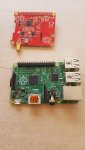
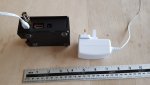
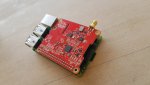
For those who don't know what a Raspberry Pi is here are a few pics

This is what our Sant Carles Marina AIS Station looks like:-
4.resized.jpg

And this is it without its clothes!!
7.resized.jpg

Made up from two parts - the green bit is the actual Raspberry Pi the red bit is a "clip on" AIS receiver.
6.resized.jpg

Raspberry Pis are about £30 each
The AIS receiver is called a dAISy hat and costs a little under £60
The Raspberry Pi takes a microSD card which can boot a full GIU operating system.
The latest Raspberry Pis can be more powerful than most Windows PCs
 
Last edited:
  • Like
Reactions: vas
thanks Mike, I'm currently dusting off my *nix knowledge form almost 30yrs ago.
Will try out remote.it, thanks!
was thinking of doing the same not for AIS (I have it but uses some current so not too keen to have it on onboard 24/7, but for windy, so I can broadcast weather from my v.expensive (read 2euro a pop) baro/temp/humidity chips on my teensy all merged with the NASA wind instrument dir/speed and it's temp meter.
better walk before running though, so still setting up bits of code and comms and setting up ports on firewalls...
decent lockdown projects btw :cool:

V.

PS. my previous answer was assuming Trev wants to get the data off his elaborate logging equipment onboard, not using IP cameras ;-)
 
You could look at Boat Vitals. I met Vasko a few years ago when he was starting development and think his initial prices were very cheap. Last I heard he did a special deal for £95 but it was ending and reverting to £175 (includes mobile traffic and server subscription for 5 years).

All versions included sensors and monitoring for a wide range of things as standard. It might be worth checking out.

I seem to remember he priced it at same level for USD, EUR and GBP so it would make sense not to pay in GBP if that's still the case.

He has a few videos showing the app and config. for Android or Apple.
 
thanks Mike, I'm currently dusting off my *nix knowledge form almost 30yrs ago.
Will try out remote.it, thanks!
was thinking of doing the same not for AIS (I have it but uses some current so not too keen to have it on onboard 24/7, but for windy, so I can broadcast weather from my v.expensive (read 2euro a pop) baro/temp/humidity chips on my teensy all merged with the NASA wind instrument dir/speed and it's temp meter.
better walk before running though, so still setting up bits of code and comms and setting up ports on firewalls...
decent lockdown projects btw :cool:

V.

PS. my previous answer was assuming Trev wants to get the data off his elaborate logging equipment onboard, not using IP cameras ;-)

Yep the RPi can be made into great little computer.
I have switched all my PCs to Linux.
Taken about 4 years to get rid of Windows but it is great.
All my computers boot in seconds - none of this waiting for updates etc.

Recently, my daughter and son in law bought me a present of a Pi 400.
Essentially the Pi 400 is a Raspberry Pi 4 built into a keyboard.
My son said - Ahh yes Dad - just like a Commodore 64!!!
But joking aside, the Pi 400 and the Pi 4 can run some excellent Linux distributions.
Most people just load Raspberry Pi OS - aka Raspbian.
But I recently found a Manjaro build for the Raspberry Pi 4 - and, being a 64 bit CPU, it simply flies!!!
Manjaro is a branch of Arch Linux so lots of support.
The last time I looked, even Raspbian hadn't gone fully 64 bit - still in beta.
The Manjaro build is fully 64 bit.

In moving to Linux, I found myself most comfortable with the XFCE Desktop Environment.
XFCE is a bit like a grown up Windows 95 but running under Linux.
Manjaro uses XFCE as its preferred Desktop Environment.
So, now I have the same Desktop Environment for a £35 Raspberry Pi as my main expensive high speed Intel i7 desktop PC.
I know that the RPi is an ARM processor but when you are doing stuff like word processing, you really can't tell the difference between the systems.

Sorry - a bit of thread drift but it does show how powerful these little IoT devices can be.
And, yes - lock down is a great time to this kind of thing.
 
thanks Mike, I'm currently dusting off my *nix knowledge form almost 30yrs ago.
Will try out remote.it, thanks!
was thinking of doing the same not for AIS (I have it but uses some current so not too keen to have it on onboard 24/7, but for windy, so I can broadcast weather from my v.expensive (read 2euro a pop) baro/temp/humidity chips on my teensy all merged with the NASA wind instrument dir/speed and it's temp meter.
better walk before running though, so still setting up bits of code and comms and setting up ports on firewalls...
decent lockdown projects btw :cool:

V.

PS. my previous answer was assuming Trev wants to get the data off his elaborate logging equipment onboard, not using IP cameras ;-)
Vas I am using the industrial Chiller controller system I use for my day job but in an alternative operating mode, also I shall treat this as an R&D project, plus we have already established reliable comms two way using the Teltonica RUT955 router, which also provides us the ability to have separate email alerts from a VF contact within the main controller. I can also install a power off relay to reboot the controller if for any reason it loses its handshake with the router via the router's own switchable VF relay contacts. The controller we use must work reliably 24/7 permanently powered up, runs off 12vdc, and only draws a few mA in standby.

I might simply add another fixed IP SIM as it will keep the system completely separate and the VPN will allow me to operate it completely securely. The Teltonica also provides a very convenient and reliable private wireless hot spot.

The supplies to engine in use only sensors can be simply turned off via a separate ancillary supply via the ignition, so power use is minimised when the remote system is only interested in shore power on, burglar and bilge pump activity. The IP cameras can connect via a separate LAN channel, via their own wireless ethernet connectors for those up on the stub mast, so cabling on board is reduced.

The base system is assembled and mounted, with the wiring of the 32 inputs and up to 14 outputs will commence this weekend. I won't have all functions working immediately, rather I have designed it to be a flexible setup so if I want to change or add something I can do so easily. My first priority will be the engine monitoring functions, especially after my recent engine failure debacle.

Just finding it difficult to get my head around the niceties of standard and fixed IP SIMs. One option with the Teltonica is the ability to have two SIMs, so perhaps find a way for one fixed IP for limited expensive data, with the other set for cheap non fixed IP for wifi and more general use.
 
I use a Synology NAS at home, easy peasy to setup Sftp & VPN servers on it for Rpi's. Can then use 4G router on the boat to securely log in to home network for file transfer & media stuff etc.

I do have a fixed IP at home so no third party web servers involved. Very reliable setup, only have issues at peak summer with 4G congestion in SoF.
 
Top