reefing lines back to cockpit - don't have them, should we???

niccapotamus

Well-Known Member
Joined
21 Aug 2013
Messages
559
Visit site
We have a new to us boat. bog standard fractional rig with fully battened main and lazyjacks.

We have two coachroof winches port and sbd with a three of jamming cleats each side. Port - spinnaker lines (2) and Jib Halyard. Stbd - Topper, Main Halyard, kicker. mainsail outhaul is also on another jamming cleat but doesn't use the winch.

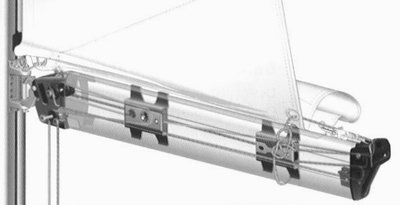
Currently have three reef points on the main - two of which are reeved with lines. slab reefing with a claw for the tack and and in boom lines for the clew with a jammer in the boom.

Issues:

1. it is difficult to get sufficient tension in the foot of the sail without a winch for the reefing line
2. it is a ballache sailing shorthanded with the reefing being dealt with at the mast but with the topper, main halyard and kicker all led back to the cockpit - worse than having all lines at the mast, imho.

obviously there isn't enough deck gear or blocks at the moment just to run lines through blocks etc to take everything back to the cockpit as it stands as we don't have sufficient jammers or turning blocks at the mast end of the operation. And there are no obvious places to mount the blocks without some ironwork being added to the boat to facilitate - which I guess makes it a bit of a major operation.

we have quite a large powerful mainsail and therefore we will be reefing fairly early which suggests that the first and second reefs will be in regular use, and TBH i'd prefer the third reef to be ready to go, because it won't be the best of weather and we don't want to be messing about trying to sort out bits of rope and stuff.

What would you guys suggest:

1. living with it and get a winch put on the mast so that at least sufficient tension could be put into the foot of the sail when reefing and perhaps mark the mainsail halyard with the amount of "drop" for each reef?
2. get "kit" fabricated to take everything back to the cockpit - and is it a relatively simple matter? I would want the first and second reefs to be ready to go for sure.
3. would a rigger be the guy to talk about if 2. was the best option - we will be renewing the standing rigging towards the end of the year so we could include sorting this out as part of the job.

Also does anyone have any experience of sorting this type of issue (I guess that you do)

ta
 
Its would be a good idea speaking to a rigger, get him to look at it, but of course he would expect, not unreasonably, some work out of his advice. Thing is you will get many suggestions here, but without seeing the boat and your set up it all becomes guess work. One suggestion I can make (without seeing the boat) is if you are short of space for blocks at the mast foot, could you change to double (twin?) blocks. Would it matter if the kicker was twined with the topping lift?

Once you have all lines back at the cockpit you will never look back, so long at it is done properly. Some swear at this arrangement rather than by it, I believe this is because of poor systems. You need low friction blocks, decent turning blocks (just replaced mine as a mater of maintenance) and careful planning.
 
thanks Galadriel

we don't have blocks as such at the mast foot - the lines are all run internally in the mast and exit at the foot of the mast with a "built in block" then run to deck organisers before going back to the winches. I did take some photos which I'll try and post later.

cheers
 
I would have thought 6 jammers should be enough. Do you have any cleats on the mast or near the mast which you could run your spinnaker lines to? Unless it's a big boat you may be able to get away hauling the spinnaker halyard by hand and cleating off which will save you a jammer. Same with your other spinnaker line if this is a pole uphaul.
You could also save yourself a line by getting a gas strut kicker (then you can get away without a topping lift).
 
I put in luff reefing lines, down through bullseyes on the mast and through a block at the foot of the mast to the deck organisers. For this I had to buy a double block, fit longer organisers and additional clutches. The clew reefng was already in the cockpit. So now I can reef entirely from the cockpit which is great. My wife never liked the "its getting a bit to windy so take the tiller while I go to the mast". Money very well spent for convenience and safety.
 
I faced similar earlier this year.

In the end I got some winches put on at the mast and set it up to do it all from the mast.

The quantity of rope in the cockpit was a key decider, and also experience has taught me that however well anything is led back you usually have to go to the mast to sort some issue out.

Now I only have the kicker, cunningham and outhaul plus spinny up and down and sheets in the cockpit.
 
Take a look at Selden's slab reefing system.

It's probably not going to be cheap (you'd have to buy a new boom), but it works really well. Just one line for each reef, and the runner inside the boom balances the lines and allows you to not only get a tight reef, but also helps to keep foot tension on.

I've got it on mine if you want to see what it looks like and how it works (Gosport), but it's a complete revelation. I can reef singlehanded from the safety of the cockpit without things flailing and banging around.

Selden%20SingleLineReef.jpg
 
Better everything at the mast than a high-friction lead back to the cockpit. Personally I'm happy to work at the mast, but others dislike it. My present AWB has everything led back, but quite a lot of friction, fortunately winch on coachroof powerful enough.
 
I've got my 2 first reefs as single line reefs, lead back to the cockpit, they take 25-30 sec's to put in.
The boat is 31', fractional rig with a 32m2 main, so 1st reef goes in @ Bf3. I've sailed single handed for the last 25 years.
I'd suggest getting rid of your topping lift and replacing it with a gas-strut.
The single-line reefing is as shown on the Harken website http://www.harken.com/productcategory.aspx?taxid=1562.
You will probably need some more mast base blocks - the spar supplier can probably let you have a new base.
As already pointed out the big enemy of single line reefing is friction - you cannot afford cheap and cheerful plain-bearing blocks. I used the biggest of the carbo Air-Blocks with 8mm dyneema (the thinner the rope the less friction).
It's impossible to contain the vast amount of string for anything but the 1st two reefs (4:1) in the cockpit, so the two upper reefs are conventional jiffy reefs (I have to question anyone's judgement in preferring reefing at the mast, I for one am terrified).
Since retiring, 14 years ago, I spend 6 months a year on the boat and do about 2400nm a season so can vouch for the practicality of the set-up.

PS I have an Antal 8 single-speed self tailer on the mast - it's essential for those last two reefs, especially offwind.
So I don't think you have an either or situation.
 
Last edited:
I'm a "all at the mast convert". I used to have the Selden single line reffing system on a previous boat (31 Ft). Did all the things to improve it, thinner dyneema lines, better blocks, ball bearing organizers, etc. It improved the working quite a bit. My current boat (37 Ft) is of the "all at the mast" denomination. It's much better to work with as you get better control over the sail. Because you hook the front of the sail to a hook instead of using a line the tension on the sail is much better. It also enables you to get the crinkles of the lower part of the sail out of the way when lowering the the sail. That always gave me headaches on the single line system.
I agree the going forward takes more effort, but the actual reefing process feel much more in control. You do need a reefing winch at the base of the mast though.

I do understand the attraction of the single line system but for me the direct interaction with the sail works better.

A.
 
One thing that makes it all a lott easier is to sew some whipping twine into your main halyard to mark where you need to drop it to in order to put in the reef, then if you have to go to the mast at least you have only yo make the trip once.
 
We have a new to us boat. bog standard fractional rig with fully battened main and lazyjacks.

We have two coachroof winches port and sbd with a three of jamming cleats each side. Port - spinnaker lines (2) and Jib Halyard. Stbd - Topper, Main Halyard, kicker. mainsail outhaul is also on another jamming cleat but doesn't use the winch.

Currently have three reef points on the main - two of which are reeved with lines. slab reefing with a claw for the tack and and in boom lines for the clew with a jammer in the boom.

Issues:

1. it is difficult to get sufficient tension in the foot of the sail without a winch for the reefing line
2. it is a ballache sailing shorthanded with the reefing being dealt with at the mast but with the topper, main halyard and kicker all led back to the cockpit - worse than having all lines at the mast, imho.

obviously there isn't enough deck gear or blocks at the moment just to run lines through blocks etc to take everything back to the cockpit as it stands as we don't have sufficient jammers or turning blocks at the mast end of the operation. And there are no obvious places to mount the blocks without some ironwork being added to the boat to facilitate - which I guess makes it a bit of a major operation.

we have quite a large powerful mainsail and therefore we will be reefing fairly early which suggests that the first and second reefs will be in regular use, and TBH i'd prefer the third reef to be ready to go, because it won't be the best of weather and we don't want to be messing about trying to sort out bits of rope and stuff.

What would you guys suggest:

1. living with it and get a winch put on the mast so that at least sufficient tension could be put into the foot of the sail when reefing and perhaps mark the mainsail halyard with the amount of "drop" for each reef?
2. get "kit" fabricated to take everything back to the cockpit - and is it a relatively simple matter? I would want the first and second reefs to be ready to go for sure.
3. would a rigger be the guy to talk about if 2. was the best option - we will be renewing the standing rigging towards the end of the year so we could include sorting this out as part of the job.

Also does anyone have any experience of sorting this type of issue (I guess that you do)

ta

I've read the thread with interest as together with the local rigger we replaced/overhauled our entire running rigging system in the winter in order to get effective control handling, principally single line reefing, from the cockpit. Rather than suggest any specifics I would strongly recommend that you get a good rigger to advise. The main reason being that it is comparatively easy (cheap) to lead the lines back yourself, but it is comparatively expensive (and more difficult) to do this in a way which gets the setup working well (you may need lots of ancilliary things fitting like the gas kicker as mentioned, low friction mainsail track/cars, new deck organisers, better blocks, smaller diameter line, maybe even better coachroof winches, etc etc). That most builders (and owners) don't shell out for all the right gear (and advice) is the reason so many boats with cockpit controls and/or single line reefing are so difficult to work with and why the setup has a bad reputation in some quarters. You might start down this road spending a few hundred quid only to find that the setup you've created won't work very well unless you spend another two grand.

OTOH a setup at the mast that works really well will likely be a lot cheaper (and easier to achieve) if less convenient. You will therefore be able to make the most informed decision at the outset if you get a rigger on the boat and give him some idea of the budget you have to achieve what you want.

Hope this helps

Cheers
 
I brought all lines including reefing lines to the cockpit on my heavy 31 ft boat; it takes me about one minute to put reefs in the safety of the cockpit, no bad; of course there is more friction but the fact that I can reef from the cockpit its more important to me. I had to put two reefs in the main a couple of weeks ago in the solent when it was gusting 34kn. Each reef has its own line; two reefs on the main, so 4 lines in total. Conclusion: for short handed, lines leading to the cockpit is the answer and keep it simple, no need for complex systems.
 
............... It wasn't cheap but was certainly a lot cheaper than a new winch for the mast.

..........

I had two winches either side of the companionway, and with a lot less lines to the cockpit I decided to remove the two out-board winches (winch handles snagged the sprayhood anyway) and use those at the mast with the selden mast blocks - one for reefing set aft and below the boom and one for halyards to portside of the mast. A couple of clutches added too.

Had I led all aft then extra organisers, clutches, and long lines etc.. were needed, so "at mast" turned out considerably cheaper too.
 
I have very little time for single line reefing. I think straight 2 line reefing is far better. Of course this means a lot more string decorating the top of the cabin. Op might consider just using first and 3rd reef. Mine is a much smaller boat but I use a fixed topping lift and simply hook it on or detatch to the back stay for raising or lowering mainsail.
The reefing at the cockpit is so efficient that I can do it in stages without need of topping lift. So yes cockpit reefing is really the only way to go.
I also fopnd that small winches OK for reefing are not really as expensive as jambers and provide more felxibility. good luck olewill
 
Another fan here. I installed it on my Sabre, using second hand kit and plain bearing blocks, with a "four line" (2 reefs, with separate clew and tack lines) system. I can reef in no time at all, works brilliantly.

I plan to reeve some light line into the 3rd reef points so I can undo the reef 1 lines and swap them to reef 3 if I need to...however it's a small main in comparison to the genny so I could only ever see me needing them if I was seriously "caught out". She'll carry reef 2 well north of 30kts anyway.
 
Top