Redesign of a Cooling Water Strainer

Forgive me for saying this ... but it always amazes me how people re-design 'the wheel' ....

A re design done by a proper designer is always a better design otherwise it will not be accepted by the general population.

Would you still fly in an airplane driven by a piston engine and propeller.

A pneumatic tyred wheel is better than an iron rimmed wooden spoked wheel.
 
Roger -- I don't argue against evolution - far from it.

My point is that a simple strainer as most boats have and I think mine is not unusual - does a fine job without any fancy additions. Close valve, unscrew top, lift out metal filter, wash in bucket, put filter back, screw top back on, open valve.
Maximum 5 minutes ...
 
Roger -- I don't argue against evolution - far from it.

My point is that a simple strainer as most boats have and I think mine is not unusual - does a fine job without any fancy additions. Close valve, unscrew top, lift out metal filter, wash in bucket, put filter back, screw top back on, open valve.
Maximum 5 minutes ...

Yes you I don't think I was re designing I was making mine, in my view better. If you are happy with your that great I and not and will not try to persuade anyone to do it my way I just presented my solution.

My design has alternate strainers that required the closing or one sea cock and opening the other.
The lid on my strainer has set screws and not a plastic screw thread as the smaller vetus have. My pool strainer has a plastic screw thread and it can be difficult to get it to undo and can be cress threaded. This might be just me.

I also added seperate ball valves for each feed point so I can work on one section without affecting any other.

My main ball valves are 3 part so they can be dismantled without disturbing the piping.

Some will think it over kill, and it may be, but its the way I designed it and I think its better than the one I had on my previous boat which was a vetus plastic strainer.

My setup allows me to changer sea water inlet without stopping my engine if I wished.
 
I think that before one starts designing a product, perhaps one should research whether or not there is a demand or market for it in the first place. Alternatively one has to decide if one can think laterally & create a market for it.
In the days of wooden wheels they probably never heard of pneumatic tyres., However, bouncing along on a rutted road meant that it would not be hard to create a market for a more comfortable alternative.

Possibly there was no market for a computer until someone dreamed up the start of an idea. At one point, Alan Sugar introduced the Amstrad, because there was clearly a demand for something better, that suited the masses.

Now looking at the water strainer. Unless the product designer can eliminate it altogether- better than redesigning it I might suggest- there is little point in developing it further. What is there works, is easy to operate by one & all. It is , relatively cheap to install, maintain etc.


However, as a university project to demonstrate the students ability to look at an item, research the current options, consider improvements, then design a better product, it may be of use. Not as a product, but as an assessment of ability. I just feel sorry for the poor student who has been given a carp product to work on, because of the limited scope for any improvement. He probably has little knowledge of the use of the thing in the first place, which puts him at an even greater disadvantage. But there again I suspect many product designers would be faced with the same challenge in industry anyway.

So perhaps the Op may like some ideas to mull over.- I do this with the greatest of respect & he can obviously ignore if he wishes. So please do not be offended

May I suggest to the Op. Where the product could do with improvement, is some form of warning device when it needs cleaning. Normally if it becomes clogged the first one knows about it is the overheat alarm on the water temp sensor sounds. If this fails for any reason then one might see steam coming out of the exhaust.
So an improvement along those lines prior to relying on the engine sensor, may be an option.
I might also add that as it becomes blocked the impeller starts to struggle as it tends to draw air rather than water. This causes heat in the water pump. the impellers are rubber based so can loose a vane. So in addition to the strainer some form of indication of impeller sensor might add to the system - or some form of preventing damage to the impeller. This damage may not become apparent when the filter gets blocked but some time after because the vanes start to crack. So the OP may decide to review the effects of what happens when a filter gets blocked so he drill further down the design and add to his report to show why he is designing a revised product in the first place, rather than just designing it because his college lecturer told him to.

Good luck
 
Last edited:
I have to admit I would not like plastic parts in this fitting. My strainer is all metal. Even the screw top is metal.
The Vetus strainer that replaced one like yours is all plastic. It has been installed for many years now, perfect except that the lid can be very hard to remove. This is a popular strainer of which I guess there must be thousands in service.
 
In a boat you cannor to that so a proper designer would design it differently. maybe with a remote engine oil filter and a sump pump to drain the oil from the sump.
Agree with what you say, but the filter shown in the Beta engine photo is actually the fuel filter. The oil filter is on the other side of the block, mounted horizontally.
 
The Vetus strainer that replaced one like yours is all plastic. It has been installed for many years now, perfect except that the lid can be very hard to remove. This is a popular strainer of which I guess there must be thousands in service.

Yes - I know ... but I still prefer my bronze item ...
 
I suppose they expect you to drain the oil first before filter .. so in theory most oil drops out. Of course when the 4 series Perkins were designed - people still used flushing oil when changing ... well some did !! (How many remember that ?)

That would help a lot to reduce mess.
I am afraid that this secondary subject may mess up the thread like my oil filter but I just need to add a short note: NO, even emptying completely the sump and waiting for all the oil to flow down out of it, will not empty the oil filter which will pour out a mess as soon as it is unscrewed. The only solution is to put a bowl under the filter - but this implies that I am sufficiently awake to remember what happened the last time I unscrewed the filter!
Daniel
 
I am afraid that this secondary subject may mess up the thread like my oil filter but I just need to add a short note: NO, even emptying completely the sump and waiting for all the oil to flow down out of it, will not empty the oil filter which will pour out a mess as soon as it is unscrewed. The only solution is to put a bowl under the filter - but this implies that I am sufficiently awake to remember what happened the last time I unscrewed the filter!
Daniel
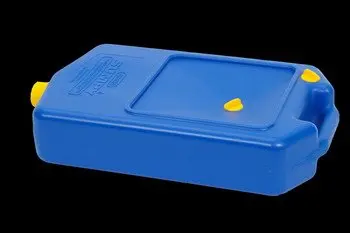
You can use one of these for draining oil and removing the oil filter.

Jerry-Sumpy-Oil-Drainer.jpg


Or do what I do and use an old cut off plastic 5 liter container
 
Top