Push button solenoid/relay for CA45 starter motor

Lomax

Well-Known Member
Joined
22 Sep 2016
Messages
375
Visit site
Hi all,

I'd like to fit a push button solenoid to reduce the current required to trigger the starter motor (~30A), while also allowing me to run the starter from the engine bay. The ignition signal source (a VDO Logic Combi instrument) can only deliver a maximum of 1A, which really isn't a lot. I've been looking at the Lucas SRB316/319 equivalents (e.g. Cargo 233955, Durite 0-335-05), but while this is a neat all mechanical solution I cannot find any information for the activation current - if it's more than 1A (which seems likely) this is not going to be a good fit, as it would necessitate an additional relay or solid state switch in the chain. I could fit a beefy DC relay instead of the solenoid and add an electrical push button next to it, but I'm curious how others have solved this?

Cheers!
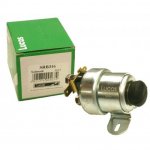
 

Attachments

  • Lucas SRB316.jpg
    Lucas SRB316.jpg
    21 KB · Views: 2
Hi all,

I'd like to fit a push button solenoid to reduce the current required to trigger the starter motor (~30A), while also allowing me to run the starter from the engine bay. The ignition signal source (a VDO Logic Combi instrument) can only deliver a maximum of 1A, which really isn't a lot. I've been looking at the Lucas SRB316/319 equivalents (e.g. Cargo 233955, Durite 0-335-05), but while this is a neat all mechanical solution I cannot find any information for the activation current - if it's more than 1A (which seems likely) this is not going to be a good fit, as it would necessitate an additional relay or solid state switch in the chain. I could fit a beefy DC relay instead of the solenoid and add an electrical push button next to it, but I'm curious how others have solved this?
What you have looked at is overkill - one of the small square automotive relays (40Amp ?) mounted near the starter motor operated by a positive from your instrument panel with a push button nearby operating the relay from a local fused positive off the main starter cable.
Jim
Cheers!
 
^^ Wot he said.
30 amps sounds a lot to trigger the relay. Your Lucas link has the rubber button to hand operate it. So would work from the engine bay. Might need more than an amp to activate it from elswhere?
 
Bit confused by request ..... but here goes :

I have a Land Rover Lucas solenoid wired up to power my starter on my Perkins 4-107.

The solenoid is activated by a low power press to make switch just inside companionway - in the 'Engine Ignition Box'. That Press to make switch is probably capable of surviving 5A at most. It causes the low power relay to then close the high power to the starter .....
 
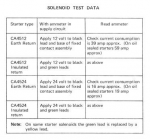
Thanks everyone - I will fit a 60A relay and a push button next to it. And yes, the solenoid on a CA45 starter does draw that much, at least according to the service manual (I have been unable to find any other source for this info):

CAV CA45 solenoid test data.png
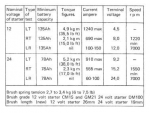
I was surprised too, but then the motor itself is rated at 3.6kW. I assume this is mechanical power, and actual current draw under load will far exceed the 300A this suggests. In fact, the service manual mentions 1240A max for a 12V model ?
CAV CA45 current draw.png
Makes me wonder if my 70mm2 cables and 115Ah battery will be enough...
 
Thanks everyone - I will fit a 60A relay and a push button next to it. And yes, the solenoid on a CA45 starter does draw that much, at least according to the service manual (I have been unable to find any other source for this info):

View attachment 141882
I was surprised too, but then the motor itself is rated at 3.6kW. I assume this is mechanical power, and actual current draw under load will far exceed the 300A this suggests. In fact, the service manual mentions 1240A max for a 12V model ?
View attachment 141887
Makes me wonder if my 70mm2 cables and 115Ah battery will be enough...
Out of interest what engine do you have ?
Jim
 
Thanks everyone - I will fit a 60A relay and a push button next to it. And yes, the solenoid on a CA45 starter does draw that much, at least according to the service manual (I have been unable to find any other source for this info):

View attachment 141882
I was surprised too, but then the motor itself is rated at 3.6kW. I assume this is mechanical power, and actual current draw under load will far exceed the 300A this suggests. In fact, the service manual mentions 1240A max for a 12V model ?
View attachment 141887
Makes me wonder if my 70mm2 cables and 115Ah battery will be enough...
Are not the current ratings (in DC circuits)a result of the coils being effectively a short across the battery except for the resistance of the coil which is the only limitation on current. the initial design has to generate sufficient magnetic thrust in order to ensure good firm pressure on the power contacts (to prevent arching) and overcome the opposed thrust of the return spring within the solenoid. And in the case of the motor high current, will that not be the 'stall' current as when not turning, again the motor windings are effectively a short across the battery
 
Are not the current ratings (in DC circuits)a result of the coils being effectively a short across the battery except for the resistance of the coil which is the only limitation on current. the initial design has to generate sufficient magnetic thrust in order to ensure good firm pressure on the power contacts (to prevent arching) and overcome the opposed thrust of the return spring within the solenoid. And in the case of the motor high current, will that not be the 'stall' current as when not turning, again the motor windings are effectively a short across the battery
Yes. On all counts. Though to be pedantic the battery chemistry and cable resistance will also limit the current. I don't think my stater battery could deliver 1240 amperes, even with a direct short across the terminals. It would hiss and fizz, smoke and leak acid, but the speed of the chemical reaction sets a limit on the available current.
 
Yes. On all counts. Though to be pedantic the battery chemistry and cable resistance will also limit the current. I don't think my stater battery could deliver 1240 amperes, even with a direct short across the terminals. It would hiss and fizz, smoke and leak acid, but the speed of the chemical reaction sets a limit on the available current.
and you may well be wrong there too ........ Battery Internal Resistance & Short Circuit Current.
 
Top