
Propane gas heater in sailboat?

H35

Well-Known Member
Joined
25 Apr 2017
Messages
165
Location
Oslo, Norway
Visit site
cozy.jpg

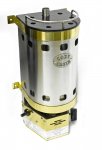
Has anyone first hand experience with installing and using a propane heater in a sailboat cabin? I found this oven very affordable, although some freight may add to the price. My original plan was to install a diesel burner, perhaps with a day tank. But I fear for diesel fumes and smell under deck. I have already installed a "pipeline" from my propane tank to my stove. I'm thinking this may be a clean and safe solution to a heating issue, maybe...

http://www.go2marine.com/product/83100F/cozy-cabin-heater-propane-boat-heater.html?WT.srch=1&WT.mc_id=gb1&utm_source=googlebase&utm_medium=productfeed&utm_campaign=googleshopping&gclid=CJ758ujRwNYCFQzPsgodngoMFQ
 
I have installed Propex heaters in two boats. Quite successful but rather noisy and limited to 2 kW. I also have an old Eberspacher that has been reliable, never smelt at all and certainly no fumes. I am most impressed with my son Owen's Planar heaters (he is the importer), quiet, frugal and very effective. I may well take out my current Propex and use a 4 kW Planar in the near future.
 
Personally, I have a strong aversion to any heater that operates by burning anything in the cabin space - far too much scope for CO poisoning! The Propex heaters that Vyv refers to are external blown air heaters - very similar in concept to an Eberspacher, but burning propane rather than diesel. We had one in our second boat and it worked, but was not particularly economical to run - the calorific content of propane is low compared to diesel and it could eat a cylinder pretty quickly.
 
Personally, I have a strong aversion to any heater that operates by burning anything in the cabin space - far too much scope for CO poisoning!

As far as I can see, these heaters from Sig all have external exhaust, and for the most part also external air intakes.
 
Personally, I have a strong aversion to any heater that operates by burning anything in the cabin space - far too much scope for CO poisoning!

I'd agree with that. Plus, you need a flue exiting in the coachroof. Plus, it's a big hot thing if you accidentally fall against it. Plus, it takes a lot of space. Room-sealed blown air heaters make a lot of sense.
 
Personally, I have a strong aversion to any heater that operates by burning anything in the cabin space - far too much scope for CO poisoning! The Propex heaters that Vyv refers to are external blown air heaters - very similar in concept to an Eberspacher, but burning propane rather than diesel. We had one in our second boat and it worked, but was not particularly economical to run - the calorific content of propane is low compared to diesel and it could eat a cylinder pretty quickly.

The Propex 2000 takes about 19 hours to eat a full 907 cylinder. Obviously not acceptable for a boat that needs 24 hour heating, but fine if you are wintering in (say) the Med where a half hour blast in the morning or late evening is all you need before the sun comes back or the warm quilt beckons.The Propex heaters also have an electric 220v option, which means that when in port you can just plug in and enjoy 24 hour "free" heating since most Med ports don't meter electricity. The propex E heaters are thus IMO very worthwhile if you are in the Med, but if you are somewhere else damp and temperate then Webasto/Planex diesel forced air systems are more economical. If you go seriously cold like Arctic then maybe consider diesel water heating systems.

I would agree though that for the OP, installing a gas-powered heater that has no external air supply inside a boat is a very bad idea.
 
Last edited:
I would agree though that for the OP, installing a gas-powered heater that has no external air supply inside a boat is a very bad idea.

It wouldn't bother me. In fact, it didn't bother me, because I have a charcoal stove (Hampshire Heaters) which draws its air from the cabin, which is well ventilated. How do those of you who are horrified by such things arrange an external air supply to your oven?
 
It wouldn't bother me. In fact, it didn't bother me, because I have a charcoal stove (Hampshire Heaters) which draws its air from the cabin, which is well ventilated. How do those of you who are horrified by such things arrange an external air supply to your oven?

Perhaps because they like creating and perpetuating myths. Provided it has an external flue it is no different from any other heater burning fossil fuel. Such heaters are available burning coal/charcoal/wood, or diesel, paraffin or gas.

All are safe if properly installed.
 
We have used a propane boiler, rather then heater, for 17 years. The boiler, instant hot water, sits in a stainless steel box in the saloon (the location backs onto the cockpit bulkhead), draws air from the saloon and has a vent, chimney, to the cockpit. We do not have clarifiers off the engines, for hot water (stupid omission :( ).

The only issue is that when out of use for some time it takes forever to light the pilot light, I assume because the delivery pipe is large in comparison the the amount of gas that is needed for the pilot light.

We only light the boiler when we need hot water - the rest of the time the gas is shut off, mainly to reduce usage of gas at the pilot light.

As JD says - most yachts have ovens - what is the difference.
 
It wouldn't bother me. In fact, it didn't bother me, because I have a charcoal stove (Hampshire Heaters) which draws its air from the cabin, which is well ventilated. How do those of you who are horrified by such things arrange an external air supply to your oven?

Our oven runs for perhaps an hour at a time during the day while one or more people on the boat are awake. Typically, we have hatches open while it it burning to reduce condensation. Our heating is running through the night in the winter with all occupants of the boat asleep and in no condition to recognise a problem developing.
 
It's advisable to have gas alarms if running any heating appliance overnight.
Our oven runs for perhaps an hour at a time during the day while one or more people on the boat are awake. Typically, we have hatches open while it it burning to reduce condensation. Our heating is running through the night in the winter with all occupants of the boat asleep and in no condition to recognise a problem developing.
 
I have used-and was very pleased with its performance-a modern parrafin heater, no external flue.

It was used while relaxing after a days sailing for heating the salon.

Never slept with it burning, the CO Meter/alarm never went off despite being adjacent to it and its own built in Oxygen depletion shut off never shut it off.

If you are intelligent and carefull, no problem.

For years boats had wood, coal and coke stoves for cooking and heating.
 
Our oven runs for perhaps an hour at a time during the day while one or more people on the boat are awake. Typically, we have hatches open while it it burning to reduce condensation. Our heating is running through the night in the winter with all occupants of the boat asleep and in no condition to recognise a problem developing.

Some form of "ventilator", perhaps? Maybe a CO alarm?

I have a coal stove in my living room. Should I be equally worried about that?
 
Some form of "ventilator", perhaps? Maybe a CO alarm?

I have a coal stove in my living room. Should I be equally worried about that?

You can, of course, do all manner of things to reduce risk. On our boat we have two CO alarms, two smoke alarms and a LPG alarm fitted. Ultimately, I guess, it's a question of personal taste. Some people go for charcoal burners in boats to save money, but I suspect that it is more a fashion choice for many people. The thing the OP referred to was certainly cheaper than an Eberspacher, but it is not a cheap option and he made no mention of choosing it to save money - with all that polished brass and steel, it seems to be as much a talking point as a heater. Personally, I prefer a blown-air diesel or propane heater safely outside the main body of the boat with no connection between the burner and living space. That does not eliminate the need for CO and smoke sensors - the isolation between the burner and the heating chamber can still break down - but it does significantly reduce the risk.
 
You can, of course, do all manner of things to reduce risk. On our boat we have two CO alarms, two smoke alarms and a LPG alarm fitted.

Hmm. Not much trust in your appliances there!

I chose a charcoal heater because it's silent and uses no electricity. You're quite right that it's also a talking point. However, it's great for hanging towels and wet things over as it's cooling down - gets them lovely and dry.
 
Top