PRM gearbox nut removal

single

Well-Known Member
Joined
19 May 2012
Messages
3,499
Location
Cardiff Bay
Visit site
One last attempt today at un-doing the filler nut on my PRM120 gearbox. Its a brass? 18mm and so far nothing will shift it so any other ideas? Access is limited and the head has started to round off.Up to now I have tried t-bar,normal sockets/ratchet , wrench, long spanner and tapping the lip.I suppose mole grips might be worth a go but there is hardly any space to swing a hammer.
 
Tap gently with a hammer for 10 to 20 minutes keeping it square and flat to not damage any parts and only gently to let the little vibrations work there magic.

Small (pen sized) blow torch/soldering iron thing to heat the brass. Ultra care as I am sure there is lots things around to be damaged including aluminium in the housing? Check for either fibre washer or copper washer, if fibre might not heat?

Good luck.
 
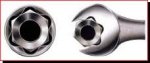
There's no alloy, and the thread is very coarse, one good jolt should do it. If the head is reasonable get a better socket, can't remember the name, one that engages the flats rather than the points.
 
6 sided or impact socket

They still grip the corners rather than the flats, but are certainly less prone to rounding them. I think Fisherman may have been referring to a socket with curved 'flats' which very much do grip the flats.
If the OP can get hold of a battery-operated rattle gun and there's room to use it, that could do the trick.
 
Probably thinking of a surface drive socket- it might work, but I find them a bit overrated.

Apply heat to the alloy body of the gearbox, not the brass plug, and as said above judicious use of a suitable hammer.
A conventional socket next size down can sometimes be hammered onto the brass plug.
 
Follow Northup's advice, if the body is alloy be very careful how much heat as aluminium will melt like butter without any warning if too hot. last ditch advice is to use a centrepunch near the edge of the hexagon and strike at an angle of about 45 degrees anticlockwise, this will start the plug to turn and give the impact as described above.
 
I'll borrow the garages cordless impact gun and try that tomorrow.I'm trying to avoid flames with all the oil,gasses etc in that area. Thanks.
 
Brass plugs quite often seize up in their threads. You might end up needing to get a stilson wrench on it. Be prepared for it shearing though. A lot of penetrating oil, a bit of technical tapping with a hammer is about all you can do except drilling it out. When you do get it out make sure you copper grease the hell out of it before you put it back in. Or perhaps ptfe tape.

I'm sure there is a good reason for putting brass plugs in cast alloy and steel casings but they are the bane of every engineers life!
 
If you look at the 'prop not turning' thread there is a pic of the plug: it has a flange, and the dipstick is attached to its underside. There are only six or so threads on it, and very coarse. The G/B casing is not alloy. A judicious pat on the head with a hammer should get it, but how hard to hit it, and I have a feeling it is hollow, so will it spread? I would go for a cold chisel on the edge of the flange, wonder if you could 'lift' the flange with something thin under it.
 
Top