Ian_Edwards
Well-Known Member
I posted earlier on an overheating problem with my Yanmar Diesel.
Yanmar 4JH4E RUNNING HOT!
The high oil level turned out to be a silly mistake, it had simply been over filled, and doesn't appear to have anything to do with the overheating problem. I pumped some of the oil out, no water, no smell of diesel and the viscosity looked normal. It ran for the rest of the season without filling up or using any oil.
However, the overheating problem is still there, sort of.
When I check the header/expansion tank, it is at the full mark, and hasn't moved.
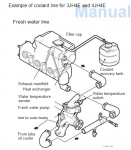
When I check the water level at the heat exchanger, under the pressure cap, there is air at the top of the heat exchanger. I takes around 100 to 200ml of water to fill it after several hours of motoring. As long as there is water in the heat exchanger the engine runs normally, at around 80C.
I've taken the small hose, next to the pressure cap off, and poked a small screwdriver through the pipe into the heat exchanger, and it's clear, I've blow back up the small hose to the expansion tank, and I can hear the bubbles in the tank. So, I know there's no blockage there.
I'm wondering why the antifreeze mixture in the expansion tank doesn’t run back into the heat exchanger, when the engine is cold, and when the pressure cap is off.
The engine is losing water slowly, but I’ve no idea were.
It could be via the heat exchanger, which was stripped, cleaned, and rebuilt 2 years ago, or the cylinder head gasket, or the calorifier, which has a heating coil in it, or could the pressure cap have anything to do with it?
What’s the best way to go about finding the leak?
To make matters more complicated, the boat is out of the water until next April.
Yanmar 4JH4E RUNNING HOT!
The high oil level turned out to be a silly mistake, it had simply been over filled, and doesn't appear to have anything to do with the overheating problem. I pumped some of the oil out, no water, no smell of diesel and the viscosity looked normal. It ran for the rest of the season without filling up or using any oil.
However, the overheating problem is still there, sort of.
When I check the header/expansion tank, it is at the full mark, and hasn't moved.
When I check the water level at the heat exchanger, under the pressure cap, there is air at the top of the heat exchanger. I takes around 100 to 200ml of water to fill it after several hours of motoring. As long as there is water in the heat exchanger the engine runs normally, at around 80C.
I've taken the small hose, next to the pressure cap off, and poked a small screwdriver through the pipe into the heat exchanger, and it's clear, I've blow back up the small hose to the expansion tank, and I can hear the bubbles in the tank. So, I know there's no blockage there.
I'm wondering why the antifreeze mixture in the expansion tank doesn’t run back into the heat exchanger, when the engine is cold, and when the pressure cap is off.
The engine is losing water slowly, but I’ve no idea were.
It could be via the heat exchanger, which was stripped, cleaned, and rebuilt 2 years ago, or the cylinder head gasket, or the calorifier, which has a heating coil in it, or could the pressure cap have anything to do with it?
What’s the best way to go about finding the leak?
To make matters more complicated, the boat is out of the water until next April.