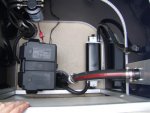
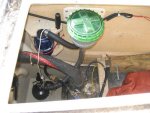
Polishing fuel

Depends where are you are in the world too. Sailing around Asia like the Philippines / Indo, you can get some really dodgy fuel. Water or just bugs / leaves, you get all sorts.

A different game entirely.
Some places people swear by having two or more tanks, and only ever filling one from one supplier.
 
....really dodgy fuel. Water or just bugs / leaves, you get all sorts!
I've bought cider like that in Devon, never had any problems with diesel. :-)
 
A different game entirely.
Some places people swear by having two or more tanks, and only ever filling one from one supplier.

Exactly. I recently sailed on a yacht which comes with 3 tanks, 2 storage and 1 day running tank. They use a fuel polishing system to feed into the day running tank. I was quite impressed as this all came as standard.
 
You're normally the most relaible on engines, but to be accurate, DERV is road fuel, not the red stuff used in agriculture etc. The clue is in the acronym.
There are plenty of recent papers from fuel companies adviding against copper and brass etc in diesel systems, I'm not so sure about zinc.
The zinc/sulphur problem may be separate from the copper problem with modern diesel.

IIRC DERV was the same dirty high sulphur stuff with the dye added.

One of my rugby club mates in the '60's worked as a chemist for Shell and BP. Pretty sure thats where the info came from.

Anyway, the 4 inch 10mm copper tube connecting 2 lengths of fuel pipe has been there four years and is as sound as the day I fitted it, inside and out.

I removed it recently to fit one continuous length of reinforced fuel pipe but the supplier got their measuring wrong and supplied not quite enough, so the old piece and the joining pipe went back on. I ordered 2.5 metres and recieved 2.25 metres.

I had seen this advice re brass and copper, but our local hydraulic supplies company still sells lots of brass fuel pipe ends, bulkhead fittings and nipples
and reports no problems so far.
 
DERV is 'diesel engine road vehicle' fuel, as in the stuff with tax paid on it.
The composition of that has probably changed from time to time.

The 'no yellow metal' advice is coming from most oil companies in many markets around the world.
For sure, lots of people are 'gettting away' with brass fittings and copper pipe, but you get the odd case of tarry-black 'aspheltene' (sp?) deposits, which might be more of a problem with a hi-tech common rail engine.
I know enough about chemistry to know that it's too complicated for me to get to the bottom of.
 
Given this tread (other fuel threads are available) interesting to see the new bit of kit from Marine 16.

http://www.ybw.com/expert-advice/ma...dipper-a-new-water-and-sludge-separator-66719

I'm not sure how this kind of system is compatible with their products which dissolve/emulsify the water into the fuel?
You really want to either physically seperate the water, or disperse it into the fuel. Either/or, not both?
If you have a few drops of water, poisoning it and spreading it into the fuel seems a good approach. If there is more, then physically removing it before adding any dispersant chemicals seems to me to be the best thing?
 
Dispersing water into diesel will ensure that the flow and combustion properties in the injector pump and cylinder are altered out of specification. In extreme cases it will increase pressures in the cylinder's ignition stroke, and ISTR that the changed lubricity can damage the injector nozzles.
 
Dispersing water into diesel will ensure that the flow and combustion properties in the injector pump and cylinder are altered out of specification. In extreme cases it will increase pressures in the cylinder's ignition stroke, and ISTR that the changed lubricity can damage the injector nozzles.

Modern road diesel will have water dissolved in it. Adding a little more 'within limits' will be fine, bit what are those limits and what happens when you exceed them?
In general, I'm not a fan of additives but they may be the right answer in some circumstances.
 
I think there is a great misunderstanding re. copper and fuel.

It is NOT that the fuel damages the copper alloys. It is that copper is a POWERFUL CATALYST that degrades the diesel fuel. Just as palladium and platinum are used to increase the rate o certain reactions, copper in solution drastically increases the rate of sludge formation. The extent depends on other metals present, water content (ppm levels) and the whether the fuel was treated with effective metal activators at the refinery.

So no, the copper tubing will never appear damaged, just as catalyst is not consumed. I'm not making this up; ASTM code and every maker of stand-by diesel generators says pretty much the same thing. It is because the fuel can sit there for years. If you operate your boat in the same manner, keeping the fuel for years, you are a stand-by generator and you need to be very careful with fuel storage practices.
 
Dispersing water into diesel will ensure that the flow and combustion properties in the injector pump and cylinder are altered out of specification. In extreme cases it will increase pressures in the cylinder's ignition stroke, and ISTR that the changed lubricity can damage the injector nozzles.

I've tried reading up on water absorbers for diesel. It seems the main ingredient is usually methanol. Being polar the Methanol and water atoms combine in a structure, so that's the way water is 'absorbed'. Methanol doesn't mix well with diesel but it seems they use longer alcohols as a mixing agent. Duodecanol was mentioned in a few places.

I've seen nothing that says that in reasonable small quantities this will do any harm to the sort of old agricultural diesel engine designs most of us use. It's when it gets to modern diesels that it gets interesting. There seems to be quite a bit of research going on using methanol water mixes in diesel to deliberately lower the combustion temperature to reduce emissions. Maybe we'll end up with engines that are deliberately designed to run with methanol and water in the fuel and with fuel at the pump that contains it.
 
I've tried reading up on water absorbers for diesel. It seems the main ingredient is usually methanol. Being polar the Methanol and water atoms combine in a structure, so that's the way water is 'absorbed'. Methanol doesn't mix well with diesel but it seems they use longer alcohols as a mixing agent. Duodecanol was mentioned in a few places.

I've seen nothing that says that in reasonable small quantities this will do any harm to the sort of old agricultural diesel engine designs most of us use. It's when it gets to modern diesels that it gets interesting. There seems to be quite a bit of research going on using methanol water mixes in diesel to deliberately lower the combustion temperature to reduce emissions. Maybe we'll end up with engines that are deliberately designed to run with methanol and water in the fuel and with fuel at the pump that contains it.

The real problem is where is the water coming from. As for what is in the tank, sump the bottom of the tank with your oil change vacuum, don't pull it through the engine!

Leak. If it is seawater, it is VERY corrosive to the tanks and fuel train and should NOT be absorbed but removed with a separator. There is a deck leak and it must be fixed. This is by FAR the most common source of water. You can test the water for chloride (not chlorine--that is different) to determine (pet stores have strips). Check the pH while you are at it. If it is less than 5.5 you also have bugs.

Marina. Unless you are in the 3rd world, I mostly don't believe it. The commercial fisherman would choke them until they were dead. It's a leak.

Condensation. Not much, but possible. The solution is a silca gel vent filter. H2OUT makes them. I don't know about a UK source, but they are very effective at keeping fuel dry.
 
The real problem is where is the water coming from. As for what is in the tank, sump the bottom of the tank with your oil change vacuum, don't pull it through the engine!

Leak. If it is seawater, it is VERY corrosive to the tanks and fuel train and should NOT be absorbed but removed with a separator. There is a deck leak and it must be fixed. This is by FAR the most common source of water. You can test the water for chloride (not chlorine--that is different) to determine (pet stores have strips). Check the pH while you are at it. If it is less than 5.5 you also have bugs.

Marina. Unless you are in the 3rd world, I mostly don't believe it. The commercial fisherman would choke them until they were dead. It's a leak.

Condensation. Not much, but possible. The solution is a silca gel vent filter. H2OUT makes them. I don't know about a UK source, but they are very effective at keeping fuel dry.

Not sure why you're replying with that to my post as it's not relevant. Or mybe you got the idea that taking an interest in what goes into water absorbers means I have a load of water in the bottom of my tank. I don't.

And I also don't know where you get the idea that first world diesel can't contain water. It does. Even if it doesn't include water droplets and it looks like diesel it'll still be in there with a risk of some of it dropping out as droplets when the temperature drops.
 
Not sure why you're replying with that to my post as it's not relevant. Or mybe you got the idea that taking an interest in what goes into water absorbers means I have a load of water in the bottom of my tank. I don't.

And I also don't know where you get the idea that first world diesel can't contain water. It does. Even if it doesn't include water droplets and it looks like diesel it'll still be in there with a risk of some of it dropping out as droplets when the temperature drops.

Please, never take offense that I responded to a specific post or that anything was meant as criticism. That was not the intent, only to inform other readers. Sometimes I punch the reply button to not-the-most-relevant post. My apologies.

I'm a chemical engineer with 35 years in refining. I understand diesel quite well. I supervised testing labs. You are correct, that some can drop out when it cools, but the amount will be on the order of 50-100 ppm, depending on the refinery, since even warm it doesn't hold much (ethanol-containing gasoline is different--it can hold 5000 ppm and can phase separate). The most this would likely account for is 10-30 ml and probably much less. Most of it would be burned before it could reach the bottom of the tank. Trucks, for example, don't suffer materially from cold weather drop-out, so clearly other factors are in play.

Physical removal is best. I firmly believe that most readers with water problems have a leak on the filler cap, and repair plus physical removal of the water is the better answer. Many have never considered that their oil change pump can make very quick work of this. It's obvious enough, but like many things, only after someone mentions it to you. Then you slap your forehead and do it.

A vent filter will also have the effect of actually drying the diesel over time. I've tested this, with controls.
 
Physical removal is best. I firmly believe that most readers with water problems have a leak on the filler cap, and repair plus physical removal of the water is the better answer. Many have never considered that their oil change pump can make very quick work of this.

A vent filter will also have the effect of actually drying the diesel over time. I've tested this, with controls.

That's good info, thanks. During a recent stage in my old-boat refurb, I discovered the small 33L diesel tank still had a little fuel inside after several years quietly 'ageing' - which was drawn off. Unsurprisingly, this contained rather a lot of brown-black 'murk', as well as water. It's been quite a task emptying and cleaning, using an oil extraction pump and small-diameter tubing..... and a home-made polishing rig.

I'd never heard of the use of a 'vent filter' on a sailboat's fuel system, and will now go hunt down a suitable device. Any positive suggestions would be welcome....
 
Please, never take offense that I responded to a specific post or that anything was meant as criticism. That was not the intent, only to inform other readers. Sometimes I punch the reply button to not-the-most-relevant post. My apologies.

No worries. I was just struggling to understand how a general reply seemed to be attached to my post. I understand now.
 
These have been popular in refineries and chemical applications for many decades, but have only found their way into boats in the last decade. In the US, carbon canisters are now coming to boats, just as they came to cars in the 70s. Unlike automotive systems, they are passive and are not sealed, since US Coast Guard regulations forbid pressurized tanks.

A factory carbon canister on a pontoon boat.

carbon+canister+instalation+on+ponton+boat+2012.jpg

H2OUT is the main US seller, but for diesel, a trip to the hardware store could buy the parts. The end caps are no-hub caps and the hose barbs are secured using conduit nuts. You need a screen at each end, and the silica gel prills are pretty standard (air compressors). The most important thing is that it MUST be located such that it will never see water or diesel, not ever. A high loop.

http://sail-delmarva.blogspot.com/search?q=gasoline+silica+gel

http://sail-delmarva.blogspot.com/2012/11/gasoline-and-fuel-tank-vent-filters.html

The silica gel filter on a PDQ catamaran.
desicant+filter+install+low+res.jpg
 
Last edited:
Top