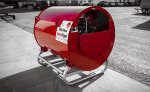
Plastic removable Fuel Tanks V Inbuilt

Bigplumbs

Well-Known Member
Joined
7 Nov 2015
Messages
8,161
Location
UK
Visit site
In my Fletcher Arrowhawk 19 GTO Bowrider which I keep on a swing mooring I have an inbuilt below floor tank of I suspect 100 ltrs. I have a Yamaha 200 V6 on the back. The boat is almost 20 years old and I cannot know the state of the fuel tank and I know that in 2020 I had fuel issues which was in effect water in the fuel.

I can of course fit a Separating filter (amazingly Fletcher did not fit one) but given the current worries about modern petrol etc. I am thinking of not using the inbuilt tank but instead running off 2 -or 3 30 ltr Plastic tanks that will quite easily fit in the back behind the seat which interestingly is where the 80 ltr tank is in my 17 footer of the same design. I will have about 90 ltrs which will be almost as much as the inboard tank. I just feel with removable tanks like these you can keep control of your fuel better and can remove the tanks at the end of the season and use the petrol up in cars or similar.

Have others done similar. Or are you happy with your inbuilt tanks in such boats
 
In my Fletcher Arrowhawk 19 GTO Bowrider which I keep on a swing mooring I have an inbuilt below floor tank of I suspect 100 ltrs. I have a Yamaha 200 V6 on the back. The boat is almost 20 years old and I cannot know the state of the fuel tank and I know that in 2020 I had fuel issues which was in effect water in the fuel.

I can of course fit a Separating filter (amazingly Fletcher did not fit one) but given the current worries about modern petrol etc. I am thinking of not using the inbuilt tank but instead running off 2 -or 3 30 ltr Plastic tanks that will quite easily fit in the back behind the seat which interestingly is where the 80 ltr tank is in my 17 footer of the same design. I will have about 90 ltrs which will be almost as much as the inboard tank. I just feel with removable tanks like these you can keep control of your fuel better and can remove the tanks at the end of the season and use the petrol up in cars or similar.

Have others done similar. Or are you happy with your inbuilt tanks in such boats

can you get a look at the inside of the existing tank / or make an access hole and ensure its clean inside ?
 
Hi...this is something that's crossed my mind often in the past. I had a couple of issues with a boat years ago, that had bad fuel in her tank left dormant for a few years before I got her. Eventually got past the issues.
Since then I have had boats and have boats with such a set up and never had issues. I like to think, as a result of me only ever having in the tank what I think I am going to use on the day, or soon after..but more importantly...I am religious about leaving the tank as close to bone dry as I dare, before winter or long term storage.
The Fletcher 19 I use most often these days has a separating fuel filter with a water alarm on it. 100 litre tank (that I have never proven by filling) too. 900 hours now without issues, just with being vigilant of such a worry perhaps.
I also think that as soon as its suspected you have water in the fuel...doing anything other than completely sucking out the entire contents of the tank, is futile 9/10 times. Known it so many times where a guy will have 20l of bad fuel in the tank...and try to get around it by throwing in 80l of fresh fuel...most often, all that does is make 100l of bad fuel. Also most often the case that once bad fuel has made it to the engine (especially carb engines)...more than just the fuel tank will need looked at thereafter.
Finally...for the last decade, I have thrown in a dose of good tcw3 oil into the tank and through the engine before storage too, referring to both boats that have a modern 4 stroke engine on/in them. It's actually in the newer mercury and mercruiser manual to do so these days.
 
can you get a look at the inside of the existing tank / or make an access hole and ensure its clean inside ?

Not easily and you would still not see enough and never be sure but it is also about the ability to remove the plastic tanks at the end of the season and use the petrol elsewhere
 
Last edited:
Slightly off-topic I'm afraid - I used to use up leftover boat petrol in the car. However, when I did that last autumn, the car's cat and both oxygen sensors gave up the ghost while running on that tank of petrol: expensive to fix. That petrol may have been in its 5l plastic can for about 12 months, as a spare. It seems that diluting it with a tank's worth of fresh petrol is not necessarily sufficient to overcome the deterioration of that 5l.

I won't make that mistake again.
 
Slightly off-topic I'm afraid - I used to use up leftover boat petrol in the car. However, when I did that last autumn, the car's cat and both oxygen sensors gave up the ghost while running on that tank of petrol: expensive to fix. That petrol may have been in its 5l plastic can for about 12 months, as a spare. It seems that diluting it with a tank's worth of fresh petrol is not necessarily sufficient to overcome the deterioration of that 5l.

I won't make that mistake again.

That's when you need a much older car to use it up in ;)
 
Top