
Osmosis

Oaks81

Member
Joined
28 Apr 2020
Messages
27
Visit site
I recently discovered about two dozen blisters along the whole length of my boat's bottom. My boat mechanic said it sounds like osmosis and the proper repair would be to strip down the gelcoat and process the whole bottom. The mechanic said that if the blisters are only filled it is very likely that I will have more new blisters in a few years.

The boat is almost five years old and it sits in the water for 5-6 months every year.

I would like to hear your opinions and experiences about osmosis. How should I prepare when I go to discuss this with the company that sold the boat? What happens to the resale value of my boat value?

All repairs should be covered by warranty.
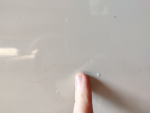
osmosis.png
 
That isn't osmosis, it's just small imperfections in the gelcoat. If the boat is only 5 years old, it will be built with isophalic resin, so you could leave it permanently in the water for 20 years without it getting osmosis.

You don't need to do anything about it.

If you feel that you want to, you can drill out the gelcoat and fill with epoxy.
 
Ok, so it's possible that it is not osmosis after all. I guess I will only know after taking it for inspection.

I just got the boat out from winter storage. I wouldn't want to pierce the gelcoat until I take it out from water for the winter again.
 
Is your boat mechanic offering to do the job for gazillions? Ignore him and go drink several glasses of cool rosé in a quiet anchorage.

Osmosis is a wonderful thing for boat repair companies whose owners are after early retirement. There are times when the nuclear option of peel and refinish is called for, but they tend to involve blisters the size of dinner plates.

Has that hull been painted? those tiny blisters look more like paint that's lifted than osmosis blisters, which are usually a lot deeper.
 
I suspect that what the others have said is correct, although 'fresh water' rings alarm bells. The only place my 1984 boat has osmosis is in the heads sink, fresh water of course. I would test as suggested and repair any blisters/imperfections with epoxy.
 
My worn out mind and body certainly need some cool rosé in a quiet anchorage. Boat ownership comes with all kinds of troubles and hard work.

I described the situation to the boat mechanic and asked for his advice. He did not offer to do the repairs. He said osmosis is rare and if it occurs in a new boat, it is due to manufacturing defects. He suggested to take the boat to the manufacturer to be inspected.

My main concern is that if the manufacturer will do proper repairs instead of a cosmetic fix. I do not have the knowledge to argue against them if they suggest inadequate repairs.

The boat has a 5 year hull warranty and it will expire next month. I have already delivered photos of the blisters to the manufacturer and called them.

The hull has not been painted.
 
Do you know if the gel coat was sprayed or brushed into the mould. I suspect it was brushed and the gel coat was inadequately brushed out to remove all air bubbles. The size of the "blisters" look like this is most likely. Check with the builder how the gel coat was applied. If brushed then use a Dremel to open each one and fill with Teroson (Plastic Padding) Gel Coat Filler. This is a white expoy based filler that is easy to sand smooth. If it is as I suggest then you may find a few more over the coming years. It is nothing major to worry about.
 
Do you know what resin the boat is built of?
A few small bubbles like that is very common in dinghies which have a polyester gelcoat and epoxy layup.
Sometimes with vinylester also AFAIK.
The blisters often disappear when the weather changes.
I'm told osmosis is happening, but not the 'boat pox' people normally mean by 'osmosis', where the resin is breaking down AKA hydrolysis. I.e there can be a few little bubbles of air or water between the gel and the main layup, but nothing actually bad is happening.
 
Your photo looks more like the topsides of the boat rather than the bottom. By bottom most people mean the bit that is underwater when floating. Topsides is between that and gunwale/deck level.
 
Nonsense.
Gelcoat filler is polyester based and IME not very good. YMMV.
I stand corrected it is an unsaturated polyester body filler. It is recommended for "restoring the original surface finish to boat hulls and glass fibre panels. It repairs osmosis blisters and minor surface damage. It can be used on glass fibre and gelcoat finishes. Once set, it is waterproof and may be overpainted if required. "
TEROSON UP 620

On my boat I have used it extensively (under the old brand name Plastic Padding) and found it excellent. It is easy to mix, sets quickly, sands easily and can be compounded to a high shine. It is also an almost exact colour match for the gel coat on my Fulmar.
 

Other threads that may be of interest

Top