Optimum bilge pumps setup

zoidberg

Well-Known Member
Joined
12 Nov 2016
Messages
6,949
Visit site
I've sailed with all sorts.
Having a manual pump which gets some exercise every morning/night and at change of watch on passage permits keeping aware of 'changes'. Most production boats seem to have two auto-electric pumps, and I'm uncertain of the claimed benefit.

What does the team think is an optimum setup in a refurb'd long keeler with a 4' deep bilge?
 
Several and big. Having pumped a yacht every hour most of the way across Biscay I have no desire to do that in an emergency. So one big electric pump and a second smaller pump in the saloon bilge with a third small auto pump under the engine, likely a source of the problem. Oh and a bucket.

Pete
 
One manual, one electric and one auto, the manual and electric as low as you can get them, the auto above them both and would be the higher capacity one...
 
One trick I've seen and ought to do on Jissel is to have an analogue electric clock or some other timer wired in parallel with the pump, so it operates when the pump is running. Set it to midday when you leave the boat and you can see if the pump's run and how long for. Seeing it go from zero usually to running for a few minutes a week tells you you've got an issue before it becomes a problem
 
I'm not keen on automatic pumps. I used to winter my previous boat in the Caledonian Canal. A large boat nearby, developed a split in a fuel tank, and her automatic pump automatically pumped 1000 litres of diesel into the canal. The owner didn't win any Brownie Points for that. ?
 
I have some sympathy for those (not) dishing out the brownie points but, playing the odds, I'd far rather have my boat pumping out water from a leak when I'm not there than quietly filling up. I know it'll run the battery down and probably kill it, but it'll give me a chance, especially with a couple of solar panels to help things along, and I reckon being immersed will kill the battery and a lot more besides
 
One of my bilge-pumping tasks is this....

I have an aged conventional 'stuffing box' which I removed, 'fettled', drilled out the sheared-off bolt and replaced it with new. I also repacked it with new PTFE- impregnated packing material, and I'll need to tighten this up progressively until it's 'just about right' - dripping just a few drops per minute and not running hot in use.

I find it painful and extremely difficult, now, to get into that very confined space and want to limit my 'inspections'., so I'm considering a 'bilge water alarm' then a pair of electric pumps which can be switched on manually, or left on 'auto'. I'm also considering a small manual pump which will allow me to 'count the strokes' and log them for changes.
 
One manual, one electric and one auto, the manual and electric as low as you can get them, the auto above them both and would be the higher capacity one...

That's interesting - i would have thought that the automatic one should be the lowest - i.e. you may as well get rid of as much water as you can, rather than sail round with 6 inches slopping around in the bottom of the bilge sump?
 
One trick I've seen and ought to do on Jissel is to have an analogue electric clock or some other timer wired in parallel with the pump, so it operates when the pump is running. Set it to midday when you leave the boat and you can see if the pump's run and how long for. Seeing it go from zero usually to running for a few minutes a week tells you you've got an issue before it becomes a problem

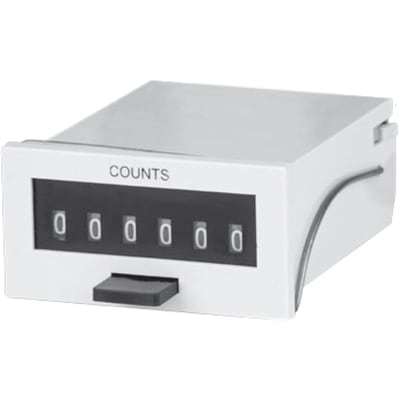
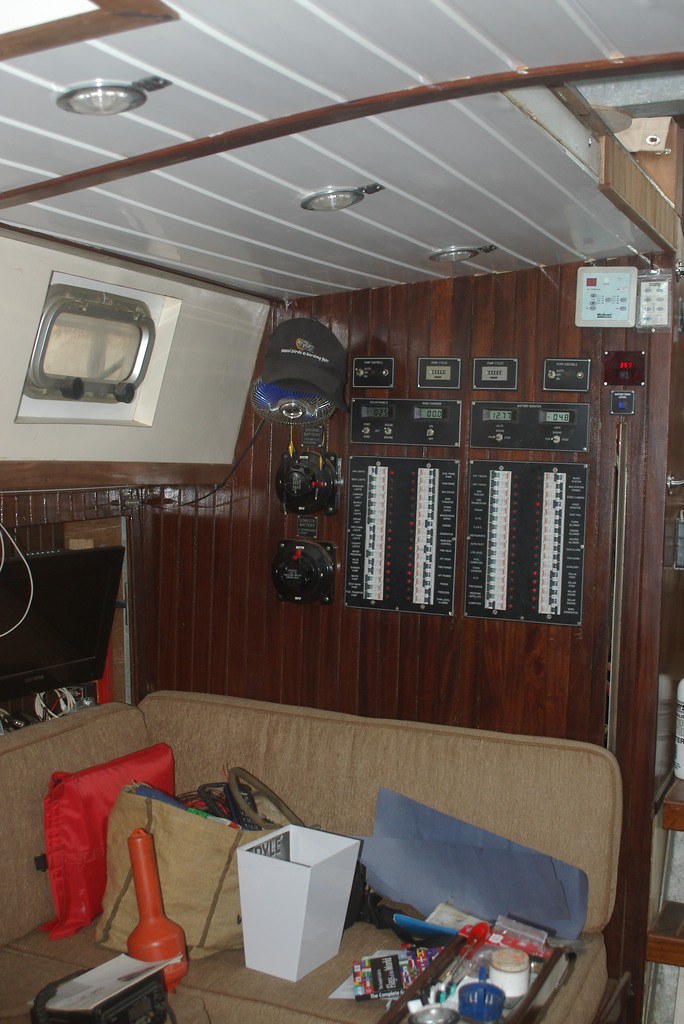
I have a resettable electromechanical counter wired across both of my automatic bilge pumps to show the number of times the pumps run while I'm away

70000862.jpg

35917684882_f927b5df69_b.jpg


Counter and switches on top line next to the cap.

I have 2 high capacity rule centrifugal pumps which have air pressure type level switch switch to either manual or automatic. each has a seperate section of my domestic battery with each bank with its own solar panel for charging while I am away.

I also have a henderson Mk V pump at the helm and 2 hendersons in my the cabin that can be operated by one person, each with own outlet
 
Last edited by a moderator:
That's interesting - i would have thought that the automatic one should be the lowest - i.e. you may as well get rid of as much water as you can, rather than sail round with 6 inches slopping around in the bottom of the bilge sump?
My auto and manual are next to each other. Auto gives me piece of mind and battery seems to last all season on the winter mooring. I do connect small solar.
Switched electric picks up from the bows by the heads. Normally never used except when she dries bows down with me aboard but a good backup.
And my manual sea toilet has an adapter i.e. a hair dryer hose, to enable it to suck from the cabin floor. And then we have the stout bucket

Got caught once on a delivery run.. Seller muttered incoherently about auto pump. No manual. Then a very big sea came aboard and pump did nothing as it turned out later the end was in bucket in locker to deal with small drip. Navigator ended up bailing with small saucepans as we didnt spot bucket under the junk. Bucket quite dry, crew shit scared.
 
Apart from a manual and an electric pump, my boat has a provision to switch the engine’s water intake to a hose with strainer down in the bilge. It is amazing how much water this shifts even at low revs. I use it when preparing the boat for the winter to flush the exhaust system and a garden hose running at full pelt can’t keep up with it. It is no use when you’re not aboard, but when you’re sailing it is a nice backup.
 
Apart from a manual and an electric pump, my boat has a provision to switch the engine’s water intake to a hose with strainer down in the bilge. It is amazing how much water this shifts even at low revs. I use it when preparing the boat for the winter to flush the exhaust system and a garden hose running at full pelt can’t keep up with it. It is no use when you’re not aboard, but when you’re sailing it is a nice backup.
Prudent sir and Ive often considered it
 
Having the handpump where the helmsman can steer and pump essential for me. Bilge alarm also, with a bleeper that could be heard from the quay above the boat, mob phone number in the window, certainly helped once. The alarm well down so gives early notice of impending doom.
 
Our main bilge has a deep sump. The main automatic bilge pump has a sounder fitted. If the pump runs we hear it even if we are in the cockpit, sailing or using the engine. We only panic when the sounder doesn't stop. If that pump doesnt stop (2000gph) then the rising water in the bilge will then set off the emergency pump (3700gph). Before this second pump activates, we will already be searching for the source of the leak. Its hard to find a failed fitting when they are deep under water.
I dont see the need for bilge alarms. Just have you main pump make lots of noise. You know its working everytime it does it.
 
That's interesting - i would have thought that the automatic one should be the lowest - i.e. you may as well get rid of as much water as you can, rather than sail round with 6 inches slopping around in the bottom of the bilge sump?

No I mean one manual and two electric, of the two electric the auto is higher up and bigger capacity. If you're sailing if there's any water in there you can pump manually or switch on the non-auto electric pump. The bigger capacity auto is there for bigger ingresses and for when the boat is left for long periods...
 
I wish to put forward a differing view to those expressed so far. I have the single, original, manual bilge pump, operated from the cockpit. This is supplemented with a double action hand pump, sponge and bucket. So far in her 35 odd years the yacht has not been even close to sinking, so there is a strong argument that any additional hardware would be excessive.

If I were having to pump every change of watch then I would prioritise investigating the source of all that water, rather than fitting additional pumps. This logic would not apply to wooden yachts but I imagine owners of such vessels are pretty clued up about removing water.

Why not spend the money, effort and weight on safety systems that are far more likely to save your life? Active radar reflector, lifejackets, AIS, PLBs etc. Or even consider the risk dispassionately, decide it is negligible, and spend the money on sails or beer.
 
No I mean one manual and two electric, of the two electric the auto is higher up and bigger capacity. If you're sailing if there's any water in there you can pump manually or switch on the non-auto electric pump. The bigger capacity auto is there for bigger ingresses and for when the boat is left for long periods...

That makes sense. I remember seeing a few years ago an adaptor that could be fitted to standard hose to ensure that a bilgepump could get down to about 1/8th of an inch of water remaining which will probably evaporate in a day or so if no actual leak - never bothered to look further as i understand that they do restrict the maximum output but a definite possibility for a small manual pump and then let an electric set up like yours do the bulk of the work
 
I wish to put forward a differing view to those expressed so far. I have the single, original, manual bilge pump, operated from the cockpit. This is supplemented with a double action hand pump, sponge and bucket. So far in her 35 odd years the yacht has not been even close to sinking, so there is a strong argument that any additional hardware would be excessive.

If I were having to pump every change of watch then I would prioritise investigating the source of all that water, rather than fitting additional pumps. This logic would not apply to wooden yachts but I imagine owners of such vessels are pretty clued up about removing water.

Why not spend the money, effort and weight on safety systems that are far more likely to save your life? Active radar reflector, lifejackets, AIS, PLBs etc. Or even consider the risk dispassionately, decide it is negligible, and spend the money on sails or beer.
Agreed.
Our only used bilge pump is a 500cc syringe, used to suck the water out of the bilge sump after cleaning.
We have an electric bilge pump to take the rain out of the RIB and I sometimes race open boats, where we are pretty serious about bilge pumps.

The yacht has the two manual pumps required for racing, plus an electric which gets used for deck wash.
The shower drain pump is also electric.
 
Top