old fashioned stuffing box question

crown22

Well-Known Member
Joined
19 Jul 2004
Messages
292
Location
Manchester
Visit site
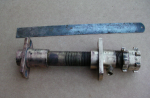
Hello everybody the photograph attached shows my stuffing box.Am i correct to think that the castellations do not have a thread between them?
Im not sure why there are castellations on either side of a piece of what appears to be a solid tube ? i am planning on holding the piece containing
the greaser with molegrips or is there something better? i have done this job before but the whole thing was in a vice in my garage after disconnecting
the propshaft and sliding it back.I have had a few sleeps since then and also a bit difficult when the boat is on the water.About fifty drips a minute when motoring so planning on adjusting it between
tides in my bilge keeler.Thanks photo to follow after file compression20220721_150243-min.jpg20220721_150243-min.jpg
 
Last edited:
No photo .....

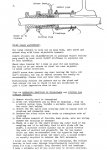
50 drips a minute is a bit too fast for me ..... I would look for maybe 15 - 20 at most. When stopped - then enough grease pumped in to stop the drips.

Grease to stop drips when shaft is stationary ... Grease to lubricate the packing when running
Water drips to cool the packing when running.
 
thanks for that vyvs site covers a lot of different types i was lucky to get such a sharp photo.a bit of extra research suggests
that the castellations are attached to two separate nuts.a packing compression nut and a smaller thickness locking nut.unfortunately my locking nut has seized against the larger packing nut.
 
I would expect there to be a locking nut tightened hard against the back of the compressing casting. This may (should) be tightened hard down, to prevent the packing unwinding itself with the rotation f the shaft.

Mole wrenches are nothing like man enough for the job. . I keep a decent size stilson wrench for this job, and if it was set up properly you will not shift the locking nut with anything less. You could use a large pipe wrench. Large = 40 cm+
 
I ha
Hello everybody the photograph attached shows my stuffing box.Am i correct to think that the castellations do not have a thread between them?
Im not sure why there are castellations on either side of a piece of what appears to be a solid tube ? i am planning on holding the piece containing
the greaser with molegrips or is there something better? i have done this job before but the whole thing was in a vice in my garage after disconnecting
the propshaft and sliding it back.I have had a few sleeps since then and also a bit difficult when the boat is on the water.About fifty drips a minute when motoring so planning on adjusting it between
tides in my bilge keeler.Thanks photo to follow after file compressionView attachment 139354View attachment 139354
I had one exactly like that. The castellated bit on the right is the stuffing box containing the packing, that on the left is a locking ring. If it hasn't been moved recently it could take some shifting - ideally with a pair of 'c' spanners but I used to use 24" and 18" stillsons and a good deal of grunt. They will move - eventually. You could try a cloth and hot water or a hair dryer.
 
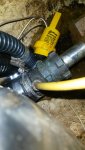
photo added now and will check out viv cox link thanks

I have the same and I found I could split my gland nut from the lock nut by using my anchor winch bar. This is flat plate about 40 mm wide and a meter long which I inserted in adjacent slots of the two nuts and worked one against the other with a twisting motion. They have been free ever since.. The rubber hose is not designed for resisting brute force.
 
I have the same and I found I could split my gland nut from the lock nut by using my anchor winch bar. This is flat plate about 40 mm wide and a meter long which I inserted in adjacent slots of the two nuts and worked one against the other with a twisting motion. They have been free ever since.. The rubber hose is not designed for resisting brute force.
Good point: The rubber hose should not be subjected to serious twisting, particularly if the boat is afloat..... :eek::eek::eek:
 
Top