OK to wire a single phase to a 3 phase adapter?

?loody hot out here in SC as well.
Very little wind.
Been out to the lagoon restaurants today on the RIB.
Huge danger of sunburn.
Nice to get back to the air con.

Not helping......

F9 on chimet.

I stayed at home having tripled my lines yesterday , and don’t have an anything met here but I did watch my wheely bin head off towards the next street.
 
Usually with a 3P connection with a nuetral and/or earth connection, the only issue with wiring say two phases (non grounded conductors) to a common neutral/earth (grounded conductor) would be if the phase loads were significantly out of phase (inductive/capacitive loads) and significantly different load currents, this will impact the neutral current in the conductor.

Generally, I would not be overly concerned myself and would do as others suggest.

The only thing I might check if possible is that the grounded conductor was at least the same size conductor as the phase conductor. Harmonics is another matter. Not sure if the following link will work but if so you can play around with the sliders, try sliding the phase shift to 90 degrees full right, which basically would be if the load on one phase was almost entirely resistive (say immersion heaters) and the other phase mainly inductive (motors, coils and the like) and you should see the neutral current rises above that carried by the single phase current:

https://demonstrations.wolfram.com/ACThreePhaseNeutralCurrent/

In reality though it is unlikely you will have purely resistive loads on one phase and purely inductive on the other with both at maximum current, so it should be fine to do as suggested. I have ignored harmonics which to marina electrical infrastructures I would suggest is 'usually' not that significant, as its generally all over the place anyway..
 
/pedant mode on/ 415V

I never understand why people (including all the warning signs) worry more about 415V than 240V. It only takes about 65V to kill you.

I was always told it was Amps that kill you, not volts. When I was an apprentice, we used to prank each other with hundreds of volts using the mega testers. Can't remember the details now, as I have long been out of the game, but I know it bloody hurt.
 
I was always told it was Amps that kill you, not volts. When I was an apprentice, we used to prank each other with hundreds of volts using the mega testers. Can't remember the details now, as I have long been out of the game, but I know it bloody hurt.
It’s the amps yes and the time. Megas (like electric fences) give a very short pulse.
The volts are a measure the “pressure” that makes the amps flow.
65v is enough to do that through your body if the conditions are right.
 
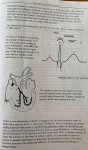
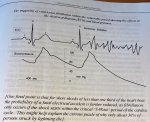
Interestingly, its not just the amps, its also the path the current takes through the body and the point on the cardiac cycle it first hits, the familiar cardiac curve has peaks and troughs identified as P Q R S T and if it hits you at the wrong point, there is a higher risk it will stop the heart. Cant remember which point, I will check my old text books when I get back to UK in a couple of weeks.

I do agree though you do need to take great care when dealing with line voltage (phase-phase) rather than phase voltage (phase-neutral). As we all know volts=amps x resistance, so if the resistance stays the same across the human body path to earth, the higher voltage will send a much greater current through the body. So don't mess with it unless you are confident you know what you're doing.
 
Interestingly, its not just the amps, its also the path the current takes through the body and the point on the cardiac cycle it first hits, the familiar cardiac curve has peaks and troughs identified as P Q R S T and if it hits you at the wrong point, there is a higher risk it will stop the heart. Cant remember which point, I will check my old text books when I get back to UK in a couple of weeks.....

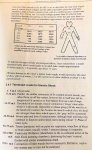
Just found my old course notes with some info on electric shocks that some may find interesting as follows:
 

Attachments

  • shock1.jpg
    shock1.jpg
    173.1 KB · Views: 11
  • shock2.jpg
    shock2.jpg
    83.1 KB · Views: 11
  • shock3.jpg
    shock3.jpg
    200.6 KB · Views: 9
Top