Oil extraction pump. Lidl, next Sunday

I’ve got one of these, they are great for transferring diesel from a can in the locker to the main tank while at sea. No more mess or spillages.
I last used mine yesterday to top up the 10l tank of my Chinese heater from a jerrycan of diesel, didn’t take long at all to transfer 10litres
 
All of these responses seems to ignore the suction line size. In a previous post I referred to my BMC 1.5 ltr diesel where the bore of the suction pipe is 3mm. I used a hand pulled suction pump (not a Pela) and, in the confines of my engine space, my arms suffered big time. It took just over an hour to empty one gallon (gallon - British made engine!). Whatever machine you use, you can only suck one atmosphere. Do the sums on pi r squared of the suction pipe bore radius.

I wonder if it is possible to blow the oil out. Seal onto the filler cap, apply air pressure and seal around the dip stick/hole with the suction pipe down into the sump.
 
Last edited:
All of these responses seems to ignore the suction line size.
.
.
Whatever machine you use, you can only suck one atmosphere. Do the sums on pi r squared of the suction pipe bore radius.

Are you quite certain and why would the limit be exactly 1 atm?

Water has low vapor pressure, but other substances such as oil have a much higher value. Cavitation won't happen until a much higher value with oil. I'd need to check some figures as oil temp. will be high, pipe diam. small but flow rate will be low. I still imagine negative pressure won't be as limited as you say, probably about 10 times that of water.
 
Last edited:
Because there's no such thing as "suction" ..... just the weight of air pressing down on the side that is not being "sucked". ;)

Richard

Yes, of course, I was thinking of Nett Positive Suction Head and pressure difference inside the pump needed to cause cavitation. Brain fade, too early in the morning. I was actually in the process of editing my post when I spotted your correction.
 
Last edited:
What I really want is a little pump like this but with very long extended cable clips to the battery, so I can use it right up forward on my water tank and right aft in my diesel tank. Or can one buy extendable crocodile clips?

No reason why you should not extend the cables but remember that the pump will be adversely affected by volts drop if they are not adequately sized . Very probably the cable supplied is on the light side so disconnect / cut off the existing cable and replace with some sized to limit volts drop over the longer length. Unless the manual states the current you may have to measure that in order to determine what size cable to use
 
Because there's no such thing as "suction" ..... just the weight of air pressing down on the side that is not being "sucked". ;)

Richard

I thought we killed this concept of "weight" in aprevious thread. What you mean is the " pressure"


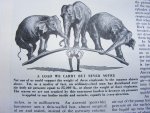
FWIW though the air pressure on your body is equivalent to the weight of three elephants ;)

DSCF1707.jpg
 
What I really want is a little pump like this but with very long extended cable clips to the battery, so I can use it right up forward on my water tank and right aft in my diesel tank. Or can one buy extendable crocodile clips?

I run mine off very long extended cables, it works just fine :) One point though, unless they've changed the design, the one I have can't be used for water.
 
Because there's no such thing as "suction" ..... just the weight of air pressing down on the side that is not being "sucked". ;)

Richard

I called at our local air equipment store for a vacuum gauge to be used on our CNC machining centres vacuum tables.

The assistant was a long time gone and eventually returned to ask for help from his boss. They returned together, somewhat embarrassed, and admitted they could not find one that read more than 30 inches of mercury.
 
Last edited:
Errrrrrr ..... most definitely not Vic. What do you think causes there to be any air pressure at all down here on the ground? ;)

Just like the March Hare, I always mean what I say. :)

Richard

So if you meant "weight" please quantify .

I know what the atmospheric pressure is in millibars , kilo-pascals or even pounds per square inch, but what is the "weight" in Newtons, or pounds if you prefer.?
 
I have had one for 3 or 4 years and therefore have made 3 or 4 oil changes. If the oil is up to maximum temperature it will empty the 10.5 litres from my D2-55 in about 25 mins.
The suction hose is a smaller diameter than the discharge, because the suction hose must fit inside the dip stick tube (in most cases) and this I think is the reason for its relatively poor pumping performance. I do not find it a problem; just switch it on and sit back and watch the dirty oil coming into the containers. I usually use 2 x 5 litre water bottles and therefore I have a good idea when the sump is empty. By jiggling the suction hose I can get a bit more out than if I switched it off when it started to speed up after initially losing suction.
I had to extend the cables to reach the batteries.

Michael.
 
So if you meant "weight" please quantify .

I know what the atmospheric pressure is in millibars , kilo-pascals or even pounds per square inch, but what is the "weight" in Newtons, or pounds if you prefer.?

But why would I need to quantify anything when the person I was quoting has already quantified it as 1 atm? :confused:

Weight is a measure of how strongly gravity acts on a quantity of matter so, if you image a small dish of water which is 1 square inch in area then you can visualise that there exists a column of air stretching dozens of miles upward directly above the dish which is being acted on by gravity. The weight of this column of air would be around 15 pounds-force or pounds as you expressed it. :)

Richard
 
But why would I need to quantify anything when the person I was quoting has already quantified it as 1 atm? :confused:

Weight is a measure of how strongly gravity acts on a quantity of matter so, if you image a small dish of water which is 1 square inch in area then you can visualise that there exists a column of air stretching dozens of miles upward directly above the dish which is being acted on by gravity. The weight of this column of air would be around 15 pounds-force or pounds as you expressed it. :)

Richard

And there I was thinking that it was the earth pushing up .....
 
But why would I need to quantify anything when the person I was quoting has already quantified it as 1 atm? :confused:

Yes, a pressure of 1atm!

Weight is a measure of how strongly gravity acts on a quantity of matter so, if you image a small dish of water which is 1 square inch in area then you can visualise that there exists a column of air stretching dozens of miles upward directly above the dish which is being acted on by gravity. The weight of this column of air would be around 15 pounds-force or pounds as you expressed it. :)

Richard

15 pounds on your square inch, in fact 15 lb on every square inch. In other words a pressure of 15 lbs per square inch.

But we wont fuss about it any more. Everyone knew what you meant really.
 
Last edited:
Top