Off-Centre Windvane Mounting?

Tim Good

Well-Known Member
Joined
26 Feb 2010
Messages
2,888
Location
Bristol
Visit site
Hydrovane say "yes mount it off centre no problem"
Windpilot say "no don't mount it off centre and if you have to then no more than 10cm"

Given that Windpilot is a servo pendulum setup, producing much more power to drive the main rudder, I'd have thought it would be much more suited to off-centre mounting. Clearly HV do work when off centre as they show on their site repeatedly.
 
Off centre can work on a boat that's predominantly rolling down wind, and as this is the case with a lot of tradewind cruisers, most deem it to be a success.

But it's different when you are reaching/beating - here when you are on the tack with the self steering vane upwind, the rudder will be less immersed. Whether this is a problem depends on how much of it you plan to do and the geometry of your transom, etc.
 
Clearly HV do work when off centre as they show on their site repeatedly.

What HV put on their site should be taken with a pinch of salt.
Prior to deciding on which windvane to get I spoke to quite a few HV owners. Not all were all the complementary about the thing and said that while off-center works, there are limitations and it is not always that reliable (can round up), especially when beating to windward.

FWIW: got a Monitor (servo-pendelum) in the end.
 
Last edited:
Very happy with our hydrovane.... its taken us to the Windies and back!

Attention to sail trim makes it easy work.

The company are small and will happily spend time chatting before, during and after installation so you get the most from the kit. As you may tell, I'm impressed!

Have also fitted a bracket, handle and tiller pilot aft for when engine is on in light airs.

:encouragement:
 
There's very few people who have used different windvanes on the same model of boat in similar circumstances.

Therefore when people said their windvane worked 'well', it usually means it worked well enough that they felt the huge outlay of money wasn't badly spent, rather than it worked well on any comparative or absolute scale.

But sail a few thousand miles with lots of different ones and you learn that the Navik is (was) way ahead in a league of it's own (the only trim tab to servo pendulum gear ever made), The Monitor is the best currently available in terms of strength, durability and performance, and then there's the Hydrovane.
 
And you're happy?

Took me a few months to fully get to grips with it, but it does what it's supposed to.
Took me cross-channel in a F7 (beam reach) without blinking.

It was a toss-up between Aries and Monitor.
Settled on the Monitor because it seemed more robust to me. And should anything ever happen to it, it's just stainless and can be welded.

PS: boat's a 43' 13 ton deep-keeler with skeg rudder.
 
What boat and disp? Mines 21T and 43ft which is why I'm worried about a HV not being able to handle it in all but good conditions with the boat overly de-powered

Smaller. Moody 33 about 12 tons all up including wifes shoes. Should handle yours though.

As I mentioned, worth a call. It is so simple to use, takes all of 2 minutes to get the knack.

I think you see already that opinions about windvane steering are, well, varied! At the end of it all, any of the most common will do the job and a great investment. Having hand steered across the Atlantic and back with my wife and a broken electric autopilot on another occasion, they are worth their weight in kryptonite. :) For some of that we did have a couple of friends to help but wouldn't be without the Hydrovane now.
 
There's very few people who have used different windvanes on the same model of boat in similar circumstances.

Therefore when people said their windvane worked 'well', it usually means it worked well enough that they felt the huge outlay of money wasn't badly spent, rather than it worked well on any comparative or absolute scale.

But sail a few thousand miles with lots of different ones and you learn that the Navik is (was) way ahead in a league of it's own (the only trim tab to servo pendulum gear ever made), The Monitor is the best currently available in terms of strength, durability and performance, and then there's the Hydrovane.

auto helm works this way with the added benefit that the vane is connected by bowden cable to the tab so can be remotely located. You can also put the tab on your own rudder if you're transom hung and don't fancy a second rudder just behind the first.
 
>Clearly HV do work when off centre as they show on their site repeatedly

Yes, ours was in the centre but we saw a number that were offset when we were long distance sailing.

>What HV put on their site should be taken with a pinch of salt. Not all were all the complementary about the thing and said that while off-center works, there are limitations and it is not always that reliable (can round up), especially when beating to windward.

In Lagos Portugal a boat we knew a boat that fitted an offset Hydrovane I went out with them with them the first because the key to any vane working is you have to balance the boat with the sails giving a neutral helm. We sailed fine on every point of sail once we got the boat balanced that took some time. I also met number of Hydrovane owners who complained they didn't work well so I told them to balance the boat and how, they all changed their mind. My bet is the people who complained didn't know how to balance their boat and were never told.

I stopped counting the number of times I've seen boats not balanced and with weather helm, which slows the boat down, when I reached 50.
 
I have had both; I fitted a Monitor to my Nicholson 32, my current boat, Rustler 36, had a Hydrovane when I bought her. The penultimate owner was a long distance cruise, I guess he must have sailed some 10s of thousands of miles with the Hydrovane, I did about 20K with the Monitor.

The Hydrovan is mounted offcentre, as the Rustler has a transom hung rudder, and it cannot really be centre mounted,. Seems to work OK, even when healed. I use the auxiliary rudder connected to the Autohelm when motoring and it is surprisingly effective, even down to tickover - say less about 1.5kns.

Both took some getting used too. Sails have to be well balanced and trimmed. The mast/rigging has to be adjusted to give minimum weather helm.

However, if I was starting from scratch,I 'think' I would go for the Monitor.
 
auto helm works this way . . .

No, Autohelm is a vane to trim tab to auxiliary rudder (or transom hung main rudder) system.

It lacks the power of a servo pendulum. It's sold for those with hydraulic steering or really difficult centre cockpit configurations that can't fit a Monitor.

The Navik combined the sensitivity of the vane to trim tab with the power of a servo pendulum to main rudder.
It was a shame Plastimo never allowed it to be refined to eliminate a couple of issues that were easily sorted.
Or that no one has made its big brother.
 
Don't know what your long term plans are with the self steering but these are a couple of comments from ARC participants published in this months YM

"The Monitor windvane worked well on a reach, but was sloppy downwind, meandering badly in the swells. We had to furl away some Genoa to balance it, losing a knot and a half and the boat rolled more. Hand steering was the better option." - Beneteau First 43.5e

"Our Windpilot struggled downwind in bigger seas, but in flatter water it was very accurate. We often hand steered at the same time to help predict the swells." - Marieholm 32e

"We hand steered in big waves, during squalls, or with the kite up, but the Hydrovane did the rest. It was the best bit of kit on the whole boat. It just works so well. It worked much better than the electric autopilot, with only a 5-10 degree variation either side of our course." - Ovni 395


As almost all contributors to the thread have said, boat balance is the key. Personally, I replaced an Aries with a Hydrovane - but for practical reasons rather than performance reasons. Given the Op's weighty displacement, I would buy a new Hydrovane with the bigger rudder as it was up speced to accommodate heavier displacement yachts. Off centre shouldn't be an issue with the correct length shaft for the installation.
 
"Our Windpilot struggled downwind in bigger seas, but in flatter water it was very accurate. We often hand steered at the same time to help predict the swells." - Marieholm 32e

"We hand steered in big waves, during squalls, or with the kite up, but the Hydrovane did the rest. It was the best bit of kit on the whole boat. It just works so well. It worked much better than the electric autopilot, with only a 5-10 degree variation either side of our course." - Ovni 395

Without wishing to appear rude, I can't shake the impression that those two above haven't quite figured out how a windvane actually works.
It steers relative to a wind angle whatever your 'course'.
 
No, Autohelm is a vane to trim tab to auxiliary rudder (or transom hung main rudder) system.

It lacks the power of a servo pendulum. It's sold for those with hydraulic steering or really difficult centre cockpit configurations that can't fit a Monitor.

The Navik combined the sensitivity of the vane to trim tab with the power of a servo pendulum to main rudder.
It was a shame Plastimo never allowed it to be refined to eliminate a couple of issues that were easily sorted.
Or that no one has made its big brother.

There is no reason for a trim tab (really its a servo tab not a trim tab) to be any less powerful than a servo pendulum. If in doubt take a look at the Bristol Brabazon
.

Lot's of current aircraft use servo tab powered flight controls ;-)

Key points are mass and hydrodynamic balance of the tab and appropriate sizing.
 
Key points are . . .

Actually the key point is that the AutoHelm and the Navik are as different as chalk and cheese. There is no trim tab system ever made that has the power of a servo pendulum gear. That's why (apart from a few specialist installation reasons), the trim tab system was obsoleted by Hasler's development of the Servo Pendulum gear in the 1960s.
 
Actually the key point is that the AutoHelm and the Navik are as different as chalk and cheese. There is no trim tab system ever made that has the power of a servo pendulum gear. That's why (apart from a few specialist installation reasons), the trim tab system was obsoleted by Hasler's development of the Servo Pendulum gear in the 1960s.

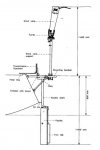
Screen Shot 2015-03-06 at 20.28.29.jpg
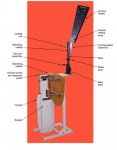
Screen Shot 2015-03-06 at 20.30.00.jpg
 
Top