Novice boat owner advice for dehumidifier

A plus for the engine bay tubular heater. Although as far as dehumidifier goes I personally have found that good ventilation beats my humidifier hands down in the prevention of black mold. Unfortunately the choice is either or.
I never had a dehumidifier on my last boat of 8 years and mould free throughout that time - what I did have was the unibond aero 360 moisture absorber which needed changing out now and again and the odd disposable moisture absorber.
As @BruceK says good ventilation helps.

Like the OP I did'nt live nearby and the thought of the anything going wrong could end up disastrous - I Think James Barke of boats.co.uk had a project Sealine in that apparently the dehumidifier had caught fire.

Here -- SOLD 2004 Sealine S38 - Boats.co.uk
 
Last edited:
The Meaco DD8L has this, but for me the 2nd priority after being desiccant, is that it has a humidistat - not a timer.

Leaving it on permanently, or too long on timer, dries things too much, leading to e.g. wood or varnish cracking or crazing. I skipped two potential boat purchases because of this (although in hindsight, things could have been repaired easily).

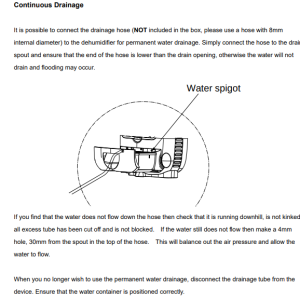
Drainage as said, is key - you'll fill up the built in container in a day or two, and no benefit thereafter.

Similarly, heaters e.g. tubular ones must be on a thermostat. Ideally with alarm e.g. via SMS when power goes off.
 
Last edited:
Depending on the boat, this does require the batteries leaving switched on so that the shower sump pump (activated by a float switch when the level rises) pumps the water out of the boat, otherwise it just overflows or backs up and you'll gradually fill the bilges or flood the heads.

Sinks are generally better as they usually drain just using gravity through a skin fitting above the waterline.

Also, and this might be a little obvious, but leave all the interior doors open, and ideally cupboard doors, and the fridge door (fridge switched off) so that it doesn't go mouldy.
I leave the electrics on.
 
I never had a dehumidifier on my last boat of 8 years and mould free throughout that time - what I did have was the unibond aero 360 moisture absorber which needed changing out now and again and the odd disposable moisture absorber.
As @BruceK says good ventilation helps.

Like the OP I did'nt live nearby and the thought of the anything going wrong could end up disastrous - I Think James Barke of boats.co.uk had a project Sealine in that apparently the dehumidifier had caught fire.

Here -- SOLD 2004 Sealine S38 - Boats.co.uk
It's fine if you don't mind a cold boat.

I used a desiccant dehumidifier and left the beds made up for impromptu trips to the boat. I would use the boat every month of the year when I was in the UK. Frost protection was never a worry either because of the background heat from the dehumidifier. It lived there from equinox to equinox and cost about £25/month in electric.

I'd put the cabin heater on when we arrived but the boat never felt cold to its bones.

So if mould is the only problem you're trying to fix then fine.

For a 365 days available boat the dehumidifier wins.

I've never bothered with engine bay heaters. As long as you keep the boat in the water, the water is warm enough to keep the engine bay above freezing. Different if you are out of the water, but taking a boat out in the winter when maintenance is cold and miserable seems the wrong way round to me. I would always take the boat out in the summer, polish the topsides, paint the sterngear, change the anodes and re launch 48 hours later.
 
Actually the instructions linked to doesn’t say a hole is essential, but only IF the water is not flowing freely
Correct. I have the Meaco DD8L, been using it for years, always drained fine without sticking a hole in the pipe.

Mine drains into the galley sink so that I don't need to leave the battery isolators turned on.
 
It's fine if you don't mind a cold boat.

I used a desiccant dehumidifier and left the beds made up for impromptu trips to the boat. I would use the boat every month of the year when I was in the UK. Frost protection was never a worry either because of the background heat from the dehumidifier. It lived there from equinox to equinox and cost about £25/month in electric.

I'd put the cabin heater on when we arrived but the boat never felt cold to its bones.

So if mould is the only problem you're trying to fix then fine.

For a 365 days available boat the dehumidifier wins.

I've never bothered with engine bay heaters. As long as you keep the boat in the water, the water is warm enough to keep the engine bay above freezing. Different if you are out of the water, but taking a boat out in the winter when maintenance is cold and miserable seems the wrong way round to me. I would always take the boat out in the summer, polish the topsides, paint the sterngear, change the anodes and re launch 48 hours later.
Exactly that - Although I do lift out generally in Jan /Feb but for only a short period of time then back in the water and yes the boat is warmer in the water.

I put 2 of the absorbent moisture catchers in my forward berth this April and didn't need changing until mid September cost £1.58p

I have just bought 10 of these for £7.90p yes 79p per unit - if I went through 20 of these in the winter period then it would be £15.80p in other words a lot less cheaper than electric which doesnt matter but what does matter is not the worry of is the boat ok - which is the primary concern (but this is only my opinion)
 
Last edited:
Exactly that - Although I do lift out generally in Jan /Feb but for only a short period of time then back in the water and yes the boat is warmer in the water.

I put 2 of the absorbent moisture catchers in my forward berth this April and didn't need changing until mid September cost £1.58p

I have just bought 10 of these for £7.90p yes 79p per unit - if I went through 20 of these in the winter period then it would be £15.80p in other words a lot less cheaper than electric which doesnt matter but what does matter is not the worry of is the boat ok - which is the primary concern (but this is only my opinion)
I have had the same 45 ft mobo for 17 years and it is dry as a bone.
I use a Meaco DD8L Sat on worktop with drain to galley sink regularly check and clear the air filter to remove dust build up.
The Meaco is on year round low setting also on humidity stat.
In the winter I use two small oil filled 240v radiators to keep temp up probably mid Nov to early March on a low setting.
The dehumidifier has a fan for some air movement and pushes out a little heat you need the oil filled rads to keep the temp above single figures C and to prevent freezing keep all interior doors and engine room entrance open.
 
I have had the same 45 ft mobo for 17 years and it is dry as a bone.
I use a Meaco DD8L Sat on worktop with drain to galley sink regularly check and clear the air filter to remove dust build up.
The Meaco is on year round low setting also on humidity stat.
In the winter I use two small oil filled 240v radiators to keep temp up probably mid Nov to early March on a low setting.
The dehumidifier has a fan for some air movement and pushes out a little heat you need the oil filled rads to keep the temp above single figures C and to prevent freezing keep all interior doors and engine room entrance open.
Had my Meaco DD8L for years, and didn't know it had one of those. Right, little job for this weekend then... 😳
 
For little money Amazon sell little battery powered air thermometers/ humidity monitors so you can see what you are achieving in air drying and temp.
If you go too low on air drying you can shrink the wood and the joints on joinery.
I saw a French trawler yacht mobo where the owner used no heating and no dehumidifier so it felt quite damp, smelt damp mouldy inside in the winter and the finest quality chipboard galley units all swelled and split the joints on the doors , I assume the carcasses of the units were as bad.
So there is a happy medium, dried adequately but not too much and warm enough in the winter.
 
So there is a happy medium, dried adequately but not too much and warm enough in the winter.
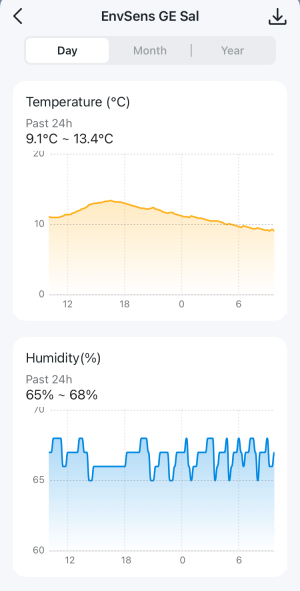
Agreed, and remote monitoring is easy and cheap these days. I use Tapo sensors connected to a MiFi on board which are inexpensive and can facilitate heater switching automatically as well. The graph shows the past 24hrs in our saloon. The Meaco dehumidifier is on its lowest setting 24/7 to produce this environment on board which seems to keep the boat warm and dry for little cost.

1761209460557.png
 
Top