New fridge freezing pipe to fridge

We still do not know what gas is being used though, and thus an assumption the correct gas has been used.

Most likely overcharged, but possibly an incorrect refrigerant.

R134a, R407C and R410A are all in common use on boat AC and fridge systems (at least for the time being, but that's another subject entirely), and they should never be swapped. However, it is simple for a fridge engineer not paying attention to pick up the wrong cylinder from the back of his van, especially if this is recovered or decanted refrigerant.

+ 1 for proper evacuation though
 
The system was evacuated when the new evaporator plate was fitted, and
the invoice states Freon R134A.

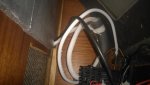
DSC_0323.jpeg
This is a picture of the pipe to/from compressor /evaprator plate
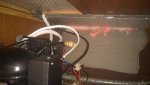
DSC_0324.jpeg
When the thermostat is trned down to 30% the ice is gone
 
Trying to work out what pipe is which. do you have any more close up photos. Looks like the tube going in to the evaporator plate where the capillary joins is also frozen up.

This could be due to water freezing in the capillary. Whereas overcharge will cause the refrigeration effect to continue after the evaporator plate, a restriction / partial blockage in the capillary will cause the suction pressure to reduce and with it the evaporation temperature throughout the low side of the system. Entrained moisture freezes at the throat of the capillary where it ends and this can then build up to form a blockage, and with it your symptoms.

Is the cold box getting down to a reasonable temperature ?

Do you know how long the evacuation phase lasted ?

R134a is the correct gas to be used, but the term Freon is incorrect - Freon was Du Pont's trade name for R12. That said if they had charged it with R12 which is highly unlikely, it would work the same as it should with R134a.

The thermostat on most fridges reduced setting means warmer cold area. So reducing below 30% will see the demand temperature rise, hence the box is cutting out the compressor earlier.

My feeling here is a blocked capillary. The only way to deal with this is to remove the gas, purge the system with dry nitrogen, then evacuate overnight, then recharge. However, if you have some of the gas removed and the system then starts working properly then this would prove the overcharge. Easy enough to pull out through the 1/4" schraeder valve.
 
Last edited:
Top