My New Project: 19' Hurley Alacrity 'Artful'

Just a point, around the UK a ' yacht rigger ' is a specialist.

You can get similarly qualified ( most of the time, but check among local users if poss - for 20' should be fine ) riggers in decent chandleries doing the same job for less as their livelihoods don't depend on your personal dosh to feed their family !

For larger boats yes independent riggers.
 
Its worth pointing out that it is possible to replace the the shrouds yourself using STA-Lok or Norseman swageless fittings. Very easy to do, however they are slightly more expensive than the swaged fittings.
 
You can get rigging made up to length at Jimmy Green's for DIY installation. Some people get them slightly oversizes with a swaged on fitting at one end and a loose Norseman fitting for the other so that they can be cut accurately when fitting. They don't need to be cut accurately to size, there's always some adjustment in the bottle screws.
 
So I've been trying to make a ball park costing of refitting Artful to a nice enough standard to use. :sleeping: The task list is rather large! one priority would be to paint the hull as it is past its best and I also would like to repair / paint the cockpit and cabin exterior as there are crazing on the gelcoat. I have been reading posts on here and they have confused the living daylight out of me. What paint should I use?

However so far I have got these figures, let me know if I've missed anything.

Task Cost
Antifoul £40.00
Topside paint £40.00
Plywood sole £66.29
plywood for carpentry £106.95
Rubbing Strake £100.00
Epoxy £70.00
Epiphanes Varnish £25.22
Non slip paint £14.00
Isolator £14.95
Switch panel £18.95
led lighting £10.00
Nav lights £60.00
battery £67.99
Wire to wire £20.00
bilge pump £15.49
Flexible solar panel £119.00
butyl tape £10.00
Rigging ...
Total £788.84

As of just now this is still just fantasy as she's still sitting on her mooring and all that I have done to her is give the washboards and cockpit hatches a good sand down and varnish. Oh and manually bailing her out every so often.. pita!
 
So I've been trying to make a ball park costing of refitting Artful to a nice enough standard to use. :sleeping: The task list is rather large! one priority would be to paint the hull as it is past its best and I also would like to repair / paint the cockpit and cabin exterior as there are crazing on the gelcoat. I have been reading posts on here and they have confused the living daylight out of me. What paint should I use?

However so far I have got these figures, let me know if I've missed anything.

Task Cost
Antifoul £40.00
Topside paint £40.00
Plywood sole £66.29
plywood for carpentry £106.95
Rubbing Strake £100.00
Epoxy £70.00
Epiphanes Varnish £25.22
Non slip paint £14.00
Isolator £14.95
Switch panel £18.95
led lighting £10.00
Nav lights £60.00
battery £67.99
Wire to wire £20.00
bilge pump £15.49
Flexible solar panel £119.00
butyl tape £10.00
Rigging ...
Total £788.84

As of just now this is still just fantasy as she's still sitting on her mooring and all that I have done to her is give the washboards and cockpit hatches a good sand down and varnish. Oh and manually bailing her out every so often.. pita!

It depends just how you intend to use her. If it's weekend days and no need for lights while moored then you can drop items like the solar panel, switch board and isolator, or at least go have some fun first.
 
Couple of links that might be of help: www.sealsdirect.co.uk and S3i who can help with reasonably priced stainless rigging. I have used both and got good service. The seals outfit has a boaty section.
Have fun
DW

Edit: I missed the ref to seals direct on an earlier page. While I always thought Jimmy Green was good value, I found S3i a lot cheaper for ss fittings.
 
Last edited:
I think you should include a radio if you've not already got one and instruments maybe just depth. Or NASA do a combined log and depth.
I spent £1000 fitting out a Leisure 17 10 years ago.
 
For paint suggest you use International Toplac and Prekote undercoat. The secret to good finish is in the preparation. Lots of filling and fairing to get a good base finish. Applying the topcoat is easy and quick in comparison. Your budget on materials for this is light as you will need filler, sanding, thinners etc. Painting decks and cockpits apart from non slip areas is a real challenge as to do it properly you need to remove everything first, and then all the angles and curves make getting a good finish really difficult.

Suggest you buy the PBO project book on renovating older boats. This will cover most of what you want to do, and has a good section on painting in particular.
 
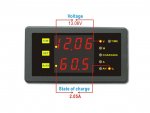
I have started on the electrics as there is currently nothing in place. So my latest purchase is a new bilge pump / float switch And switch for the pump I have wired them all up and applied heat-shrink ready for fitting. I have also purchased a cheap battery monitor via ebay. It has a built in shunt and although Im sure some of you will be against be buying such cheap crap, it will do me for just now :) 90xxc_voltage_state_of_charge-76341880.jpg
http://www.ebay.co.uk/itm/181289920812?_trksid=p2057872.m2749.l2649&ssPageName=STRK:MEBIDX:IT
I am a total beginner when It comes to electrics so my question is how do I wire this in will I need a bus-bar? and should I wire my bilge pump to this or directly to the battery? :confused:
 
I have started on the electrics as there is currently nothing in place. So my latest purchase is a new bilge pump / float switch And switch for the pump I have wired them all up and applied heat-shrink ready for fitting. I have also purchased a cheap battery monitor via ebay. It has a built in shunt and although Im sure some of you will be against be buying such cheap crap, it will do me for just now :) View attachment 57417
http://www.ebay.co.uk/itm/181289920812?_trksid=p2057872.m2749.l2649&ssPageName=STRK:MEBIDX:IT
I am a total beginner when It comes to electrics so my question is how do I wire this in will I need a bus-bar? and should I wire my bilge pump to this or directly to the battery? :confused:

There are 2 very helpful pictures on the eBay auction page.
The ones that are schematics of "Charging" and "Discharging" configuration.

5 minute answer:
Connect battery charger + and load(rest of boat) + to meter output +
Connect battery charger - and load(rest of boat) - to meter output -
Connect battery + to meter input +
Connect battery - to meter input -
No need for external shunt, it has one built into it.


NOTE it has a 30A max (charge/discharge) there is no indication of what happens if you exceed this, it might just read 30A, it might flash, it might go poof.
 
OOps, missed a few questions...
Buss bar? That depends on how many circuits you have wired (or plan to wire), less than 5 and a buss bar is a bit of a luxury, more than 6 and you will really wish you had one (2 really one for + and 1 for -)

Wire bilge pump to battery or other side of meter?
Well, theres a whats your favourite colour question...
If you wire it straight to the battery you have fewer things between the pump and its power source to go wrog, leaving the pump unpowered when you want it. But that would mean that any power the pump uses is not metered, and in fact would confuse the meter's AmpHour reading.
 
Having spent a lot of my sailing time on boats with little or no electrics, the idea of a battery monitor is a bit over the top. Keep it simple.
 
NOTE it has a 30A max (charge/discharge) there is no indication of what happens if you exceed this, it might just read 30A, it might flash, it might go poof.
Thanks for the advice. Being a small boat, I thought Id never exceed 30A. hopefully I'll never find out if it goes poof!

OOps, missed a few questions...
Buss bar? That depends on how many circuits you have wired (or plan to wire), less than 5 and a buss bar is a bit of a luxury, more than 6 and you will really wish you had one (2 really one for + and 1 for -)

Wire bilge pump to battery or other side of meter?
Well, theres a whats your favourite colour question...
If you wire it straight to the battery you have fewer things between the pump and its power source to go wrog, leaving the pump unpowered when you want it. But that would mean that any power the pump uses is not metered, and in fact would confuse the meter's AmpHour reading.
I think I'll try and do without the Busbar, try and save some space :) Have not quite made my mind up about the bilge pump, my thinking was that it would be better to have it on its own circuit directly to the battery to ensure it was always ready.

Having spent a lot of my sailing time on boats with little or no electrics, the idea of a battery monitor is a bit over the top. Keep it simple.
You may be right! but hey its my first boat so Im allowed to make mistakes and go over the top :rolleyes:
 
I don't think a battery condition meter is in any way OTT, in the 21st Century one needs to know where one stands re electrical power !

My 22' boat started off with a total loss battery system, we had to take it to garages to get recharged in the 1970's.

Now I have a solar panel which keeps it topped up nicely, and a charger on the outboard I only use if motoring for long calm trips with the autohelm on.

The battery isn't vital, doesn't start the engine or anything and I have charts and eyes if the plotter goes dead, but the electrics are jolly handy, not least for depth sounder - for contour navigation purposes - and compass light for the same.

I started off with a Smiths battery condition meter from a Ford Escort Mk1, now still have that and a NASA battery monitor and use them both.

As for the bilge pump, I'd go for a Whale Supersmart 1100GPH job as it has a solid state sensor, I always found conventional float switches very unreliable.

And yes I'd wire it independent of the switch panel main on / off switch, but still have a fuse or circuit breaker to pull in case the thing went mad drawing tons of power and / or overheating !
 
Last edited:
Sorry, a bit hasty on the OTT bit. Just I was thinking that on ones first boat, the priority is the saily bits, rather than the toys... But then, the attraction to add tech bits is pretty strong.
Have fun.
DW
 
I agree with you in principle, apart from cabin & nav lights the only tech bits needed - especially when learning, and not being over-adventurous - are a depth sounder and a compass with a light...
 
We had an alacrity 19 years ago and it was an awesome little boat. It was really seaworthy and sailed very well. It would surf easily downwind in strong winds and regularly exceed hull speed embarrassing bigger, heavier boats. Ours had a cold moulded ply hull and i want aware that they did a grp version although her bigger sister the vivacity 20 was grp. Worth checking the hull for weak spots though as ours did split once falling off a big wave. It was easy to repair though. The rudder fixings are worth checking as she sails with a fair bit of weather helm and there are big loads on the large rudder. I don't remember the cockpit hatches ever having a proper seal, i think they were never particularly water tight. Good luck with your project, it would be great to see one of these awesome boats restored to her former glory.
 
Whereabouts are you? Or more specifically, whereabouts is the boat?

Sounds like you're getting lots of advice so here's mine. I did a lot of work to my Corribee last year and learned a lot..:

Focus on the stuff that needs doing rather than the stuff you can do. Headlining and electronic goodies are pretty much the least important stuff compared to getting the boat seaworthy.

If you start one task, see it through to completion. It's easy to distracted on to something else and you end up with 10 different jobs and none of them get finished. I made a list and ticked stuff off as I went.

Don't think about the money - small boats aren't worth much, so you'll get no return for your outlay. But small boats are a lot of fun and cost almost nothing to own. You also get a lot of experience in how to fix, maintain and fine tune your boat which is worth more than anything.
 
Top