

Hurricane
Well-Known Member
Friedrichshafen is the home of MTU Engines - the second largest employer in the region. The first being ZF Gearboxes so you can see that beautiful part of Germany is a special place for marine engineering.
So, why was I there?
Most on this forum will already know that last year we bought a new Princess 67.
She's fitted with twin MTU CR 2000 8V engines and at 1200 hp, I wanted to know as much as I could about these fabulous machines. Apart from a couple of minor electronic warnings, these engines have performed perfectly since we took delivery last April.
Anyway, when I was asked if I would like to go on a service course at the factory, you can imagine that "wild horses couldn’t keep me away".
So, while the UK was under a layer of snow, I was away in the MTU factory at Friedrichshafen.
MTU offer these courses to owners and skippers who want to have a good understanding of the basic operation of their engines. The courses last four days and every aspect of a specific engine range is covered. As leisure boaters, our interest is in the new common rail 2000 range which like most of their models is a V format engine. This range of common rail engines goes up to about 2000 hp but the 2000 doesn’t stand for the horsepower – it’s the approximate size of each cylinder (actually about 2.2 litres each). The difference between the models in the range is the number of cylinders. For example, my engines are 1200 hp and are V8s which means that they are about 18 litres each!!
It seems that the larger end of the marine leisure boating matket would use this CR 2000 model.
So, here are some pics.
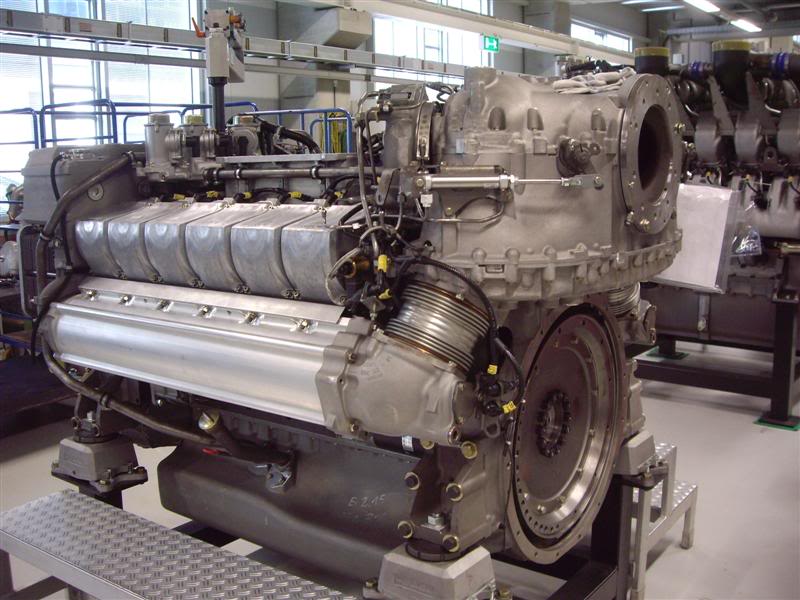
First the CR 2000 – this one is the 16V version.
My 8V engines only have 2 stage turbos whereas the 16V has 3.

They didnt have any 8Vs in the training workshop so here's a pic of mine actually fitten in the boat.

The courses cover interesting introductions to other ranges of MTU engines whilst focusing on the running and maintenance of your own specific machines. We also had a tour of the actual factory – sorry, I wasn’t allowed to take any photos inside, due mainly to their involvement in military designs, but I was allowed to photograph the engines in the Training Centre. I took loads of pics of the CR 2000 from various angles – might be useful later. At the end of the course, you get an MTU qualification that enables you to service your own engines.
Here's some other models - it seems to me that mine were the smallest ones that they make!!


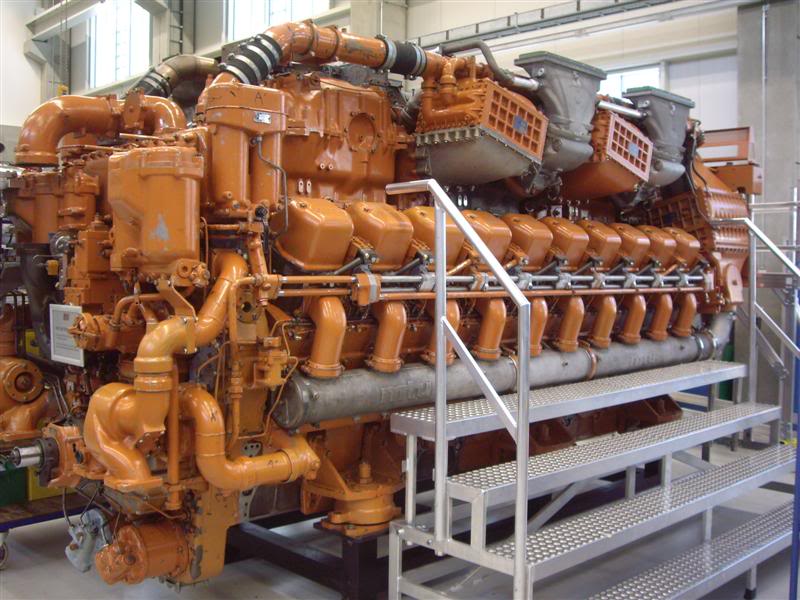
And this big bugger - about 20 of these each year.


And Gas engines for power stations


And this one is specially designed for local railway systems - I believe that there are over 800 of these running around the UK rail network.

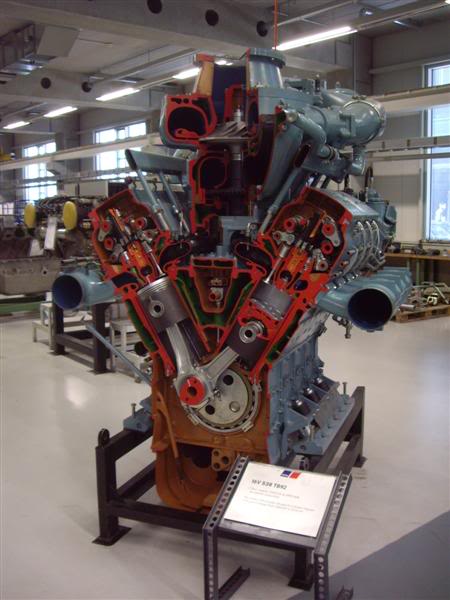
And this special cut away one is great for training - actually, the product/model was designed just after the war and is still in production.
The thing that really impressed me was the robustness of the equipment which is very apparent when you look at the service intervals. Typically, if you use the lubricants, MTU recommend oil changes only every 2 years or 500 hours. In reality, the requirement for the first service is usually after the engines initial warranty has expired. I’m quite a “hands on” person so engine servicing without invalidating the warranty was very appealing. In fact, my new qualification even covers me for resetting the valve clearances when they are due at 500 hours!!!
Anyway enough for the moment - I have some more specific technical stuff/photos - if you are interested I'll keep the thread going.
So, why was I there?
Most on this forum will already know that last year we bought a new Princess 67.
She's fitted with twin MTU CR 2000 8V engines and at 1200 hp, I wanted to know as much as I could about these fabulous machines. Apart from a couple of minor electronic warnings, these engines have performed perfectly since we took delivery last April.
Anyway, when I was asked if I would like to go on a service course at the factory, you can imagine that "wild horses couldn’t keep me away".
So, while the UK was under a layer of snow, I was away in the MTU factory at Friedrichshafen.
MTU offer these courses to owners and skippers who want to have a good understanding of the basic operation of their engines. The courses last four days and every aspect of a specific engine range is covered. As leisure boaters, our interest is in the new common rail 2000 range which like most of their models is a V format engine. This range of common rail engines goes up to about 2000 hp but the 2000 doesn’t stand for the horsepower – it’s the approximate size of each cylinder (actually about 2.2 litres each). The difference between the models in the range is the number of cylinders. For example, my engines are 1200 hp and are V8s which means that they are about 18 litres each!!
It seems that the larger end of the marine leisure boating matket would use this CR 2000 model.
So, here are some pics.
First the CR 2000 – this one is the 16V version.
My 8V engines only have 2 stage turbos whereas the 16V has 3.
They didnt have any 8Vs in the training workshop so here's a pic of mine actually fitten in the boat.
The courses cover interesting introductions to other ranges of MTU engines whilst focusing on the running and maintenance of your own specific machines. We also had a tour of the actual factory – sorry, I wasn’t allowed to take any photos inside, due mainly to their involvement in military designs, but I was allowed to photograph the engines in the Training Centre. I took loads of pics of the CR 2000 from various angles – might be useful later. At the end of the course, you get an MTU qualification that enables you to service your own engines.
Here's some other models - it seems to me that mine were the smallest ones that they make!!
And this big bugger - about 20 of these each year.
And Gas engines for power stations
And this one is specially designed for local railway systems - I believe that there are over 800 of these running around the UK rail network.
And this special cut away one is great for training - actually, the product/model was designed just after the war and is still in production.
The thing that really impressed me was the robustness of the equipment which is very apparent when you look at the service intervals. Typically, if you use the lubricants, MTU recommend oil changes only every 2 years or 500 hours. In reality, the requirement for the first service is usually after the engines initial warranty has expired. I’m quite a “hands on” person so engine servicing without invalidating the warranty was very appealing. In fact, my new qualification even covers me for resetting the valve clearances when they are due at 500 hours!!!
Anyway enough for the moment - I have some more specific technical stuff/photos - if you are interested I'll keep the thread going.
Last edited:


