Mobile phone as GPS data source?

Boreades

Well-Known Member
Joined
8 Sep 2003
Messages
5,040
Location
Boat:Plymouth, Me:Not Boat
Visit site
I've been frustrated by an aged Garmin GPS65 unit that seems to be dying a death after 18 years of solid and reliable duty. Bit of a bugger, as I've just bought a VHF DSC radio that wants a GPS input to make it work properly. Put off by the price of a new marine GPS receiver, I've been playing with a handheld Garmin GPSMap76 I had spare that has an NMEA ouput.

On deck in open air, no great problems, it eventually picks up seven or more satellites with good signal strength. But as soon as I try it below decks next to the new VHF, the signal strength drops rapidly and eventually it looses its position fix.

But strangely my new Sony mobile, sitting right next to the Garmin, picks up 21 sats and gets an instant position fix. Wow! No doubt the GPS chipsets used by mobile phones is advancing fast, are more sensitive, and use less power than a old dedicated GPS receiver.

So I'm wondering, has anyone found a way to use a USB connection to get a mobile phone GPS signal to their laptop or tablet, to use with nav charts? Long term I will get a new dedicated 12v GPS receiver with the SIRV4 chipset, and use one of Angus' excellent YAPP. But this would be a great stop-gap and/or emergency backup.
 
Before anyone points out the bleeding-obvious, I'll point it out myself. The "half-empty" response should be "what's the point of a GPS that only works close to shore-based mobile phone coverage?". The "half-full" response will be "if you are close enough to shore to get a GPS signal this way, and your main GPS is not working, be glad of any GPS data at all"
 
Lots of mobile phones have a proper GPS chip built in. Some also use the phone signal to speed up the initial position, but with a full GPS they will work outside phone range.
Beware some phones have no GPS and can only get a rough position from the phone towers, but these days that is rare except in the cheap models.

The new GPS chips are much better than the old versions. They will even get an ok fix inside my aluminium boat. Its a pity marine GPS unit often lag behind with old, poor, chipsets at 10x the price.

There are lots of cheap units with up to date chipsets that will feed a VHF.
 
Last edited:
There's an app for that. Actually several, android and iphone, but you have to pay a bit for them. You connect the phone via bluetooth, an existing wireless network or an ad hoc wireless connection to the laptop and away you go. Search in the android or itunes store for something like "gps nmea". No personal experience of any of them since I plan on writing one myself. Eventually.
 
Lots of mobile phones have a proper GPS chip built in. Some also use the phone signal to speed up the initial position, but with a full GPS they will work outside phone range.
Beware some phones have no GPS and can only get a rough position from the phone towers, but these days that is rare except in the cheap models.

The new GPS chips are much better than the old versions. They will even get an ok fix inside my aluminium boat. Its a pity marine GPS unit often lag behind with old, poor, chipsets at 10x the price.

There are lots of cheap units with up to date chipsets that will feed a VHF.

Examples please?
 
There's an app for that. Actually several, android and iphone, but you have to pay a bit for them. You connect the phone via bluetooth, an existing wireless network or an ad hoc wireless connection to the laptop and away you go. Search in the android or itunes store for something like "gps nmea". No personal experience of any of them since I plan on writing one myself. Eventually.

Agreed, e.g. http://sharedroid.jillybunch.com/user.html

The main stumbling block seem to be downloading 400Mb of Google SDK to enable one piece of software that converts the data into a recognisable format.
 
No problem talking to your laptop but I'd rather use one of these:

parani10_200.jpg


It's just the bit how you're going to feed the information to your vhf set that's troubling me
 
No problem talking to your laptop but I'd rather use one of these:

parani10_200.jpg


It's just the bit how you're going to feed the information to your vhf set that's troubling me

That's troubling me as well now. I think I was thinking of a cheap GPS mouse to feed the VHF hardwired directly with the NMEA data

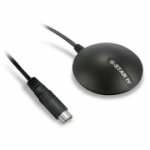
GlobalSat_Sirf4_PS2.JPG

Angus has a great YAPP project on how to use one of those.

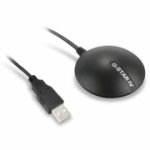
The mobile phone GPS idea is trying to get a data feed to my laptop computer with charts from ViewMyHarbour. It would use something I've already got, at zero cost, except for the coding effort. One the other hand I could give up, be lazy, and use the USB version of the same thing! :)

GlobalSat_Sirf4_USB.JPG
 

Attachments

Agreed, e.g. http://sharedroid.jillybunch.com/user.html

The main stumbling block seem to be downloading 400Mb of Google SDK to enable one piece of software that converts the data into a recognisable format.

Not at all what I had in mind. If you search the google play store for "nmea gps" there are a bunch of apps there which will help you out (although you need to read the descriptions).

There are some which will turn your phone into a bluetooth gps. Assuming you've got bluetooth on your laptop, you should be able to simply connect to the phone and use it as a gps: the GPS data will be available over a serial device (I believe microsoft fans call this a "COM port") which your nav program should be able to read from. I don't really do bluetooth or windows, so anyone is welcome to correct me if I'm wrong there.

That may be the simplest. The alternative is an app which creates a network server (generally a tcp server) to distribute GPS data over an IP network. If you've got a wireless network on your boat this is simple. If not you can create an "ad hoc" network between your laptop and phone (I believe new versions of windows make this easier than it used to be). Some chartplotter programs (e.g. opencpn) can read GPS data from the network. Others you might have to use another program (navmonpc?) to take the network data and make it available over a "Virtual COM port". That probably enters the realm of more hassle than bluetooth.

If you can get GPS into a computer you can feed it out to the VHF via a usb to serial converter. Again, I believe opencpn would do that for you. Not the most robust solution and you have to have the laptop on all the time. Those globalsat GPSes hardwired seem like a popular solution for the cheap GPS feed to the VHF which I've tested out (successfully) with my ICOM VHF.

There is of course the raspberry pi solution but I suspect you don't want to go there...
 
i have a gps dongle - the benefit of it is that it works off the usb port and power from the laptop - and for less than £25 it saves trying to mess around with phone connections. works fine below decks.
 
i have a gps dongle - the benefit of it is that it works off the usb port and power from the laptop - and for less than £25 it saves trying to mess around with phone connections. works fine below decks.

I have one as well, and its great for use with a nav program on a laptop, but for connecting to a DSC VHF a proper antenna is the way to go. Whilst some are expensive, I have an Evermore SA320 (bare wire version) which sends NMEA 0183 sentences to the VHF, and to my old plotter. They still cost less than £100, and the cheapest I have seen recently was about £75.
 
I have an Evermore SA320 (bare wire version) which sends NMEA 0183 sentences to the VHF, and to my old plotter. They still cost less than £100, and the cheapest I have seen recently was about £75.

Or £25 ish for a BR355 and another pound or two for a 5v regulator to power it. This is what supplies my VHF and AIS display, and it works perfectly.

We're in agreement that a dedicated GPS puck is the way to go.

Pete
 
There are some which will turn your phone into a bluetooth gps..

I've found an app called ShareGPS, which sends the GPS data via Bluetooth to a virtual COM4 port on my Windows laptop.

On the laptop, NavMonPc is woking fine at recognising the incoming data and displaying Lat, Lon and SOG (zero knots in this marina)

Funny thing is I can't get OpenCPN to recognise the same data yet. Hmmm, more tweaks required?

Edit: OpenCPN sorted. First in NavMonPc go to Option.NMEA routing.
Find the incoming serial port used for the Bluetooth NMEA data.
Look across that row for the first virtual serial port being used for output (send) e.g. Vport A
In File.Connections, choose that VPort
In that VPort's config section, choose a spare COM port e.g. COM2

Then in OpenCPN config (spanner icon)
Connections section
Add a connection on the chosen COM port with the usual NMEA settings (4800 baud)

There is of course the raspberry pi solution but I suspect you don't want to go there.....
Well, I do have a RaspPi, so go on then, what's that solution? :)
 
Last edited:
Or £25 ish for a BR355 and another pound or two for a 5v regulator to power it. This is what supplies my VHF and AIS display, and it works perfectly.

We're in agreement that a dedicated GPS puck is the way to go.

Pete

Given that Globalsat offer the BU-353-S4 SiRF Star IV with either USB or PS2 connections, does it matter which one I choose? As in, the plan is to chop the end off and connect the bare wires to a 5V source and the NMEA input of something else?
 
Top