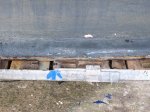
Metal plates attached to the keel of a fiberglass boat

torrdien

New Member
Joined
23 Jun 2021
Messages
3
Visit site
Hello together!

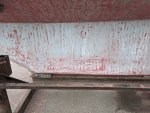
As we are currently repainting our fiberglass sailboat (the first time since we have it), we discovered that there are two metal plates attached to the keel, one on each side (see in the picture). Around them is a small stripe of rubber and they were covered with primer and antifouling paint, just like the rest of the keel. As we scraped away some of the rubber, a bit of water started leaking out. Neither the previous owner nor the people on the shipyard where we are currently repainting can give us information on why they are there and what we exactly should do about it.
In another forum, I read that some fiberglass boats have metal plates attached to the hull or keel to provide grounding. Does someone maybe knows more about that, we are happy for any information or advice!

Thanks a lot and have a good day!
 

Attachments

  • Metallplatte kiel.jpeg
    Metallplatte kiel.jpeg
    352.7 KB · Views: 138
Looks very much like a metal 'shoe' to prevent damage to the GRP when grounding, my last boat had one ad it had a long GRP keel, but as my current boat has cast iron keels a shoe isn't needed.
All the boats in our drying harbour that have GRP encapsulated keels have had shoes fitted.
Attached photo of shoe on my previous boat.
DIDO Shoe (1).jpg
 
Last edited:
Hello together!

As we are currently repainting our fiberglass sailboat (the first time since we have it), we discovered that there are two metal plates attached to the keel, one on each side (see in the picture). Around them is a small stripe of rubber and they were covered with primer and antifouling paint, just like the rest of the keel. As we scraped away some of the rubber, a bit of water started leaking out. Neither the previous owner nor the people on the shipyard where we are currently repainting can give us information on why they are there and what we exactly should do about it.
In another forum, I read that some fiberglass boats have metal plates attached to the hull or keel to provide grounding. Does someone maybe knows more about that, we are happy for any information or advice!

Thanks a lot and have a good day!
From your pic it looks like it is on the side of the keel, so would have no purpose in preventing grounding damage. Is the other plate directly opposite on the other side of the keel? If so perhaps it was a fix for some problem that allowed access to the ballast core.
 
From your pic it looks like it is on the side of the keel, so would have no purpose in preventing grounding damage. Is the other plate directly opposite on the other side of the keel? If so perhaps it was a fix for some problem that allowed access to the ballast core.
It's directly on the opposite side. We considered that option as well, but then it would be only on one side or am I wrong?
 
Does not look like protection from grounding. What make of boat is it? and is the ballast internal?
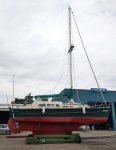
It's a Tinker 32. We don't have many information about it but we believe it is handmade. If someone has more information on that we would be grateful as well, I'll attach a picture of the whole boat! :)
Yes the ballast is internal.
 

Attachments

  • IMG-20210623-WA0025.jpg
    IMG-20210623-WA0025.jpg
    170.2 KB · Views: 59
Maybe the boat has been used for smuggling drugs.
 
Have now looked at the OP photo on a larger screen and can see it is not part of a shoe so ignore my #2 post.
The suggestion that they may cover an old repair or an access to that part of the keel seems possible.
 
Could be a grounding plate for a SSB/HF radio transmitter/receiver: if so there will be a wire coming up from it on the inside. This is nothing to do with the keel touching the bottom (the other sort of grounding) but to increase the efficiency of the radio transmitter. Only SSB/HF radios need this. VHF radios do not.
 
Could be a grounding plate for a SSB/HF radio transmitter/receiver: if so there will be a wire coming up from it on the inside. This is nothing to do with the keel touching the bottom (the other sort of grounding) but to increase the efficiency of the radio transmitter. Only SSB/HF radios need this. VHF radios do not.

Seems unlikely with plates both sides and thoroughly painted over, though. Also you wouldn't expect there to be enough of a hole behind grounding plates for water to come out.

My best guess is some sort of unusual repair or construction technique - fibreglass would have been a more sensible choice but owners and homebuilders do all sorts of odd things.

Pete
 
This may seem a little odd, but some types of boats used removable ballast segments that could be taken out to reduce weight for easier transport. If there is a matching plate on the other side, it might be the case that this block could be slid out, much like a kitchen drawer, or so.
 
Percentage-wise that is not much of an advantage.
Blowing OB has a good point. My first yacht was an 18ft one on the west coat which had obviously been "inspected" by the Customs in a past life with a circular patch over a hole that had been cut in the transom (access to a double skinned area of the hull) and much of the inner cabin lining torn away.
Bet the 'agents' wouldn't have thought of looking in the keel.
 
Last edited:
My thought was also an SSB earth plate, if it was an amateur installation then 2 plates of sheet metal might give the necessary surface area normally achieved with powder metallurgy. Again - somewhere inside there should be a big copper tape that would connect to the radio (though it could have been cut off). If the plates are painted over then a previous owner did not have an SSB.

But if water is coming out then remove the plates as possibly the keel is full of water.

Forget painting - You need to know what is inside the keel and how the yacht should be ballasted (or not)

Let us know the outcome, there maybe another such yacht and spreadding the word about would be advantageous.

And in case it has not been said

Welcome to the Forum

Jonathan
 
My first yacht was an 18ft one on the west coat which had obviously been "inspected" by the Customs in a past life with a circular patch over a hole that had been cut in the transom (access to a double skinned area of the hull)
Customs do that? Who pays to repair it, I wonder? Is it on you if they find something and on them if they don't?

Funnily enough, I once looked to buy a boat with a bilge in the skeg. The part of it at the bottom of the cabin's steps was normally fibre glassed over but, in this case, a letter box hole had been cut out of it for no apparent reason. A dumb thing to do because water was bound to fill it up there. I wonder if that was for a similar reason & that's why it had been abandoned?

What do you have to do to avoid that happening to you, or what do you have to do for it happen?
 
Two possible thoughts.

Firstly the boat could have floated into a wheeled cradle and the plates were to guide the keel to ensure it was centred in the cradle.

Secondly it could be a keel with a centre plate and the plates cover the pin it rotates on.
 
Top