Low oil pressure alarm and warning light, on Volvo Penta 2003.

Isn't there an "alarm test " button that allows you to briefly test the buzzer after switching on but before starting the engine?

I think the brief bleep is because the oil pressure light takes a bit longer than than ignition warning light to go out.
 
Isn't there an "alarm test " button that allows you to briefly test the buzzer after switching on but before starting the engine?

There is, but, as mentioned in #11, it doesn't show anything other than that the buzzer buzzes, does it?

It certainly buzzes when I press the 'test' button, but that doesn't instil any confidence that the buzzer will buzz in the event of overheating, or low oil pressure.

Or am I missing something (always a strong possibility, particularly these days)?
 
If its a single wire oil pressure switch it earths through the body of the switch, you short the wire to earth it should sound. N/C switch so when pressure is present switch opens and extingushes alarm, having said that my panel operates identically to yours key on 3 lights no sounder even from the test button, yet short the oil pressure switch and it sounds, go figure you would expect the alarm to sound for 3 or 4 seconds seeing it sounds when its shorted, maybe the pressure switch itself is stuck open(not in my case) .Been like that since day one, as long as there is oil in the sump and its to the correct level ive never been concerned about the alarm(y)
 
Last edited:
There is, but, as mentioned in #11, it doesn't show anything other than that the buzzer buzzes, does it?

It certainly buzzes when I press the 'test' button, but that doesn't instil any confidence that the buzzer will buzz in the event of overheating, or low oil pressure.

Or am I missing something (always a strong possibility, particularly these days)?

The button tests the functionality of the buzzer.

.
 
Start the engine.
Pull the wire off the oil pressure switch.
The alarm should sound.

QED

Thank you!

I tried that ...... and the alarm didn't sound with the wire removed from the sender.

Hmmmmmm ...... so .........thinks ...... am I missing something?

The oil pressure sender switch is 'normally closed', so, I, agree with you, that the alarm should sound when the engine isn't running.

Once the engine starts, and oil pressure rises, the sender switch opens, so the alarm should go silent.

Now, this is the bit where you've lost me ........ with the engine running (and assuming oil pressure is ok), removing the wire won't change the circuit: will it?

The sender switch is already opened by the oil pressure, so removing the wire only adds another 'break' in the circuit: it won't make the alarm sound, will it?

Or am I totally misunderstanding every thing ?
 
Correct, it wont. You are effectively mimicking the operation of the oil pressure switch when oil pressure is reached. If for any reason, as you stated, there is a lack of oil pressure the wire from the oil pressure switch earths down through the sender completing the circuit and operating the buzzer. Possibilities could be faulty panel, faulty oil pressure switch, poor earth, faulty buzzer. (y)
 
Thank you!
I tried that ...... and the alarm didn't sound with the wire removed from the sender.
Hmmmmmm ...... so .........thinks ...... am I missing something?
The oil pressure sender switch is 'normally closed', so, I, agree with you, that the alarm should sound when the engine isn't running.
Once the engine starts, and oil pressure rises, the sender switch opens, so the alarm should go silent.
Now, this is the bit where you've lost me ........ with the engine running (and assuming oil pressure is ok), removing the wire won't change the circuit: will it?
The sender switch is already opened by the oil pressure, so removing the wire only adds another 'break' in the circuit: it won't make the alarm sound, will it?
Or am I totally misunderstanding every thing ?

Of course the alarm won't sound if you pull the wire off the oil pressure sensor. The advice in #23 from Boater Sam is wrong!

Your system all appears to be operating correctly

When you switch on all the lights light up. This proves that all the bulbs are OK.

The fact that the no-charge light comes on also proves that its wiring to the alternator is OK, The fact that it goes out when the engine is running proves that the alternator is generating
(although not that it is performing correctly ... much more extensive testing is needed to do that.)

The fact that the low oil pressure light comes on and goes off again when the engine starts confirms that the sensor and the wiring to it is OK

The fact that the overheating waning light comes on only proves that the bulb is Ok. It does not test the sensor or the wiring to it.

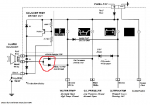
If one of the diodes ringed in the diagram below ( which was originally posted by forum member RIBW ) fails then the audible alarm will not sound in event of of the corresponding alarm condition.

You can test the overheat alarm or the low oil pressure alarm by shorting the sensor to the block , or to its own negative terminal in the case of two-wire sensors., while the engine is running. The corresponding light should illuminate and the buzzer should sound.

This leaves only the overheat sensor untested

1650832724571.png
 
Of course the alarm won't sound if you pull the wire off the oil pressure sensor. The advice in #23 from Boater Sam is wrong!

Your system all appears to be operating correctly

When you switch on all the lights light up. This proves that all the bulbs are OK.

The fact that the no-charge light comes on also proves that its wiring to the alternator is OK, The fact that it goes out when the engine is running proves that the alternator is generating
(although not that it is performing correctly ... much more extensive testing is needed to do that.)

The fact that the low oil pressure light comes on and goes off again when the engine starts confirms that the sensor and the wiring to it is OK

The fact that the overheating waning light comes on only proves that the bulb is Ok. It does not test the sensor or the wiring to it.

If one of the diodes ringed in the diagram below ( which was originally posted by forum member RIBW ) fails then the audible alarm will not sound in event of of the corresponding alarm condition.

You can test the overheat alarm or the low oil pressure alarm by shorting the sensor to the block , or to its own negative terminal in the case of two-wire sensors., while the engine is running. The corresponding light should illuminate and the buzzer should sound.

This leaves only the overheat sensor untested

View attachment 133975

Many thanks (again) for taking the time to write that, Vic.
 
Top