Log impeller fouling

Mistroma

Well-Known Member
Joined
22 Feb 2009
Messages
5,247
Location
Greece for the remainder of summer
www.mistroma.com
I've been applying more and more antifoul to my log impeller each year. It did work most of the time but was messy and I'd invariably still find it stuck after several days anchored in one spot. Someone mentioned last year they'd been painting Tea Tree oil on their log impeller and that it seemed to reduce growth. It was easy to apply but needed to be redone frequently. I imediately thought it might last longer if delivered in a lanolin based cream.

Bingo, no idea why I hadn't made the connection already. I've been using Equimins Udder Ointment for years on the propeller and waterline area. It contains Tea Tree oil in a lanolin ointment. It actually contains a variety of fungicides, bactericides and misc. things unlikely to encourage marine growth.

I applied it to the log impeller this year and it didn't ever stop working. It did stick momentarily after a week or two anchored in the same spot but worked properly after 2-3 minutes at 6kts.

I will use it again next year because it is quick to apply and can also be done again afloat if needed. No messing with a paint brush and having to let the paint dry afterwards.

No guarantees but it might be worth trying. I bought 500gms from a farm shop several years ago and give away quite a bit each year. I still have about 400gms left, so not likely to run out soon.

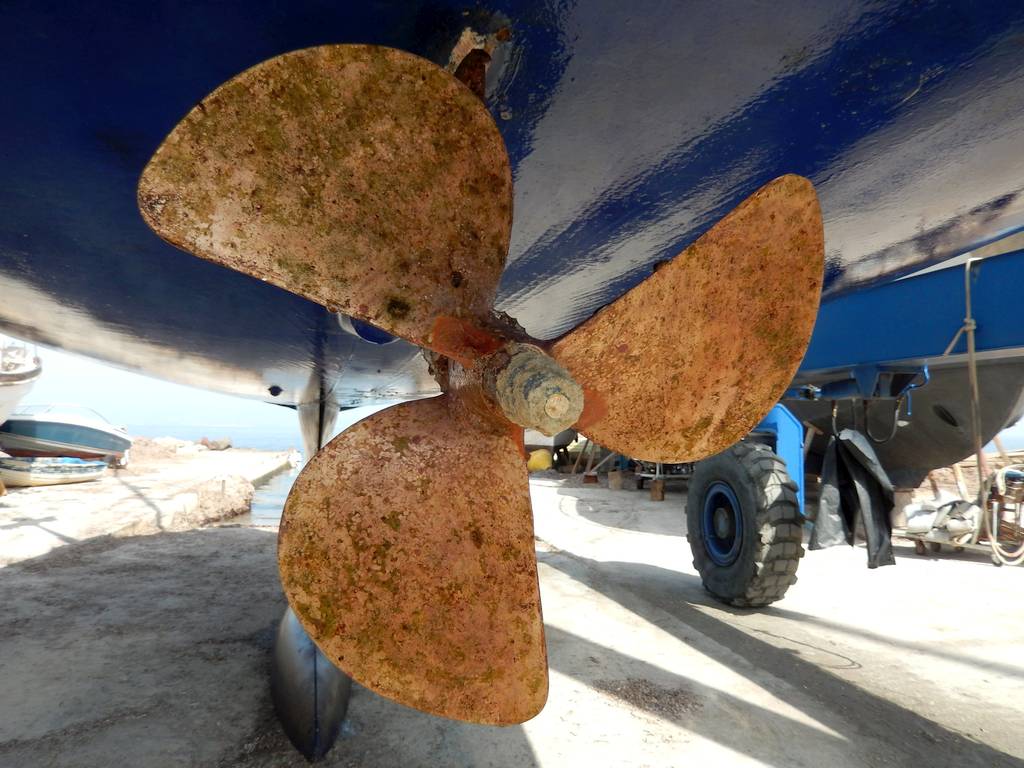
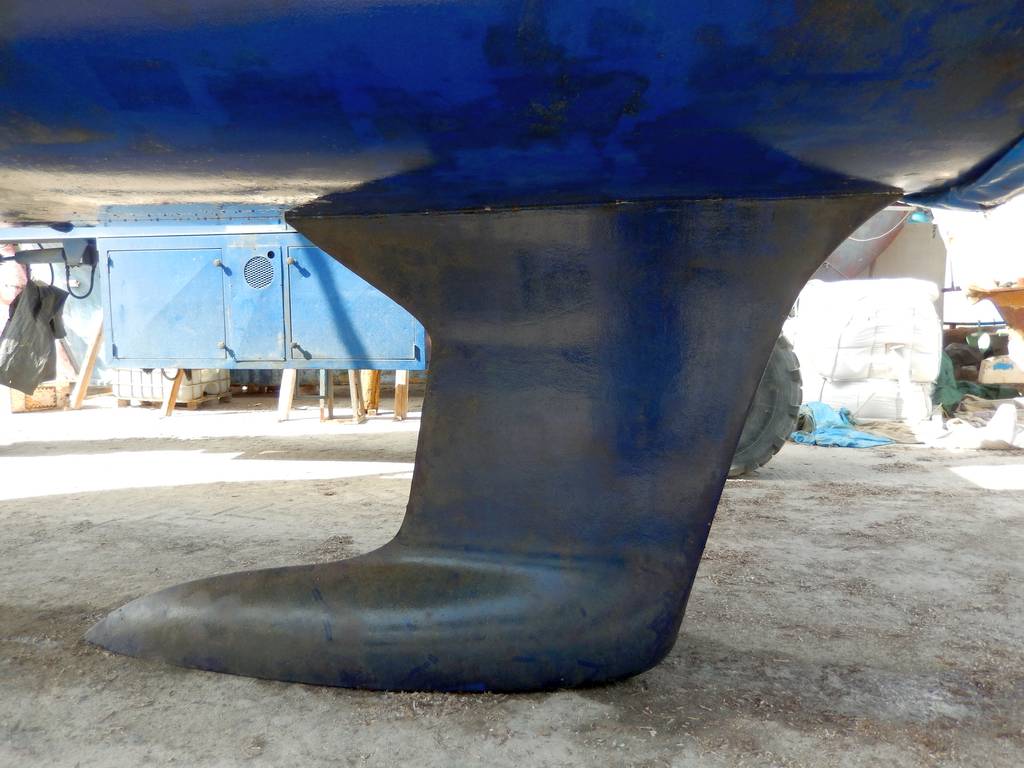
I may just have been lucky this year as I did notice fouling was light anyway. I didn't even dive to clean anything when afloat. Pictures below are just after lifting but before pressure washing had started.

Propeller had little growth (Burnished and given one coat of Equimins pre-launch)
DSCN8085.jpg


DSCN8086.jpg


Keel had some slime at end of season (1 coat of Mare Nostrum).
Hull was pretty clean (1 coat Hempel Mille NCT)
DSCN8091.jpg
 
Last edited:
Odd how people's perception of antifoul results vary
I would have said that that propeller was not particularly good (because as a rotating item it should shed a lot of the film in use) & the P bracket is poor, yet you seem to think that it is OK.
If your hull has not been jet washed then it is miles better than my coppercoat (after only 10 weeks)

However, back to your comment re the log. I used ECO from force 4 & did not have to clean the impeller all season (although the boat did get lifted mid season for the coppercoat to get washed so may have got slightly washed during that) & the echo sounder transducer worked OK as well. Expensive but should get several coatings from it if the shelf life lasts.
 
Last edited:
I agree, the prop and P-bracket don't look good to me. My photo shows our worst result with Velox in the Agean, lift out end of 2016 season. We spent a lot of time that year not moving, including a period away from the boat in August followed by a water pump failure, so fouling by tube worm was quite bad. Most other years have been far better, a couple of times no fouling whatsoever.

Unfortunately we are aware that Mediterranean results do not necessarily translate to UK, where some Velox users have been disappointed.
 
I've been applying more and more antifoul to my log impeller each year. It did work most of the time but was messy and I'd invariably still find it stuck after several days anchored in one spot.
I am always surprised by the number of people who keep the log in the water. When we stop for more than one tide the log is replaced with the bung.

Tea tree oil you say, I wonder how long that remained on the log once it was in the oggin. About 30 seconds I suspect, or does homeopathy actually work?
 
I am always surprised by the number of people who keep the log in the water. When we stop for more than one tide the log is replaced with the bung.

Tea tree oil you say, I wonder how long that remained on the log once it was in the oggin. About 30 seconds I suspect, or does homeopathy actually work?
Not worth the effort, though that isn't much. My impeller doesn't foul badly. It is a Ray marine one and I give it a light coating of silicone grease.
 
My log will always be inoperable after a spell on the mooring. But the cause seems to be not fouling on the impeller, but the fine Hamble silt that builds up around it. Does anything help with this? It is too messy to remove and blank each time (even with the flappy bit).
 
My paddle wheel impeller gets filled by tiny shrimps who fight literally to the death to come out.

Blocked solid within a week or two.

Have tried lightly painting on the same stuff as I use for my saildrive but that’s useless on the drive too so I wonder why I bother.

Is the Eco keeping the shrimps away or should I collect them like the Bretons do?:rolleyes:
 
My paddle wheel impeller gets filled by tiny shrimps who fight literally to the death to come out.

Blocked solid within a week or two.

Have tried lightly painting on the same stuff as I use for my saildrive but that’s useless on the drive too so I wonder why I bother.

Is the Eco keeping the shrimps away or should I collect them like the Bretons do?:rolleyes:

Yes, I've probably lots of problems with tiny shrimp living inside the impeller housing (or perhaps investigating it and becoming stuck).
 
Last edited:
I am always surprised by the number of people who keep the log in the water. When we stop for more than one tide the log is replaced with the bung.

Tea tree oil you say, I wonder how long that remained on the log once it was in the oggin. About 30 seconds I suspect, or does homeopathy actually work?

Yes, that was exactly my thought about Tea Tree oil by itself. Hence the Equimins to give it a better chance of sticking around for a while. I could try ECO at £16 for 70mls, I expect a bottle would last for several years. However, I still have enough Equimins to last a century on the prop. (assuming it is worth using) let alone the impeller.
 
I agree, the prop and P-bracket don't look good to me. My photo shows our worst result with Velox in the Agean, lift out end of 2016 season. We spent a lot of time that year not moving, including a period away from the boat in August followed by a water pump failure, so fouling by tube worm was quite bad. Most other years have been far better, a couple of times no fouling whatsoever.

Unfortunately we are aware that Mediterranean results do not necessarily translate to UK, where some Velox users have been disappointed.

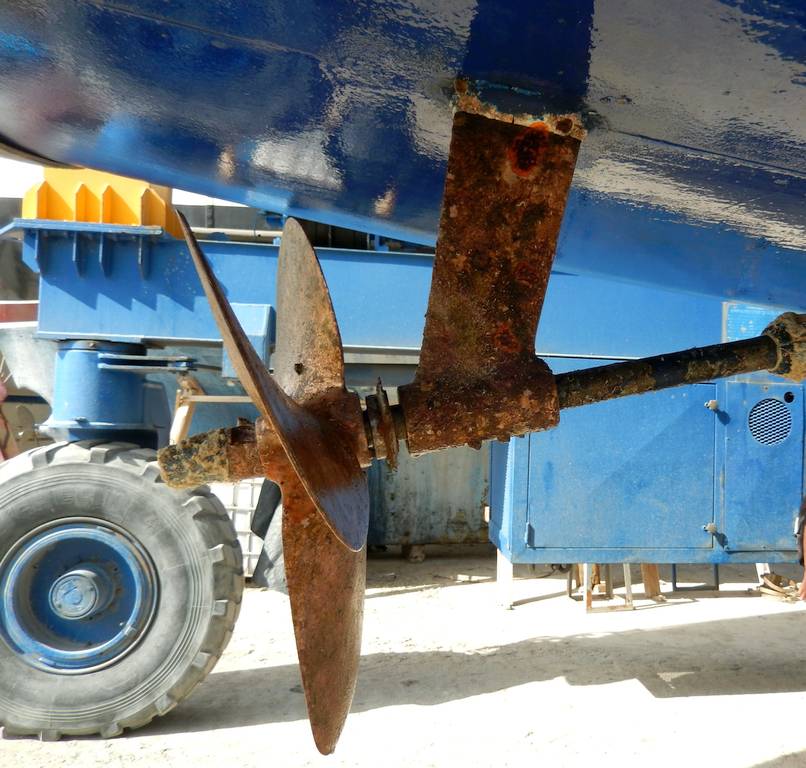
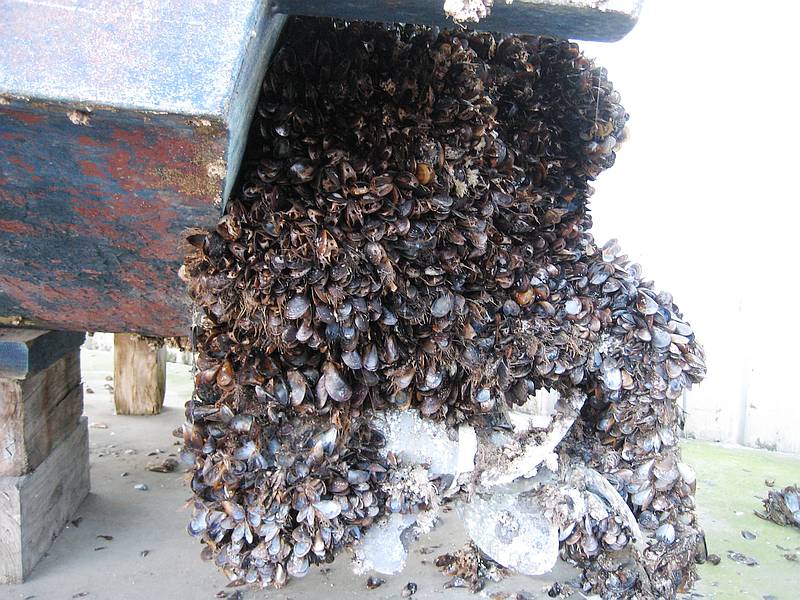
Yes, yours looks very clean with Velox. I've never used antifoul on the prop., just burnished it (plus Equimins for last few years). I still think that the prop. was pretty good (as per first picture) after a season without any antifoul. We were static in Ionian for about 6 weeks and again for several weeks in the Aegean. However, my expectations have been coloured with a few seasons in the Rias (that's when I started using Equimins). I've seen a pair of outdrives looking like a 1x1x2m box of shellfish after a year in the Rias. :D:D.

I thought it was the worst prop. fouling I'd ever seen (not that you could see any sign of a prop. in the picture :D:D). I couldn't find that picture but think that this might be one I took later after a couple of guys had hacked off a large amount of the fouling to reach the propellers.

IMG_5149_PowerboatMussels.jpg
 
Last edited:
I got fed up with a fouled log impellor so removed it and put the original al plug in, from then on it was use the GPS.

Modern plotters such as the B&G Zeus2 rely on input from the impeller for their Sail-Steer functions. It would be a shame to buy such a unit and not use the full functionality. We find this very useful, especially in indicating current flow strength and direction.
 
Top