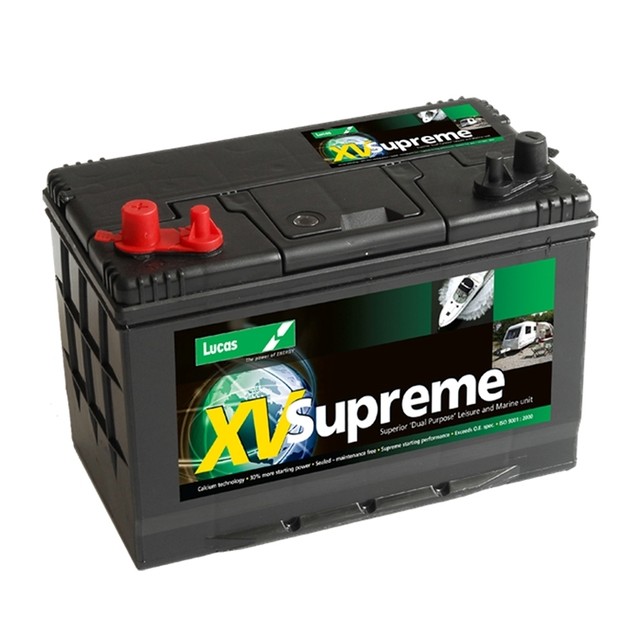
Life of Calcium batteries charged at 15.1 V

DuncanHall

Well-Known Member
Joined
14 Feb 2013
Messages
152
Location
Cardiff Yacht Club
Visit site
I have a system with twin Lucas XV supreme 110AH Calcium Batteries for the domestic bank and a redflash unit as a starter batteries. Its charged by a Stirling Alternator to Battery Charger (AB 1280) set for Calcium Batteries (15.1V boost and 13.6 float). I have a solar panel to maintain charge in winter. A NASA BM1 monitors the state of charge.

The batteries were purchased in Feb 2011 and this July dropped to 11V after discharging about 60AH after a full charge.

I use the boat most weekends but only heavily use the batteries during about 4 weeks per year and rarely discharge more than 60AH before recharging. I am therefore somewhat surprised that the battery capacity is down to about 30% of its stated level.

Does this mirror the experience others have or is my suspicion that 15.1V is frying the domestic bank. I note that more recent versions of Stirling unit do not have the Calcium stetting.
 
Last edited:
The general consensus appears to be that there should be no difference in charge regimes for Ca hardened cells as opposed to antimony.
However, AC Delco did specify a very strange regime for their lead/calcium batteries, involving charging them @ 15.1v.
I've found that, though they take a charge very slowly and are reluctant to give it up, treating them as normal batteries seem to get 5-7 years out of them, no different to cheap, open lead acid cells.
Incidentally I believe that part of ACDelco was sold off by GM when they nearly went belly-up and had to be bailed out by the US taxpayer, so I suspect the battery name is merely a trademark for one produced by Johnson Controls.
I suspect the Lucas batteries are bog standard and should be treated as sealed lead-acid.
So, yes the special treatment for lead/calcium was probably an attempt by ACDelco to establish a unique sales point.
Lead/calcium is used extensively for sealed units - the attempt to claim special virtues for Ca hardened plates is, IMHO, just marketing hyperbole.
 
Last edited:
A bit o/t sorry, but not worth starting a thread for.

Have an Adverc charge manager which came with the boat. This is mounted inside the engine room in a very hard to get at spot. Do these have variable voltage levels ? Also, how would I check what it is set at - the voltmeter on the engine control panel seems to vary widely.

Thanks
 
...Have an Adverc charge manager which came with the boat. This is mounted inside the engine room in a very hard to get at spot. Do these have variable voltage levels ? Also, how would I check what it is set at - the voltmeter on the engine control panel seems to vary widely...

So far as I know, the Adverc isnt adjustable - I've just replaced one with something else partly for that reason. Does the voltage slowly build as the engine runs ? Its quite likely that you're seeing the natural increase, up to the charger's setpoint, of voltage during the 'bulk' phase of charging. I'm sure someone will correct me if thats wrong :)
 
So far as I know, the Adverc isnt adjustable - I've just replaced one with something else partly for that reason. Does the voltage slowly build as the engine runs ? Its quite likely that you're seeing the natural increase, up to the charger's setpoint, of voltage during the 'bulk' phase of charging. I'm sure someone will correct me if thats wrong :)
Yes, it builds up and then drops back when I assume the batteries are getting full.

As further thread drift ! Have a large Quick battery charger, this has three settings; boost, normal and float. That also does not seem to have any adjustment which is odd because it looks like it was quite expensive when new. Is it safe to assume that this will be for conventional lead acid batteries ?
 
The general consensus appears to be that there should be no difference in charge regimes for Ca hardened cells as opposed to antimony.
However, AC Delco did specify a very strange regime for their lead/calcium batteries, involving charging them @ 15.1v.
I've found that, though they take a charge very slowly and are reluctant to give it up, treating them as normal batteries seem to get 5-7 years out of them, no different to cheap, open lead acid cells.
Incidentally I believe that part of ACDelco was sold off by GM when they nearly went belly-up and had to be bailed out by the US taxpayer, so I suspect the battery name is merely a trademark for one produced by Johnson Controls.
I suspect the Lucas batteries are bog standard and should be treated as sealed lead-acid.
So, yes the special treatment for lead/calcium was probably an attempt by ACDelco to establish a unique sales point.
Lead/calcium is used extensively for sealed units - the attempt to claim special virtues for Ca hardened plates is, IMHO, just marketing hyperbole.

As I recall, the original Delco Freedom batteries used an expanded mesh electrode (like Expamet steel flooring grids) rather than the normal cast grid. I don't know if that is still the case, I doubt it, and I don't know who owns the brand now, I don't think it's Delphi - where most of Delco went - or Johnson.
I also think I recall that originally they used a higher than normal specific gravity acid, which in turn would call for slightly higher charging voltage. If you can still buy Freedom brand, do they still specify the high voltage? (Sorry to be a bit vague but it's many years ago now and I was working in industrial not automotive batteries, but my auto colleagues had them in the lab to test and strip.)
Re calcium vs antimony, yes modern low antimony alloys (typically 1.5% Sb) will take the same voltages as calcium alloys, but if you get traditional ones with 5% or more Sb content (10% used to be common) they usually call for a lower voltage to reduce gassing. Advantage of high Sb is better cycle life (e.g Trojan T105).
The advantages touted for Pb-Ca against Pb-Sb are lower self discharge and lower gassing, but again that relates to high Sb content. In wet cells low Sb is pretty equivalent.
Pb-Ca is usually used in sealed lead acid by which I mean the ones known as VRLA or AGM or gel because the slight reduction in gassing is still advantageous.
The Lucas referred to is bog standard lead calcium, made by heaven knows who (the brand name is licensed to Numax, but I don't think Numax actually manufacture themselves anyway) but it is not "sealed lead acid". It's flooded, as proved by the "magic eye" hydrometer window in it. It's "sealed maintenance free" which just means it shouldn't run out of water before something else kills it!


Question for the OP - is the "magic eye" still OK (green?). If so you haven't run out of water, which is the only damage that 15.1V would cause if applied for extended periods. Far more batteries are damaged by undercharge than overcharge and I'm not keen on the 13.3V float it's rather low. The regulator must switch down from 15.1V with the battery still some way from fully charged and 13.3V will never put the rest in, 13.8V is the minimum for that. If all they get is the engine charging plus the solar then I think they are suffering from perennial undercharge (and the Red Flash will be too). Are you able to put them on a mains charger and give them something like 14.4V for 12 hours followed by 13.8V for at least 24h? I would expect an improvement.

If your Sterling regulator has a 14.4/13.8 setting you would be better off using that.
 
As I recall, the original Delco Freedom batteries used an expanded mesh electrode (like Expamet steel flooring grids) rather than the normal cast grid. I don't know if that is still the case, I doubt it, and I don't know who owns the brand now, I don't think it's Delphi - where most of Delco went - or Johnson.
I also think I recall that originally they used a higher than normal specific gravity acid, which in turn would call for slightly higher charging voltage. If you can still buy Freedom brand, do they still specify the high voltage? (Sorry to be a bit vague but it's many years ago now and I was working in industrial not automotive batteries, but my auto colleagues had them in the lab to test and strip.)
Re calcium vs antimony, yes modern low antimony alloys (typically 1.5% Sb) will take the same voltages as calcium alloys, but if you get traditional ones with 5% or more Sb content (10% used to be common) they usually call for a lower voltage to reduce gassing. Advantage of high Sb is better cycle life (e.g Trojan T105).
The advantages touted for Pb-Ca against Pb-Sb are lower self discharge and lower gassing, but again that relates to high Sb content. In wet cells low Sb is pretty equivalent.
Pb-Ca is usually used in sealed lead acid by which I mean the ones known as VRLA or AGM or gel because the slight reduction in gassing is still advantageous.
The Lucas referred to is bog standard lead calcium, made by heaven knows who (the brand name is licensed to Numax, but I don't think Numax actually manufacture themselves anyway) but it is not "sealed lead acid". It's flooded, as proved by the "magic eye" hydrometer window in it. It's "sealed maintenance free" which just means it shouldn't run out of water before something else kills it!


Question for the OP - is the "magic eye" still OK (green?). If so you haven't run out of water, which is the only damage that 15.1V would cause if applied for extended periods. Far more batteries are damaged by undercharge than overcharge and I'm not keen on the 13.3V float it's rather low. The regulator must switch down from 15.1V with the battery still some way from fully charged and 13.3V will never put the rest in, 13.8V is the minimum for that. If all they get is the engine charging plus the solar then I think they are suffering from perennial undercharge (and the Red Flash will be too). Are you able to put them on a mains charger and give them something like 14.4V for 12 hours followed by 13.8V for at least 24h? I would expect an improvement.

If your Sterling regulator has a 14.4/13.8 setting you would be better off using that.


Thanks for all the advice.

The only long term float is from the solar regulator. The batteries the magic eye is still green. They have had a good run from the Stirling in the past few days with two days of 12 hour running and seemed to take another 20 amps. I'll check the solar regulator setting as that gives about half an amp trickle charge.

I will adjust the Stirling to 14.4/13.8 as it gives that option and see if I see a benefit. I have a few longer journeys to undertake which will probably involve a considerable run.
 
Last edited:
I will adjust the Stirling to 14.4/13.8 as it gives that option and see if I see a benefit. I have a few longer journeys to undertake which will probably involve a considerable run.

I do think that should help.
However bear in mind that the claimed capacity is based on carefully prepared batteries under lab conditions and particularly with batteries at the economy end of the market (I use them too!) you are unlikely to match the claims in service. Why do you think a top brand 80-90Ah battery weighs more (there just ain't no substitute for lead!) - and costs more than a 110Ah Lucas/Numax/Alphaline etc?
When you got your 11V after 60Ah discharge, was that still under load, and how much load i.e. how many amps?
11v is 1.83V per cell. That still leaves a fair amount in if you were drawing any significant current. The claimed 110Ah is probably based on 20 hours i.e. 5.5A to 1.75VPC (there are various standards and I can't find any statement of which they use).
You may well have suffered less deterioration than you think.
 
I do think that should help.
However bear in mind that the claimed capacity is based on carefully prepared batteries under lab conditions and particularly with batteries at the economy end of the market (I use them too!) you are unlikely to match the claims in service. Why do you think a top brand 80-90Ah battery weighs more (there just ain't no substitute for lead!) - and costs more than a 110Ah Lucas/Numax/Alphaline etc?
When you got your 11V after 60Ah discharge, was that still under load, and how much load i.e. how many amps?
11v is 1.83V per cell. That still leaves a fair amount in if you were drawing any significant current. The claimed 110Ah is probably based on 20 hours i.e. 5.5A to 1.75VPC (there are various standards and I can't find any statement of which they use).
You may well have suffered less deterioration than you think.
The load on the two batteries was never more than 10A but typically 6 so its not underestimating as a result of Peukert's law.

Its a fair comment that the units may not have had a good float charge but I note that the solar panel (nominally 28W) usually gives it 0.5 A during most of the day so covers self discharge.

Given the lack of indication of loss of water it may be that it needs to connected to a mains charger to boost capacity as its rare to get more than a few hours from the engine.
 
I thought it worthwhile to update on progress and what I found about calcium batteries.

I took the batteries home over Christmas and found them to appear to be fully charged. I then did a discharge test on each using a 4.5A load. After about 6 hours the battery voltages drooped to 10v starting from 12.5v (under load). When the load was removed the at rest voltage returned to 11.9v. The same behavior was exhibited by both batteries.

I then removed the top of the battery and examined the state of the electrolyte in each cell. All cells indicated about 75% charged consistent with a 25% discharge. I then measured the voltage different between cells and found the voltage between the electrolyte between the +ve most cell and the adjacent cell was close to zero under load. All other adjacent cell differences were two volts.

Wikipedia states "(The calcium oxidizes whenever the positive plate voltage is lower than 40–80 mV above open-circuit and forms an insulator between the active material and the grid. Pulse treatment can help to recover oxide-affected batteries.) " seehttp://en.m.wikipedia.org/wiki/Lead%E2%80%93acid_battery
and implies this use of calcium shortens battery life. I will try to see if using a high Ctec charger is useful in recovering the other battery but I don't have much confidence that it will.

I shall stick to plain lead acid traction batteries in future.
 
Last edited:
On what basis do you say they appeared to be fully charged?
Your results do look pretty bad.

I would disagree with a number of things in that Wikipedia item and it seems a bit alarmist about the vulnerability of calcium. A variety of alloying components are used to improve performance not just tin and no decent manufacturer will use plain Pb-Ca.
Nonetheless it does tend to be more abuse sensitive than Pb-Sb.

Not sure what you mean by plane (plain?) lead acid traction batteries. Unless you really do mean genuine industrial traction - big, heavy, expensive - they will almost all be Pb-Ca, a few e.g.T105 will be Pb-Sb.
 
I meant to say plain lead acid i.e. open lead acid.

I know they were fully charged because I repeated the test after removing the cover to the electrolyte and tested the specific gravity before and after charging. The specific gravity indicated fully charged.

One factor I don't think I mentioned is that about a year after installation I changed the engine to one with a 115 A alternator. Using the Stirling unit often results in currents of close to 100 A to the pair of batteries.
 
"Plain lead acid" is what you have got (the Lucas Supreme), but emphatically not "traction".
It may not have accessible filler plugs, but what's inside is no different.
Is there a filling point below the top cover label, or does the strip between the two vent nipples lever off? Can't quite see from the photo. You can see the dimple where each plug is though.
$_58.JPG
 
The top was not easy to remove but I removed it by prying it off with a screwdriver. My batteries only had one vent at the center of the rear of the photo you show. Its worth noting that the fluid level in all cells was well above the plates suggesting that the reason for cell failure was not boiling out. Likewise high specific gravity discounts lead sulfide affecting the cell I presume.

Its my intention to move to traction batteries such as a Rolls 12 FS-105
 
Last edited:
Twice the price. Thick plates (3.2mm pos; what are the Lucas ones, about 2mm?).
Different ballgame.
They claim about 1400 cycles at 50% DOD.
Note that Rolls rightly stress the importance of keeping them well charged and the damage that can result from undercharging.
 
Not quite twice

A Lucas units is £74 http://www.ebay.co.uk/itm/LUCAS-12v-110Ah-XV-Supreme-LX31MF-Electric-Fence-Battery-3yr-warranty-/191402208008
The Rolls are about £130 each http://www.eurobatt.co.uk/rolls-12v-12-fs-105-deep-cycle-battery/.

I know the rolls are slightly lower nominal capacity but in practice have much higher effective capacity as they can achieve much lower levels of discharge. And the rolls are 31kg compared to 24kg for the Lucas.

see http://support.rollsbattery.com/support/solutions/articles/98486-cycle-life-vs-depth-of-discharge

From what I could see from the top of the cells I would say the Lucas plates were nearer to (or less than) 1 mm thick.


In hindsight I don't believe the issue was undercharging as the solar panel did its job keeping them topped up and the specific gravity of the electrolyte remained high. Undercharging would have led to a sulfated battery with low electrolyte specific gravity.
 
Last edited:
The Rolls ought to be much better. You are right to look at the weight. Good indicator of quality. T105s might be better value if they would fit in.
If the Lucas plates are <=1mm that is VERY thin for that size battery. We only used that thin on moderate size car batteries. Truck types would be 1.5-2mm I think. (My field was large industrial cells, some of those plates were up to 8mm thick.) I will strip one of my Alphalines (new this year) when they fail but I hope for maybe 3 years out of them.
What I'm not sure about is the failure mode of your present batteries. There are really 3 possibilities I think; paste shedding, grid corrosion (those two often accompany each other) or sulphation. You'll only see evidence of the first two if you strip it down. Don't dismiss sulphation. It wouldn't necessarily change the charged s.g. conspicuously, and presumably you don't know precisely what your original s.g. was anyway. Did you temperature compensate your readings?
The everyday benefit of s.g readings is checking cells are even rather than the absolute number.
Did you take s.g readings after discharge too? What sort of numbers did you get charged and discharged? My guess for 25 deg values for these when healthy would be 1260-1280 fully charged and 1100-1150 fully discharged (20h rate to about 10.2V.)
 
I had a relativly simple 4 ball hyrometer from halfords. At fully charged it says 1.280 and at 3/4 it says 1.222.

So before discarge it had four balls and after 3.

I have now put i the battery that I did not dismantle through a recon cycle on a Ctec M200 charger. i am rechecking performance. The one I dismanlled was disposed of as it was a safety hazard with exposed sulphuric acid.

I did note that it remained charging alot longer than with a more basic halfords unit. I will post the results when I have them.
 
Top