RunAgroundHard
Well-Known Member
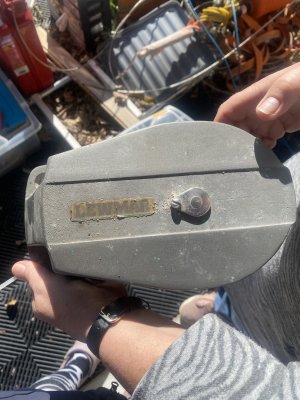
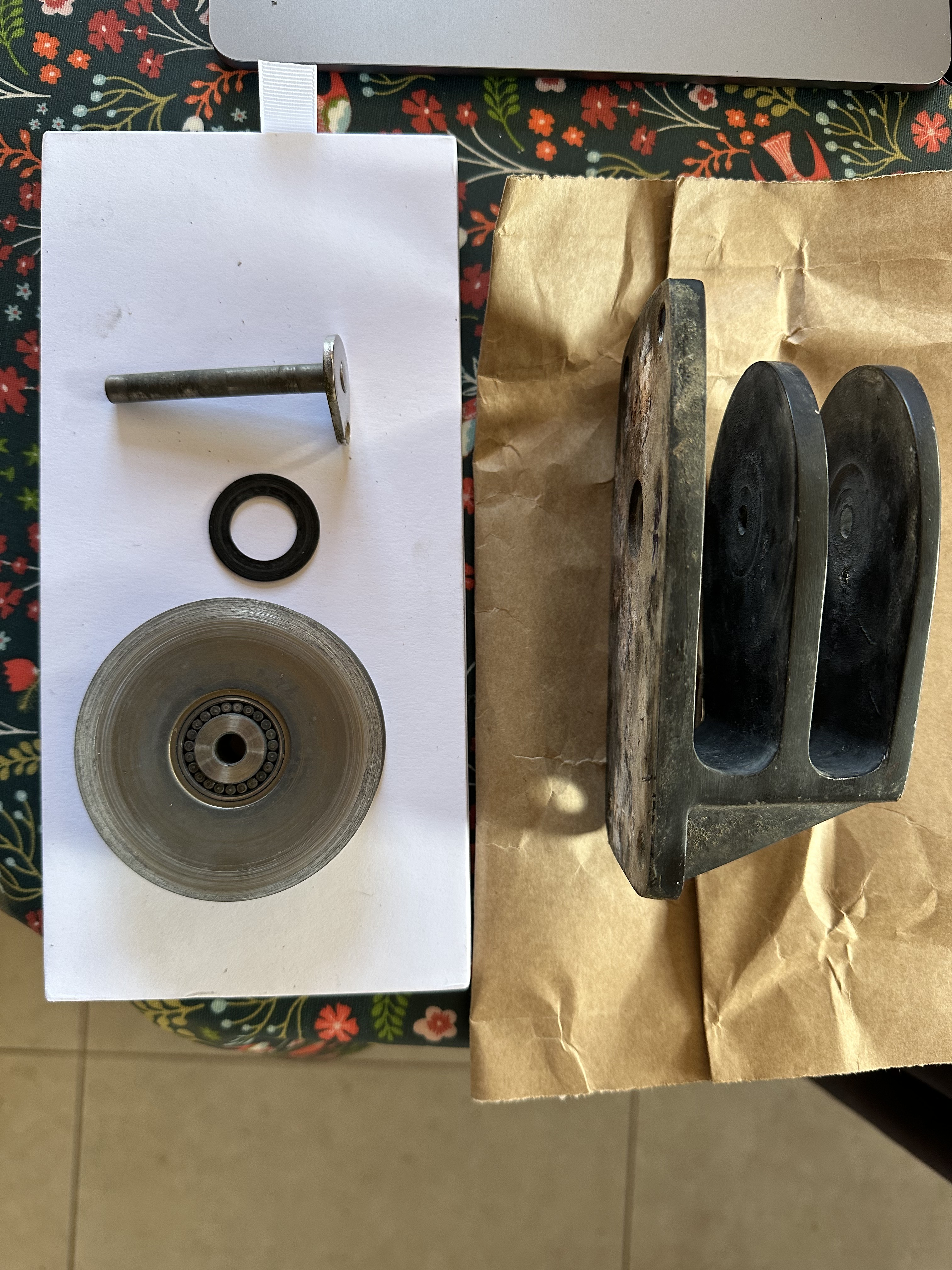
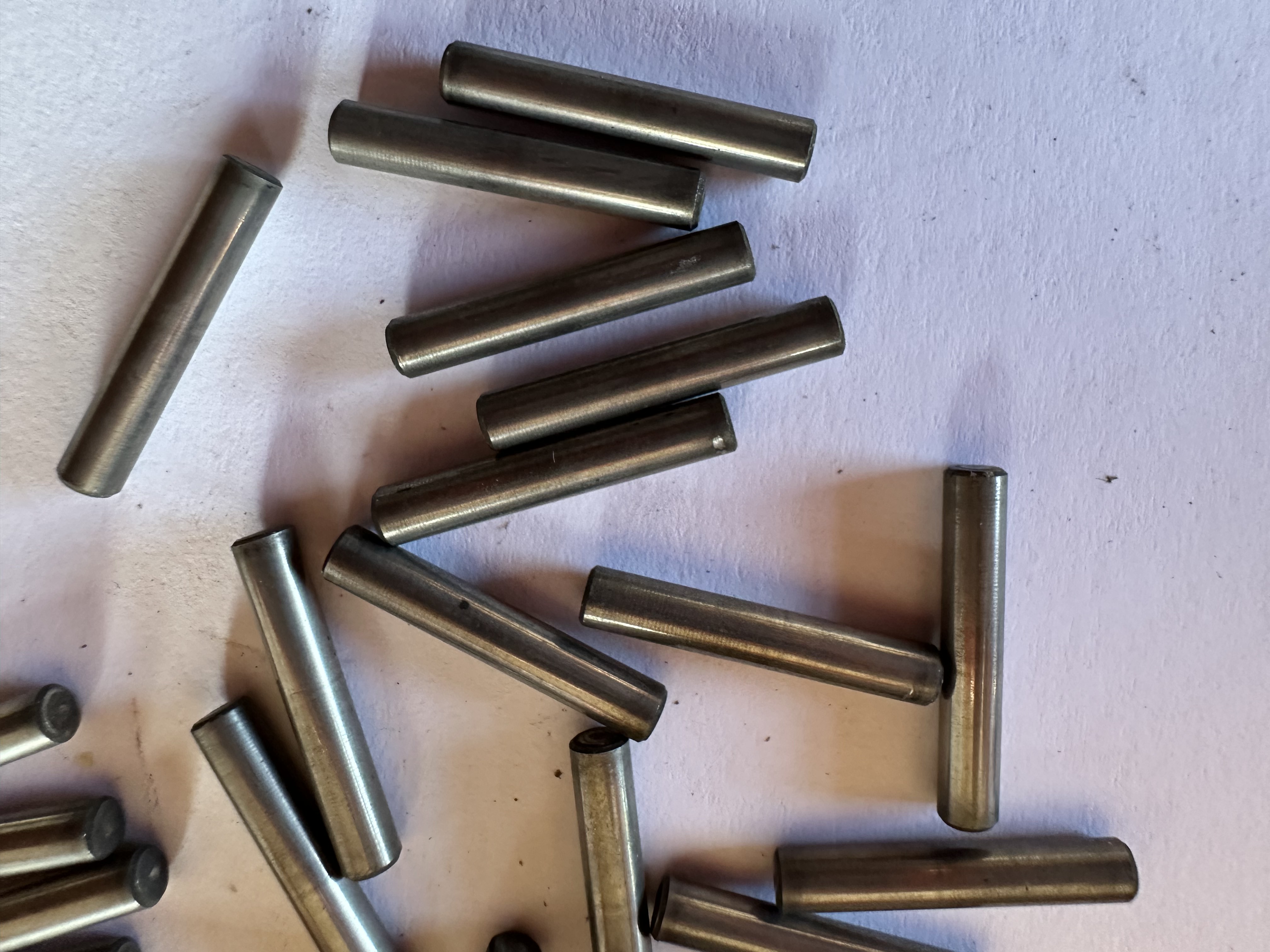
I have a pair of old Lewmar, dual sheave foot blocks. The sheaves are alloy, with stainless pin and needle bearings. When I dismantled them the needle bearings dropped out easily and are bone dry, no sign of lubrication. The foot blocks get a good dousing with seawater when pressed hard and of course rained on all the time in Scotland. There is no sign of wear but one of the sheaves was tight to rotate, but still rotated.
Were these needle bearings assembled dry, free of lubrication or would they have been lubricated originally?
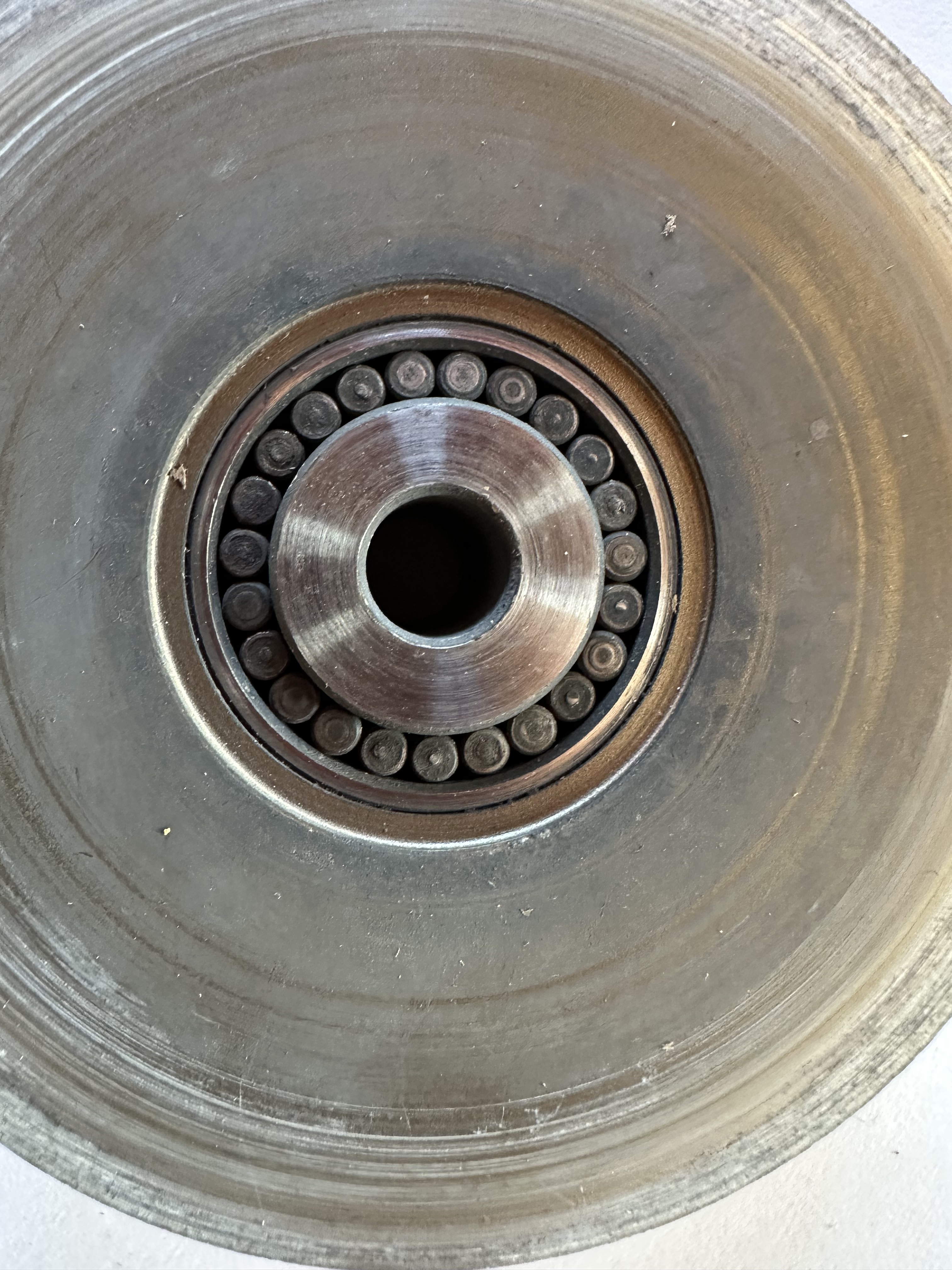
The needle bearings and bushing when wiped with paper towel (dry wipe) leaves a slight grey smudge, which I assume is fine metal debris. I will be reassembling soon, hence can apply a smear of suitable lubricant, or nothing at all after a good clean up. I am inclined to apply a light touch of Lewmar or Harken winch grease, but fear this may just act as carrier to trap salt and wear products. What do you think?
The image of the sheave which looks scored, is in fact smooth and the rings are smeared and compacted dirt.

Were these needle bearings assembled dry, free of lubrication or would they have been lubricated originally?
The needle bearings and bushing when wiped with paper towel (dry wipe) leaves a slight grey smudge, which I assume is fine metal debris. I will be reassembling soon, hence can apply a smear of suitable lubricant, or nothing at all after a good clean up. I am inclined to apply a light touch of Lewmar or Harken winch grease, but fear this may just act as carrier to trap salt and wear products. What do you think?
The image of the sheave which looks scored, is in fact smooth and the rings are smeared and compacted dirt.