
Keel Bolts

Paulfireblade

Well-Known Member
Joined
13 Mar 2020
Messages
290
Location
Buckinghamshire
Visit site
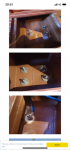
It seems to be common for the keel bolts to be included in the photos of a particular brand of boat
5AE2733A-C4CA-4337-9070-F7A2E468A13A.png
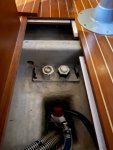
I have nothing against AWB’s I own one of similar age but relieved that my keel bolts look considerably more substantial
67E4BE3B-1B86-4DF2-BF99-658E4E880EF4.jpeg
My keel bolts are 36mm dia, the ones in the top photo look about 12mm are they really that small or am I missing something because that size of keel bolt wouldn’t fill me with huge amounts of confidence.
 
Surely it depends on the size of the keel/yacht and how many bolts there are?

I'm not sure you are comparing like with like.

Our keels have no bolts at all :)

Take care, stay safe

Jonathan
 
No they are 20mm and more than adequate as they way exceed the requirement for the standard used for keel attachment.

I expect your keel is rather heavier than the typical keel on a Bavaria and judging by the spacing looks like it is very narrow.

Not sure why when the boat was built is in any way relevant as keel attachment is dependent on the design, not the age of the boat.

The main reason why photos of Bavarias often show the bilges is to illustrate how spotless and dry they are (as in the photos you post) and the condition of the studs and nuts with no signs of flaking paint and rust on the backing plates.
 
Just putting together selection of photos for the sales particulars for my Bav. Must remember to put in a couple of shots of the keel attachments and spotless dry bilges which are even more impressive than the 20 year old boat in the original post!
 
No they are 20mm and more than adequate as they way exceed the requirement for the standard used for keel attachment.

I expect your keel is rather heavier than the typical keel on a Bavaria and judging by the spacing looks like it is very narrow.

Not sure why when the boat was built is in any way relevant as keel attachment is dependent on the design, not the age of the boat.

The main reason why photos of Bavarias often show the bilges is to illustrate how spotless and dry they are (as in the photos you post) and the condition of the studs and nuts with no signs of flaking paint and rust on the backing plates.
20 mm is fairly substantial, they just didn’t look it in the photo
 
Just putting together selection of photos for the sales particulars for my Bav. Must remember to put in a couple of shots of the keel attachments and spotless dry bilges which are even more impressive than the 20 year old boat in the original post!
Good luck with the sale, boats still seem to be selling well so shouldn’t take long, I hope you have a replacement organised.
 
There are twice as many bolts in the Bavaria and they are much further apart so actually it will be a stronger attachment for side loading and pretty similar in shear.
How many keel bolts do they have, mine has a total of six.

you are right they are much narrower on mine so might explain the extra thickness of the bolts.
 
Depends on the model and the type of keel, but the early 2000s like the one in your photos had 7 or 9. I will check, but I think my current 2015 33 cruiser with a 1.6 tonne keel has 6, but a rather different arrangement as the bonded grid is a different design.

In general keel bolts are significantly over specified. Problems with keel attachment (and one can't deny that some boats of all types can have problems) are rarely related to failure of bolts, but to the structure of the hull, and almost always related to grounding or dropping the boat rather than the designed sailing stresses. Where there is design deficiency again it is in the structure.
 
There was an interesting exchange on this topic between Julian Everitt and Bob Perry (in Bob's excellence in yacht design series) where a potential disconnect between design and construction was highlighted: IIUC, the risk discussed was that the designer penned a suitable combination of hull, rig & keel using the methods that the yard used as standard but the boat yard practices and engineering margins didn't deliver what was promised...
Conversation ran on to (or developed from? can't quite remember) a discussion about boats not being Used as Intended: along the lines that if a yacht designed, built and sold as a "friends and family" cruiser-racer is put out to charter, where use and abuse is significantly more intense, inspection & maintenance opportunities are scarcer and occasional groundings are expected... is it reasonable to expect it to be up to the job?
Bob & Julian both seemed to think it ought to be (at least, structurally) but that certain boatyards might not...
 
How many keel bolts do they have, mine has a total of six.

you are right they are much narrower on mine so might explain the extra thickness of the bolts.
My Bavaria has 14 keel bolts. The keel is glued on with an adhesive too though, and I am told that if you undid all the nuts and lifted the boat up, the keel would stay attached (not that I've tried it mind).
 
I would certainly prefer over sized bolts. Considering that after many years and if moisture gets into the keel hull gap the bolts get corroded or waste away. So we have people x raying bolts to look for condition. (not such a good test) on old boats. So bigger the bolts less concern re wasting over long term. ol'will
 
The ISO standard used is here. I think that's the latest.


https://www.iso.org/obp/ui/#iso:std:55339:en

I checked the bolts used on my 1978 MAB and they were 3 times stronger than the standard requires after allowing for all the reserve factors. Not convinced the standard covers all the very difficult to determine dynamic loading cases.
 
I would certainly prefer over sized bolts. Considering that after many years and if moisture gets into the keel hull gap the bolts get corroded or waste away. So we have people x raying bolts to look for condition. (not such a good test) on old boats. So bigger the bolts less concern re wasting over long term. ol'will
While this is relevant to old wooden boats with through bolted keels - I have the evidence in my garage and fond memories of replacing keel bolts, it really is not an issue on modern GRP boats. Water can only get to the bolts/studs if the keel/hull joint fails. Not only is this rare, but is so obvious that remedial action is likely to occur long before loss of strength from corrosion becomes an issue.
 
While this is relevant to old wooden boats with through bolted keels - I have the evidence in my garage and fond memories of replacing keel bolts, it really is not an issue on modern GRP boats. Water can only get to the bolts/studs if the keel/hull joint fails. Not only is this rare, but is so obvious that remedial action is likely to occur long before loss of strength from corrosion becomes an issue.
Yes, I have experienced this with a GK29, a boat with a notoriously weak hull in way of the keel (it is said that boat No.1 dried against a wall, with the result that the keel finished up in the saloon). After the keel of mine was rebedded professionally it leaked rusty water into the bilge on a beat. A very obvious problem long before bolt corrosion would have occurred.
 
My Bavaria has 14 keel bolts. The keel is glued on with an adhesive too though, and I am told that if you undid all the nuts and lifted the boat up, the keel would stay attached (not that I've tried it mind).
I left the boat hanging in slings overnight with the nuts off the keel bolts - and still had to use saws, wedges and a sledge hammer to break the joint on an MG335. Mind you, investigating the Young's Modulus of sticky goop with any angle of heel would take a braver man than me.
 
My Bavaria has 14 keel bolts. The keel is glued on with an adhesive too though, and I am told that if you undid all the nuts and lifted the boat up, the keel would stay attached (not that I've tried it mind).
It must be very difficult getting the keels off then. Modern adhesives are pretty tough.
 
I will let you guys know. Need to drop the ballast keel to free the c/plate, well rusted. Local yard suggested to someone I know that undoing the nuts and lifting the boat just clear of the chocks, then leaving her for couple of days so the mastic lets go. Only 380kg, but same problem. Mastic has been there for 40+yrs, so not modern.. 8 bolts.
 
While this is relevant to old wooden boats with through bolted keels - I have the evidence in my garage and fond memories of replacing keel bolts, it really is not an issue on modern GRP boats. Water can only get to the bolts/studs if the keel/hull joint fails. Not only is this rare, but is so obvious that remedial action is likely to occur long before loss of strength from corrosion becomes an issue.
So by obvious, do you mean substantial water ingress passed the bolts in to the bilge?
 
Top