Just tapped a thread, cleaning? before using threadlocker.

FairweatherDave

Well-Known Member
Joined
28 Sep 2009
Messages
2,089
Location
Solent
Visit site
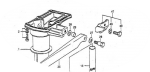
So I have drilled into the "body" of my Suzuki DT2.2 outboard in order to fit a new larger bolt which fixes the swivelling tiller arm to the metal body (below the plastic cowling). Drilling was incredibly hard work which suggests the body is made of stainless steel, not aluminium, but I'm no expert. My difficulties and inexperience might suggest I had "work hardened" the stainless. Anyhow hole made and tapped for M8 stainless bolt. Should I use duralac (possible disimilar metals) - or threadlock (which one?)- as I never want it to come undone? Could I use ordinary aryldite? And given I used cutting oil for drilling and tapping do I need to rinse the thread hole with acetone or alcohol beforehand so that the thread lock grips properly? Opinions much appreciated ...... and my free advice, don't lift even a light weight two stroke by the tiller arm. One day you won't get away with it. :(
 
Clean it with a cloth in side the thread and then use loctite to clue in if you don’t want it to come out again, aryl is epoxy so not really going to hold it. Loctite dries by removal of air
 
So I have drilled into the "body" of my Suzuki DT2.2 outboard in order to fit a new larger bolt which fixes the swivelling tiller arm to the metal body (below the plastic cowling). Drilling was incredibly hard work which suggests the body is made of stainless steel, not aluminium, but I'm no expert. My difficulties and inexperience might suggest I had "work hardened" the stainless. Anyhow hole made and tapped for M8 stainless bolt. Should I use duralac (possible disimilar metals) - or threadlock (which one?)- as I never want it to come undone? Could I use ordinary aryldite? And given I used cutting oil for drilling and tapping do I need to rinse the thread hole with acetone or alcohol beforehand so that the thread lock grips properly? Opinions much appreciated ...... and my free advice, don't lift even a light weight two stroke by the tiller arm. One day you won't get away with it. :(
Acetone would be my choice, nail polish remover for small quantity. Loctite threadlock is the stuff.
 
So I have drilled into the "body" of my Suzuki DT2.2 outboard in order to fit a new larger bolt which fixes the swivelling tiller arm to the metal body (below the plastic cowling). Drilling was incredibly hard work which suggests the body is made of stainless steel, not aluminium, but I'm no expert. My difficulties and inexperience might suggest I had "work hardened" the stainless. Anyhow hole made and tapped for M8 stainless bolt. Should I use duralac (possible disimilar metals) - or threadlock (which one?)- as I never want it to come undone? Could I use ordinary aryldite? And given I used cutting oil for drilling and tapping do I need to rinse the thread hole with acetone or alcohol beforehand so that the thread lock grips properly? Opinions much appreciated ...... and my free advice, don't lift even a light weight two stroke by the tiller arm. One day you won't get away with it. :(
Use a blue Loctite if you want ti be able to remove it using hand tools or a red Loctite if you want something that will require heat to remove it.

Clean and degrease the threads, allow any cleaning solvent to evaporate (acetone is good forthe final rinse if you've used another solvent because it evaporates quickly) apply one or two drops of Loctite only and reassemble. Allow 24 hrs to cure and reach full strength.
 
Thanks folks, you have ruled out aryldite (and duralac). I have a tube of some kind of loctite somewhere on the boat - I expect it has gone off but will have a look. Otherwise I might buy some blue loctite - can that store a couple of years once opened? It says its formulation makes it good for storage but gives no details on the Halfords info. I did watch a loctite video which did a comparison with nyloc washers, spring washers etc. The next best product to loctite was a toothed flange washer - that might be a cheaper alternative?
 
Thanks folks, you have ruled out aryldite (and duralac). I have a tube of some kind of loctite somewhere on the boat - I expect it has gone off but will have a look. Otherwise I might buy some blue loctite - can that store a couple of years once opened? It says its formulation makes it good for storage but gives no details on the Halfords info. I did watch a loctite video which did a comparison with nyloc washers, spring washers etc. The next best product to loctite was a toothed flange washer - that might be a cheaper alternative?
I have a bottle of Blue Loctite that has been on the workshop shelf for decades . It is Ok and I recently tried it and it woks perfectly well too.

Its the Superglue that goes off before you need it a second time

I don't think any type of locking washer will be suitable for this job Isn't it a special bolt that tightens onto a shoulder so that the tiller can still swing up and down
1659387073269.png
 
Spot on VicS. That's good news on the blue Loctite, thank you. I'm afraid my repair is a bit of a bodge, but given I will never forget how long the drilling took, I will monitor the tiller bolt closely forever! Had my drilling failed I had visions of fixing a bar for steering mounted on the cowling bolts. Would beat trying to steer the dinghy holding the cowling with my hands (no tiller).
 
It would be interesting to know if there is actually an outboard specifically designed to be used in salt water :)

Most seem prone to corrosion fairly swiftly.

Jonathan
 
It would be interesting to know if there is actually an outboard specifically designed to be used in salt water :)

Most seem prone to corrosion fairly swiftly.

Jonathan
My Evinrude brochure says "All Evinrude outboards are salt water engineered", but Evinrude are no more. Mine has suffered no obvious corrosion.
 
It seems to me as Vic pointed out you need a bolt with a shank of correct dimension to carry adjustable tiller ( by die nut extending thread and shortening bolt) enabling the bolt to be tightened down on to end of thread or bottom of hole. If you can't get the shank /thread dimensions right then I would suggest drill a hole through corner of bolt hex or across bolt hex so that you cna attach lock wire which then goes to a nearby fixing point. This way bolt does not have to be tight to remain fixed. or ar eyou just goping to tighten up bolt until tiller arm is fixed in horizontal position? ol'will
 
I have a bottle of Blue Loctite that has been on the workshop shelf for decades . It is Ok and I recently tried it and it woks perfectly well too.

Its the Superglue that goes off before you need it a second time

I don't think any type of locking washer will be suitable for this job Isn't it a special bolt that tightens onto a shoulder so that the tiller can still swing up and down
View attachment 139893
I tip I learned in my model aircraft phase was to store the cyanoacrylate (Superglue) , in the fridge.
 
It would be interesting to know if there is actually an outboard specifically designed to be used in salt water :)

Most seem prone to corrosion fairly swiftly.

Jonathan
My Mercury is over 20 years old, still all ok. I have one that is older in thegarage, corrosion not an issue.
 
I had a Honda 2hp 4 stroke - the studs, stainless, corroded into the aluminium casting. A simple fix, for Honda, would be Duralac - too late for me -drilling them out, re-tapping....I replaced with a 2stroke (which were then still available).

I accept - statistically - hardly sound, but I would expect better from Honda.

Jonathan
 
Aha
That type of corrosion. Understood. No rust on my Suzuki but aluminium / stainless bonding........aaaaaaagh
(And PS VicS and Ol'Will.......you're points about the special bolt are noted........experiments will continue with the bodge.)
 
Aha
That type of corrosion. Understood. No rust on my Suzuki but aluminium / stainless bonding........aaaaaaagh
(And PS VicS and Ol'Will.......you're points about the special bolt are noted........experiments will continue with the bodge.)

Having second thoughts about the bolt and Loctite
You will want to be able to adjust the friction on the tiller so that it stays were you want it but can easily be folded back out of the way when bot in use.
Maybe a stud Loctited in place, friction washers either side of the tiller and a self locking nut on the end that can be set to give the right degree of friction.
You may need a spring washer under the nut.
 
Top