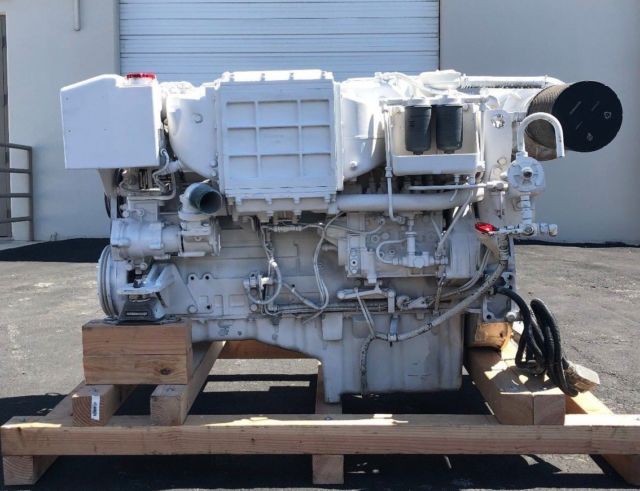
Isotemp unit drained for winter, shut off engine coolant feed ?

Non sequitur: preventing this particular failure is clearly a certainty rather than a hope, if like in my boat you've got valves directly screwed on the engine outlets/inlets of the heating loop, and you keep them closed.
And as I said, the usefulness of the disabled function is absolutely none, with my type of boating.
I already acknowledged that this can be different for yourself and/or other boaters, though.
Can't see why you shouldn't accept that it's different for me too.

Lastly, of course I agree that there are dozens of other possible problem sources on a boat engine - that's stating the obvious.
But I don't think there's any way to get rid of them all, other than give up boating altogether.
To get rid of this one, I just had to close a couple of valves, with zero drawbacks (for me).
Pretty much a no brainer: unlikely as it might be this problem (but tell that to the chap who experienced it in open sea!) it still means dozens minus one... :encouragement:

Each to their own, of course, though I’m with the leave it in use brigade.

There’s no more chance of failure than any of the other coolant hoses and Calorifier hoses are generally far more accessible and easier to routinely examine/replace ... And relatively cheap.

I’m not a big fan of isolator valves either ... Useful if you want to change the Calorifier but not much help if a hose bursts as, by the time you notice it, the damage is done ... You may as well simply carry a spare hose for what they cost and replace it after you’ve mopped out the engine bay and before refilling from the 10 litres of ready mixed coolant we all carry :D

Free hot water from the engine ... Luvly jubly.
 
Yup, I never disputed the each to their own principle, so no disagreement on that.

Otoh, by saying nonchalantly "after you've mopped the engine bay" you are making me guess that you've never seen an e/r after one coolant hose blew with the engine running at cruising speed.
And you can trust me when I said that in the one I had a chance to see, the effects were still visible after two full days of thorough cleaning.
Anyhow, let's leave this aside - I'm happy to concede that this doesn't happen every other day, and probably it's not a good enough reason to give up the functionality for anyone who appreciates it.

The real reason why I'm following up further is your "no more chance of failure than any of the other coolant hoses" statement.
In fact, already a few days ago, after Beamishken mentioned "any other of the many water hoses", I wondered why I never noticed all those hoses, so I had a careful look around in my e/r.
And I found out that the simple reason why I never noticed them is that I have NONE!
Well, not in my MAN engines, anyway. But by heart, I would swear that the same was true for my previous CATs.

So, out of curiosity, which sort of engines are you folks talking about, whose closed cooling circuit is so poorly designed to need all those rubber hoses?!?
My funny feeling is that you are mixing up the closed cooling circuit (which is what feeds the boiler through the ONLY rubber hoses where 85+ deg pressurized liquid is flowing, in my e/r) with the raw water circuit (which obviously does have rubber hoses).
But the latter is a very different kettle of fish, because neither temperature nor pressure is anywhere near those in the closed cooling circuit!
And it has nothing to see with the boiler loop, anyway.
 
Yup, I never disputed the each to their own principle, so no disagreement on that.

Otoh, by saying nonchalantly "after you've mopped the engine bay" you are making me guess that you've never seen an e/r after one coolant hose blew with the engine running at cruising speed.
And you can trust me when I said that in the one I had a chance to see, the effects were still visible after two full days of thorough cleaning.
Anyhow, let's leave this aside - I'm happy to concede that this doesn't happen every other day, and probably it's not a good enough reason to give up the functionality for anyone who appreciates it.

The real reason why I'm following up further is your "no more chance of failure than any of the other coolant hoses" statement.
In fact, already a few days ago, after Beamishken mentioned "any other of the many water hoses", I wondered why I never noticed all those hoses, so I had a careful look around in my e/r.
And I found out that the simple reason why I never noticed them is that I have NONE!
Well, not in my MAN engines, anyway. But by heart, I would swear that the same was true for my previous CATs.

So, out of curiosity, which sort of engines are you folks talking about, whose closed cooling circuit is so poorly designed to need all those rubber hoses?!?
My funny feeling is that you are mixing up the closed cooling circuit (which is what feeds the boiler through the ONLY rubber hoses where 85+ deg pressurized liquid is flowing, in my e/r) with the raw water circuit (which obviously does have rubber hoses).
But the latter is a very different kettle of fish, because neither temperature nor pressure is anywhere near those in the closed cooling circuit!
And it has nothing to see with the boiler loop, anyway.

The KAD32 series engines have hoses between the heat exchanger and water pump/thermostat housing :encouragement: ... Not all that easy to get at either.

I’m not sure if this is actually a poor design to be honest as the vast majority of diesel automotive engines usually have high pressure/temperature hoses as part of their coolant circulation system.
 
My yanmars have rubber hoses on the freshwater side and the cmd diesels in my previous boat had rubber hoses too as does every van truck bus & car on the roads.
To be honest a bit of antifreeze sprayed around the engine bay is nothing compared to a sewater hose bursting & spraying seawater everywhere.
Antifreeze will wash off with a jet wash & any residue wont do any harm, most insurance companies will write off the entire electrics if the get wet with seawater as you can never fully get rid of the salt & it sits there attracting moisture & corrosion.
Id rather clean up after a freshwater hose than a raw water hose failure
 
Me too, but burst salt water hoses downstream of the pump?!? THAT is an unheard of event!
In fact, also rubber hoses for the raw water circuit should have no place in a marine engine.
The only "unavoidable" post-pump sea water rubber hose I can think of are the two (in-out) hoses for the g/box cooler, typically very short and easily accessible. I don't have any others, in my boat.
What sort of hoses do/did you have, in Yanmars/Cummins?

PS: ref. automotive diesels, the comparison doesn't hold water at all, if you 'scuse the pun.
Radiators are attached to the chassis rather than to the engine, while in marine diesels the opposite is true.
Well, at least in all marine engines I came across so far!
 
The KAD32 series engines have hoses between the heat exchanger and water pump/thermostat housing :encouragement: ... Not all that easy to get at either.

I’m not sure if this is actually a poor design to be honest as the vast majority of diesel automotive engines usually have high pressure/temperature hoses as part of their coolant circulation system.
Yuk!
Yeah, in hindsight it's unfair to call it a poor design.
AWFUL design is more like it! :D :p
Ref. the automotive comparison, see my previous reply to Beamishken...
 
@mapism: Don’t you have rubber hoses going to the exhaust elbow injection point? From both the main engine heat exchanger and the gearbox cooler. And then to the genset exhaust separator. And the hydraulic oil cooler. And the aircon chiller raw water circuits. I have zillions of seawater pressurised rubber hoses in my engine room, downstream of the pumps, and I don’t worry about it.
I also have lots of pressurised rubber hoses carrying black water downstream of my Tecma WC pumps and black tank discharge pumps, which I do worry about a little bit. :D
 
Last edited:
Don’t you have rubber hoses going to the exhaust elbow injection point?
Of course, but that's sea water, so not really pressurized.
And even less so by the time it gets there, where it's almost sucked into the exhaust, courtesy of the scavenging effect of u/w exhausts, at least on P boats.

From both the main engine heat exchanger and the gearbox cooler.
Yes again, as per my post #25 - but that's also part of the raw water circuit, hence very low pressure and temp.

And then to the genset exhaust separator.
Same as previous!

And the hydraulic oil cooler.
Naah, that's for posh boats with hydraulic fin stabs! :D

And the aircon chiller raw water circuits.
Yawn. Raw water again. :rolleyes:

I have zillions of seawater pressurised rubber hoses in my engine room, downstream of the pumps, and I don’t worry about it.
I also have lots of pressurised rubber hoses carrying black water downstream of my Tecma WC pumps and black tank discharge pumps, which I do worry about a little bit. :D
All well and good J, but in none of your examples there are rubber hoses carrying pressurized 85 deg cooling liquid (and a very critical one, for evident reasons), aside from the boiler loop.
 
Me too, but burst salt water hoses downstream of the pump?!? THAT is an unheard of event!
In fact, also rubber hoses for the raw water circuit should have no place in a marine engine.

Well, at least in all marine engines I came across so far!
Perhaps you should take a look at this recent thread
http://www.ybw.com/forums/showthrea...d-still-not-back-in-the-water-Can-anyone-help
A forum member who almost lost his boat due to a rubber hose failure downstream of the raw water pump. Probably caused be a temporary lack of coolant supply allowing the hose to get just hot enough to melt.
Afaik its a fairly common occurrence a short loss of cooling water and the exhaust burns the rubber connectors to the exhaust.
The point is any hose can fail and there are dozens on a boat turning off the calorifier reduces your chances of a failed hose by such a small amount its hardly worth considering it a reduction in risk
I work in an industry where we use rubber hoses pressured up to 15000psi where a failure could be fatal and we don't worry, we have a test procedure & monitoring regime & haven't had a failure in 15 years. If hoses are correctly rated & maintained they wont fail.

14psi ish in a calorifier hose is next to nothing
 
hm, good thread to remind me to buy and install a calorifier in MiToS, managed four years without it although after a couple of hours engine use, water tanks which are part of the e/r lazarette bulkhead do heat up nicely.
Mind, in 30+C ambient you don't really need hot water to have a shower, at least none has complained not even the ladies.

what size element do you guys use? Probably going to buy a 100lt NON marine calorifier 2KW or more?
 
I already did, but if you're resorting to this example to support your view, you must be at the end of your rope! :D :D :D
The only thing which is indeed interesting in that thread is the remarkable efforts made by some forumites to help, against all odds!

Let me go back to the point, as briefly as I can:
1) nautical calorifiers use a loop from the engine closed cooling circuit to warm up sanitary water to 85 deg or so.
2) I said that I disabled that on my boat, and I explained why.
3) You replied that my concern is pointless because there are many other similar hoses.
4) I said that I have none, and asked you where exactly have you seen them, on those Yanmar/Cummins engines that you mentioned.

Now, the only replies I got so far (with the notable exception of the KAD32 example given by Seeline - thanks to him for that) were related to raw water hoses, automotive installations, high pressure industrial equipment.
Which have nothing at all to see with nautical calorifiers and the way they work, as I hope you will agree!?! :ambivalence:

PS: all of the above, in a framework where I acknowledged that, for all I know, the feature which is being discussed can well be convenient for cruising in Scotland. Otoh, for some reason, you seem to deny that for anyone whose cruising habits (and latitudes) are like mine, engine fed calorifiers are as useful as a chocolate teapot, ffs!
 
Of course, but that's sea water, so not really pressurized.
And even less so by the time it gets there, where it's almost sucked into the exhaust, courtesy of the scavenging effect of u/w exhausts, at least on P boats.


Yes again, as per my post #25 - but that's also part of the raw water circuit, hence very low pressure and temp.


Same as previous!


Naah, that's for posh boats with hydraulic fin stabs! :D


Yawn. Raw water again. :rolleyes:


All well and good J, but in none of your examples there are rubber hoses carrying pressurized 85 deg cooling liquid (and a very critical one, for evident reasons), aside from the boiler loop.
I never said they were, and you are now talking a bit of crap here Mapism. My list of hoses was a direct response to your statement "In fact, also rubber hoses for the raw water circuit should have no place in a marine engine. The only "unavoidable" post-pump sea water rubber hose I can think of are the two (in-out) hoses for the g/box cooler, typically very short and easily accessible. I don't have any others, in my boat" Your first and last sentences are just not correct. I mean they are totally 100% wrong.

Now you are moving the goalposts and saying that pressurised 85deg liquid is the problem in rubber hoses, not raw water in rubber hoses. Ok, but that isn't what you were asserting in the blue text above.

The hoses to the calorifier are* as Beamishken says above hydraulic style hoses for which 1-3 bar of jacket coolant is a walk in the park - they can handle 100 bar +++ without thinking about it. If there is material risk of them failing, then you'd better not have any hydraulics, which carry 100+ bar hydraulic oil also at about 80deg, yet you did for 20 years in m/y Ant iirc. (*Obviously I'm only recommending proper high pressure hoses, not jubilee clip stuff).

You are free to worry about these cooling water hoses failing if you wish, and you are free to take account of one (evidently) badly maintained boat you know of that had a pipe failure, but if we forget your personal preferences and just be objective and rational about this for the benefit of forum readers generally, then the fact is that in the real world hydraulic hoses carrying 80 deg fluid at say 2-3 bar is just not a significant risk - it's virtually zero risk. Even the failure rate of hoses carrying hundreds of bar is close to zero, so 2-3 bar is virtually risk free, as Beamishken says. You drive a car whose brakes rely on such hoses. So, objectively the risk is pretty much zero. Obviously you might choose not to use a calorifier, which is fine, but let's not lose objectivity about the true hose failure risk.

And let's not move goalposts please :D
 
Got some real time pressures here .

Raw water from the pump which goes through metal until it exits the SW cooler in rubber to the g box cooler and exhaust elbow .
Expansion pressure from the header tank in mmbars .Not sure ( I think ) it’s the air pressure of the air above the close coolant in the expansion tank , to monitor head gasket problems ? You know before the filler caps blow open , there’s two on MAN engines .Or the actual circulation coolant pressure , which I doubt .
There’s circulation jacket temp on another screen normally 85 this summer .
I also have analogue gauges for engine temp and oil pressure and g box pressure .
G box is 18/19 bar for twin disc with two rubber hydraulic hoses .One burst in 2014 and it defaults into neutral as looses pressure to press the “ discs “ together .So I had all four replaced as they were 2002 so arguably aged .
I had all the raw water black pipes replaced too in 2015 as a precaution again a 2002 boat imho just good housekeeping.


You can see the two rubber pipes exiting the HE , larger to the exhaust, smaller to the G box cooler .


The water heater on MAN s does not use engine circulation fluid.
That doesn’t mean they can’t it means they haven’t .One needs to ask why ? As the Volvo boat I had previously did .
As per JFMs post which I agree with I don’t think it’s a risky hose failure issues as MapisM infers considering they could use correct specced hoses .
But there has to be a Germanic rational engineering reason .
Maybe a more narrow accurate margin of warm up time of the circulatory fluid to 85 ? And any thermostat control if any to that additional circuit ?
Maybe ( accepting the rubber correct specced stuff ) a risk of internal corrosion/ failure of the metal HE coil inside the hot tank ?
Or maybe as MapisM infers for what ever reason ( his rubber failure) less is more from a reliability, show stopper POV ?
Dunno ?? Why MAN don’t do it ?

Suppose big boats there main customers compared to VP , Yanmar etc have big hot tanks which are better served with because of greater folks and potential uses by a simple electric immersion on all the time .
So independent of engine use .
That’s probably the rationale as opposed to some rubber risk I think .

So mine ( MAN s ) has a simple domestic hot tank with electric 220 v only .
On shore / geny there’s a breaker on the AC panel and on engines running I have a dedicated inverter which only comes on when ( I think the stb ) engines are running , the alternators doing there usual .Thats top up the starter bank first then the domestic bank .
It’s only little a 30 L .It was a 40L the OEM but it sprung a leak this summer .Remember just a pin hole hot water as no engine circulation fluid running round ...... so maybe MapisMs argument has some merit .I,am adding in the HE metal bit leaking here which is different to the rubber hoses but the point is it’s leak saw nothing to do with the engine functionality. This has to be in a Nordavn expedition PoV a better place to be I would have thought thinking rationally.
Which is you have to concede is a + ve .
Another + ve the local DIY has them €170 as basic household stuff as opposed to a “ marine “ €1000 jobbie if it was engine coolant fed like VP .

There’s a hook out of sight it hangs on , the Velcro straps and the belt n braces approach.

@VAS yep in ambient 30 degrees with 4/6 pax a little 30 L tank is plenty hot water wise .We don’t winter boat .
 
Last edited:
And let's not move goalposts please
C'mon jfm, you know you're now barking up the wrong tree, dontcha?
My statement which you quoted in blue was just a reply to post #24, which started the o/t towards raw water.
So, if anything, by reverting to the closed circuit I was only trying to bring the debate back to the point, which is indeed about pressurised 85deg liquid used for calorifiers and nothing else.
Why you are now accusing me of talking crap and moving goalposts, that's something for which the only logical explanation I can think of is that you didn't want to waste an opportunity for a good old forum querelle... :D

A mood which at the moment I have no reason to share, thankfully.
So, just for sake of honesty, I'll recognize that I was wrong when I said that the only rubber hoses I've got in the raw water circuit are the two short ones connected to the g/box heat exchanger, but only because I forgot the exhaust elbow (which I already commented in first para of post #28).
That's all though, and I reject all your other examples, because it's very obvious that we were talking of main engines, not of the genset or hydraulic oil, let alone airco or Tecmas - WTF?!?

Regardless, I would suggest to call this topic done to death, and give us a rest by agreeing to disagree.
If you are concerned about "forum readers generally", anyone unable to make up his mind after reading ANY suggestion given here in the asylum should rather rely on other sources for his/her boating choices.
In fact, as I'm sure you know, we could write a book about weird forum recommendations, some of which made MUCH less sense than the one I gave in this thread... :rolleyes:
 
@VAS yep in ambient 30 degrees with 4/6 pax a little 30 L tank is plenty hot water wise
+1.
Mine is actually 40L, but I'm pretty sure I could live with 30.
And that's in spite of using it with the electrical heater only, and set at just 50deg...
#joysofsouthernmedcruising :cool:
 
+1.
Mine is actually 40L, but I'm pretty sure I could live with 30.
And that's in spite of using it with the electrical heater only, and set at just 50deg...
#joysofsouthernmedcruising :cool:

As I said mine was a 40 .Beauty of plane Jane domestic hot water heater is you can opt for what ever you like vol wise .
On a big boat even more than one unit , giving built in redundancy not necessarily in the ER near an engine .
Eg put one in the anchor locker or stern locker .
 
Agreed.
A plain vanilla domestic water heater is what I had on my previous, very much "no-frills" boat.
Pretty big btw, 80L or so IIRC, and still working just fine, after almost a quarter of a century! :encouragement:

That said, your previous statement about MAN engines not including the calorifier loop is not correct, Porto.
Far from wishing to dig deeper into this topic right after having called it done to death, but just FYI, in my V8s the valves from which the rubber hoses go to the calorifier are bolted near the heat exchanger (calorifier in) and on one of the exhaust manifolds (calorifier out).
I'm pretty sure that this isn't a customised solution, because the fittings exist on both engines - they are just capped on the engine which doesn't have a calorifier attached.

Using this possibility or not is entirely up to the boatbuilder, rather than the engine manufacturer.
I'm not surprised to hear that Amati didn't, anyway.
At risk of generalizing a bit, I think it's fair to say that down here this functionality is very far from being appreciated as much as it obviously is among Brits.
 
Top