
is this wing OK?

vas

Well-Known Member
Joined
21 Jun 2011
Messages
8,200
Location
Volos-Athens
Visit site
not quite boaty, but interesting (or scary) nonetheless...

coming back from Milan Malpensa to Thessaloniki and boarded this 7?7/600 (OK, not good with planes, think it was a 737, but maybe wrong) from the rear door. Was rather crowded (RyanAir) so was stuck on the top few steps of the ladder for quite a while. I noticed this, didn't like it at all, had no option but to board, so took a pic in case it would fall from the sky and my mobile survived :p

OK, flight was fine, but I still believe that this wing shouldn't be as if it's an overinflated bouncy castle!
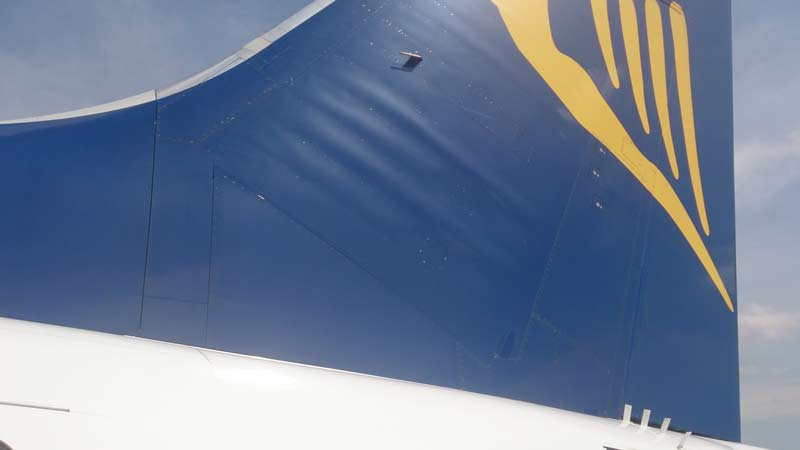
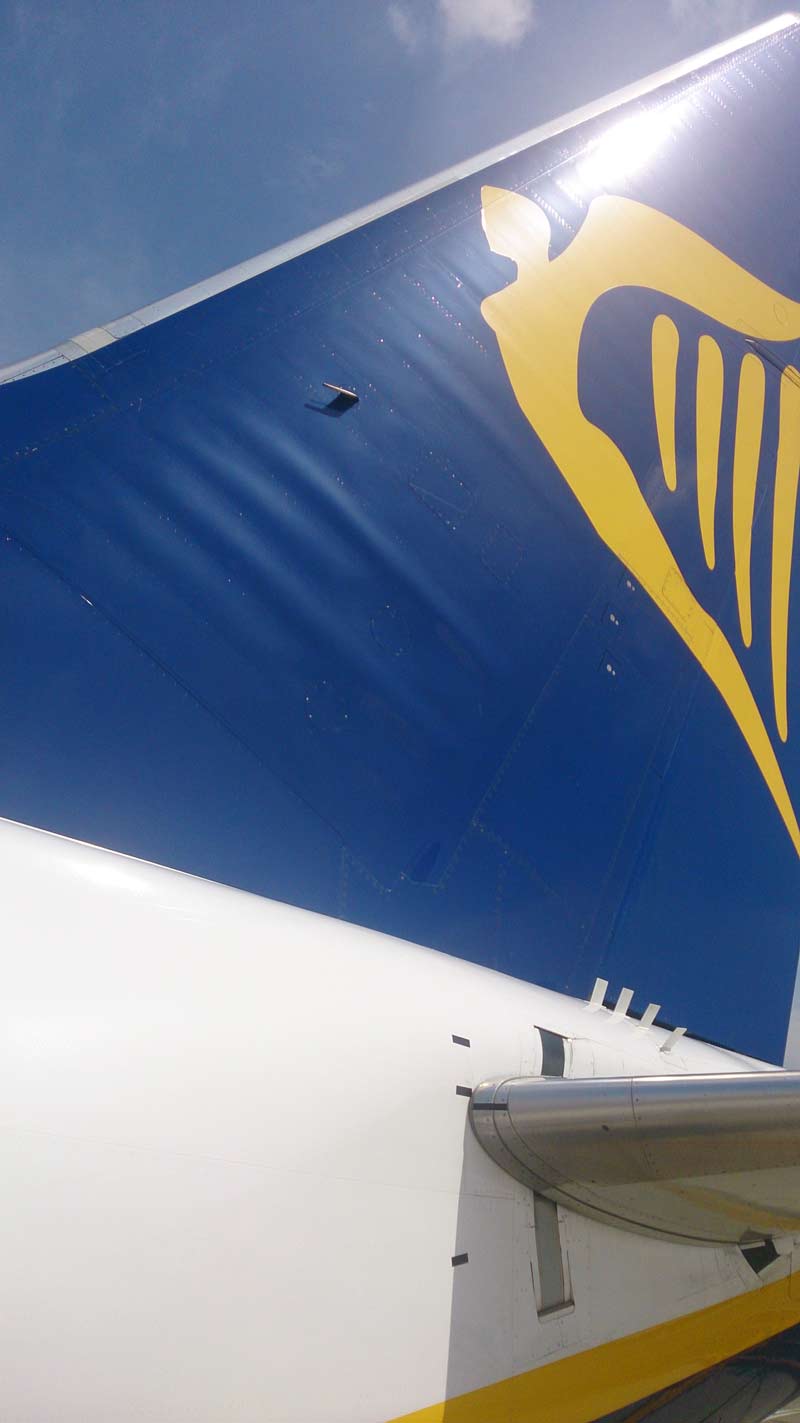
ryanair_wing_2.jpg


ryanair_wing_1.jpg


what do you think?

V.
 
Its a well known fact that Boeing builds special cheap lightweight models of this aircraft just for Ryanair. In the industry it's known as the Bayliner 737
 
Last edited:
OK, not good with planes
LOL, I guessed that after reading the title and then looking at your pic, V. :p
That thing is actually called vertical stabilizer (or possibly also fin in EN, IIRC).
Wings are those things sticking out of the plane horizontally, where engines are attached... :D
Oh, and the plane is bound to be a 737/800 - not that I'm such a great spotter, but that's the only aircraft Ryanair flies!

Anyway, welcome to the club of concerned Ryanair passengers, did you see this previous thread of mine? :)
http://www.ybw.com/forums/showthread.php?396373
Back to your point, I've seen panels like that other times, also on the wings, and I don't think it's worrying, but I'll leave technical comments to those who already addressed my doubts in that thread.
There's definitely some proper knowledge also of flying stuff around here, o top of the usual floating things...!

PS: did you note which aircraft was it exactly? Mine was the EI-EFL.
 
Last edited:
thanks guys for the info, MM for teaching me plane terminology and Deleted User for having me LOL :p

OK, I can understand that it's unlikely to drop due to these ripples, BUT in my book and according to my understanding of structures, this means that:

1. internal structure of the fin or whatever you call this thing is having some issues and is bending/compressing/moving
2. skin is inappropriately thin and cannot help to support the structure.

Since I sincerely hope that Boeing is not building custom lightweight 737s, I'd bet on 1. Which isn't a good thing no matter what.

OTOH I typically enter the plane from the front and through this flex tube thing hence no close view to the rear fin, so it maybe that all 737s are like this (which I really doubt!)

MM, I don't do Lounge so no didn't spot the thread. Interesting, thanks! BTW, didn't think of keeping the name of the plane (although it maybe somewhere close to the front of the plane and I was at the far back...)

FWIW, other than that flight was OK (landing was cr4p and it was no wind whatsoever, massive field)

cheers

V.
 
It's actually the empennage.:encouragement:
Mmm... Isn't that used to describe the whole "tail", i.e. vertical+horizontal stabs?
I'm pretty sure of that in French and Italian, and I'd be surprised if it were that different in EN.
But glad to bow to the superior language knowledge of the asylum, of course. :D

Vas, re. your point 1 (wing structure bending/moving): you bet it does, and much more than you might expect....
http://www.youtube.com/watch?v=Ai2HmvAXcU0
 
vas, if your plywood topsides looked like that you wouldn't be too pleased; it would be a serious case of delamination.

Think it's called a tail fin, the waggly bit is called the rudder.:D
 
1. internal structure of the fin or whatever you call this thing is having some issues and is bending/compressing/moving

It would be having issues if it wasn't bending and flexing. The wings especially are designed to flex to the extent that wingtips that are up level with the top of the fuselage in flight can be only just clear of the ground at rest. Some parts of the wings and tail fin are designed to derive stiffness and strength from the skin but other areas are really just covering to give shape for the airflow and protect whats inside. Extreme rippling on the wings can be an indication that excessive g has been pulled but that will be picked up by the instrumentation anyway and the aircraft will be checked as appropriate.

2. skin is inappropriately thin and cannot help to support the structure.

As above it's not really meant to in a lot of cases but, even where it does, you may get rippling and it's quite safe.

High aspect ratio wings are efficient at subsonic and transonic speeds and the longer and thinner a wing is the more it bends...


marzinzik10.jpg


If want to see what sort of testing a wing gets during development and certification try this video clip:

[video]http://www.dg-flugzeugbau.de/Data/Videos/bruchversuch-i.wmv[/video]

And here's a clip of a another glider from that company undergoing testing for flutter (resonance caused by imbalanced control surfaces):

[video]http://www.dg-flugzeugbau.de/Data/Videos/dg-300-flatterversuch.wmv[/video]

Both aircraft passed their testing and are regarded as strong for their type.


Amongst airliners the Boeing 787 has a bit of a rep for bendy wings...

wingflex-diagram-thumb-476x237.jpg


b787_8_220_wing_flex_range.jpg
 
It would be having issues if it wasn't bending and flexing. The wings especially are designed to flex to the extent that wingtips that are up level with the top of the fuselage in flight can be only just clear of the ground at rest. Some parts of the wings and tail fin are designed to derive stiffness and strength from the skin but other areas are really just covering to give shape for the airflow and protect whats inside. Extreme rippling on the wings can be an indication that excessive g has been pulled but that will be picked up by the instrumentation anyway and the aircraft will be checked as appropriate.


As above it's not really meant to in a lot of cases but, even where it does, you may get rippling and it's quite safe.

High aspect ratio wings are efficient at subsonic and transonic speeds and the longer and thinner a wing is the more it bends...


marzinzik10.jpg


If want to see what sort of testing a wing gets during development and certification try this video clip:

[video]http://www.dg-flugzeugbau.de/Data/Videos/bruchversuch-i.wmv[/video]

And here's a clip of a another glider from that company undergoing testing for flutter (resonance caused by imbalanced control surfaces):

[video]http://www.dg-flugzeugbau.de/Data/Videos/dg-300-flatterversuch.wmv[/video]

Both aircraft passed their testing and are regarded as strong for their type.


Amongst airliners the Boeing 787 has a bit of a rep for bendy wings...

wingflex-diagram-thumb-476x237.jpg


b787_8_220_wing_flex_range.jpg

THANKS grumpy o g....... as someone who knows very little about how stuff works, that post was both informative and interesting...I seem to remember yonks ago discovery channel did a prog on the new "double-decker" plane and showed a similar test on a wing and that snapped at about 60degs of bend !!!!! which was about 4X possible max loading........... just thought I,d stick my 4penith in ..
 
Nah, I don't think so.
All steel vessels look like that to some extent, also much smaller ones.
Unless faired, but that's a very time consuming (hence expensive) process, usually specced only on luxury yachts.
 
Top