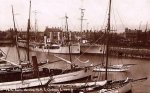
Is this Lowestoft in 1928?

Kukri

Well-Known Member
Joined
23 Jul 2008
Messages
15,562
Location
East coast UK. Mostly. Sometimes the Philippines
Visit site
43D07104-8E64-4926-8B8B-BED70AB26CBD.jpeg

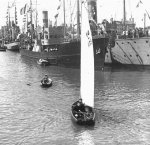
The boat can be identified by her sail number: she is “Avenger”, Uffa Fox’s revolutionary National 14 Foot Dinghy. And that’s Uffa at the helm. The Prince of Wales Cup, which she won, was held at the Nobs and Snobs in 1928. I think the vessel on the right with two rows of scuttles was the fishery cruiser. Can anyone confirm?

As a vintage Fourteen enthusiast, I note that the mainsail is laced to the boom - Uffa hadn’t invented the foot rope groove yet.

Vintage racing dinghies are like vintage racing cars - they were tweaked constantly for as long as they were competitive.
 
Lowestoft.JPG

Looks like it. This is the RN&SYC basin in the 20s: the building in the centre background looks very much like the one on the right in the OP.

Perspective would suggest the OP's picture was taken in the main channel just inside the harbour entrance.
 
Different year!

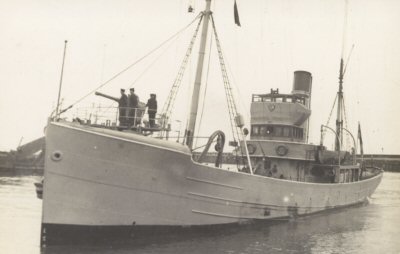
The fishery protection cruisers of the day were a very mixed bunch. The three largest were cabbage patch sloops, some were trawlers, some were one off conversions. They were not much concerned with keeping foreigners away from British waters; they were mostly trying to stop British skippers from fishing where they were forbidden to fish. There was also a fishery research ship based at Lowestoft at the time.

Here’s a video of the race:

Prince Of Wales Challenge Cup
 
Last edited:
When I lived in Penzance and started sailing, one of the boats was International 14 K(!)201 Daring, from 1929... She was still varnished 40 years on, and had 2 buoyancy "tanks" made of metal held in place by wooden slats which doubled as seats...
 
Re Avenger, here's what Robin Steavenson said about her in his book Marks to Starboard (1958):
"At the close of 1927 Uffa Fox had designed and built Avenger, which was destined to become, surely, the most famous dinghy ever built."
"... the advent of Avenger changed the face of dinghy racing and opened up new lines of thought by confirming the superiority of the planing hull."
"With Uffa at the helm she had 15 firsts, two seconds and three thirds in 57 starts. In addition she was sailed 100 miles across the Channel and back from Cowes to Havre carrying 3cwt of gear and three hefty men."
 
That's about quarter of a ton of extra weight: I bet she didn't do much planing during that trip!
I think, from memory, that the following year he advanced the planing concept further with Daring, but this was less successful, having been optimised for the stronger winds. I remember sailing a 'Holt 500' National 12, which was a slippery pre-planing hull, with a different feel to the Firefly that I was used to.
 
Re Avenger, here's what Robin Steavenson said about her in his book Marks to Starboard (1958):
"At the close of 1927 Uffa Fox had designed and built Avenger, which was destined to become, surely, the most famous dinghy ever built."
"... the advent of Avenger changed the face of dinghy racing and opened up new lines of thought by confirming the superiority of the planing hull."
"With Uffa at the helm she had 15 firsts, two seconds and three thirds in 57 starts. In addition she was sailed 100 miles across the Channel and back from Cowes to Havre carrying 3cwt of gear and three hefty men."
Ah... Marks to Starboard... Had that out of the library many times when I was a kid... Brilliant book!

Edit: I've just found a copy online for £7.50.....Thanks for reminding me about the book!
 
Last edited:
Ah... Marks to Starboard... Had that out of the library many times when I was a kid... Brilliant book!

Edit: I've just found a copy online for £7.50.....Thanks for reminding me about the book!
Do you know a about Robin Steavenson's first, and also brilliant, book When Dinghies Delight? Published in 1955, it chronicles the develop of dinghy sailing in the late 1940s and early 1950s, mainly about National Twelves but also Fourteens and Merlin Rockets – he sailed in each of these classes.
Robin was a doctor in the North East. During winter evenings, while working with a practice in a Durham coalfield village, he designed a boat, and in the spring he built her. While serving at a maternity hospital one of his boats was stored in an adjoining disused chapel. He built and designed most of his own dinghies, which he raced at almost every championship of those days, including many Burton Cups.
 
Lowestoft.JPG

Looks like it. This is the RN&SYC basin in the 20s: the building in the centre background looks very much like the one on the right in the OP.

Perspective would suggest the OP's picture was taken in the main channel just inside the harbour entrance.
Wonderful Hull shape of that fisheries patrol boat,if that what it is?
 
Do you know a about Robin Steavenson's first, and also brilliant, book When Dinghies Delight? Published in 1955, it chronicles the develop of dinghy sailing in the late 1940s and early 1950s, mainly about National Twelves but also Fourteens and Merlin Rockets – he sailed in each of these classes.
Robin was a doctor in the North East. During winter evenings, while working with a practice in a Durham coalfield village, he designed a boat, and in the spring he built her. While serving at a maternity hospital one of his boats was stored in an adjoining disused chapel. He built and designed most of his own dinghies, which he raced at almost every championship of those days, including many Burton Cups.

My father was a doctor in the RAF with Robin in the second world war and bought a 12 foot Chichester harbour One design off him which we raced in the Paglesham dinghy races in the 60's and 70's. It was called Tinker, sail no F19, all clinker with no fore deck but very similar to a National 12
 
Do you know a about Robin Steavenson's first, and also brilliant, book When Dinghies Delight? Published in 1955, it chronicles the develop of dinghy sailing in the late 1940s and early 1950s, mainly about National Twelves but also Fourteens and Merlin Rockets – he sailed in each of these classes.
Robin was a doctor in the North East. During winter evenings, while working with a practice in a Durham coalfield village, he designed a boat, and in the spring he built her. While serving at a maternity hospital one of his boats was stored in an adjoining disused chapel. He built and designed most of his own dinghies, which he raced at almost every championship of those days, including many Burton Cups.
Yes, I do... I read it along with M's to S, but the latter always held my thrall... I also loved the Uffa Fox books from that era... Particularly loved that he designed the Jollyboat when he was "getting a bit thick aft". First time I ever trapezed was on a Jollyboat...
 
Different year!

The fishery protection cruisers of the day were a very mixed bunch. The three largest were cabbage patch sloops, some were trawlers, some were one off conversions. They were not much concerned with keeping foreigners away from British waters; they were mostly trying to stop British skippers from fishing where they were forbidden to fish. There was also a fishery research ship based at Lowestoft at the time.

Here’s a video of the race:

Prince Of Wales Challenge Cup
Quite a lot of development visible in the rigs: the bermudian rigs predominate in the front-runners, but there are also quite a few gunter-rigged mains. If you look closely at the shot of the start line, you can even see a couple with standing lug rig!
 
Top