Is radar cooking my children?

Flyfloat

Member
Joined
7 Mar 2015
Messages
32
Location
Hampshire, IK
Visit site
I have a 50ft flybridge cruiser with a radar arch to the aft end. Every time I turn on the radar everyone on the flybridge guffaws about how I am irradiating the children which leads me to switch it straight off again.

To be fair I have not needed it in anger but what is the reality, should I drive from below if using radar?
 
http://www.who.int/peh-emf/publications/facts/fs226/en/

"Marine radars can be found on small pleasure boats to large ocean going vessels. Peak powers of these systems can reach up to 30 kW, with average powers ranging from 1 to 25 W. Under normal operating conditions, with the antenna rotating, the average power density of the higher power systems within a metre of the antenna is usually less than 10 W/m2. In accessible areas on most watercraft, these levels would fall to a few percent of present public RF exposure standards."

whether you personally consider any exposure to something that needs a limit in the first place as acceptable is another question.

Not sure if someone can do the maths and say whether just being on the flybridge in the sun is orders of magnitude more risky than just having the radar on.
 
I have a 50ft flybridge cruiser with a radar arch to the aft end. Every time I turn on the radar everyone on the flybridge guffaws about how I am irradiating the children which leads me to switch it straight off again.

To be fair I have not needed it in anger but what is the reality, should I drive from below if using radar?

More danger of cooking you kids on the flybridge grill. :)
Short pulse radar would be less risk that from using an iPhone.

I think that there have been a few posts about this on the forum if you want to search. There loads online about it if you need to have a print out ready next time you are under fire ;)
 
The manual for the radar will give the power, and also how much the beam spreads out below the horizontal. If it's on a tall arch close behind you, odds are you're below it anyway.

Pete
 
Personally, I would not sit on the Radome for long periods of time.
Bur although the peak pulse power looks scarily high, the average power is closer to a mobile phone.
 
The beam from the scanner is very narrow, and not that much power.

I understand the highest danger is to your corneas, so do not stand in front of it staring at the thing whilst it is transmitting. The stray radiation is likely less than that leaking around your microwave door, and similar levels of radio energy.
 
Most radars that I know of have a narrow beam spread of +/- 12' either side of their horizontal plane. If the radome is above head height then it seems unlikely that anyone will have much exposure.
 
It seems to me that for years there have been conflicting views about this. Many flybridge boats are set out in a way that means the radar 'beams' are certainly sweeping across the backs of the heads of anyone sitting at the flybridge helm. A delivery skipper well known to me is 100% certain that he can feel the effect of prolonged exposure to radar beams - headaches etc. My new boat (Sq65) certainly suffers from this and I've had BUK (ex EBY) make a mast to raise the radar dome by over a meter, partly in order to avoid this problem (but also to ensure that the sweep doesn't simply scan my bimini rather than other boats - but that's another story!!).
 
I asked a guy who worked on the designs at Raymarine, not there anymore so no axe to grind. He said that to get anywhere near maximum levels of exposure you would have to spend 24 hours with you head in the scanner case with it transmitting but not rotating. They're only radio waves, they are very low power - my RADAR was powered by 12v using two small diameter wires and the scanner rotates.
 
Thank you for all the replies. Now much happier turning on the radar, on a bright sunny day when I can see further than it can, but at least everyone can see the unintelligible blips on the plotter with wonder and amazement without being toasted.
 
Just a point but, if the radar is cooking you and your loved (or unloved) ones, however slowing and tenderly, then they/you will also be attenuating the beam. Might not matter if that's a line down to a point about 10' in front of the bow but, if it's one of those set ups where the arch is just a few feet above the sole in a attempt to keep things sleek, then you might be affecting the perfomance of the radar.
 
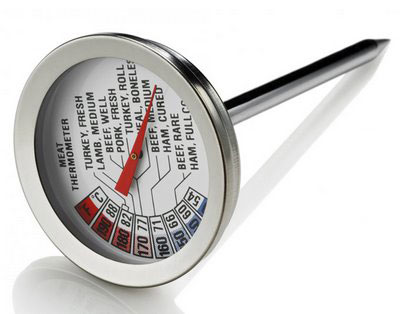
meat_thermometer.jpg

If the core temperature isn't hot enough, stick the little darlings back in front of the radar until done

(I'm sorry, I am, really, I just couldn't help myself!)
 
I asked a guy who worked on the designs at Raymarine, not there anymore so no axe to grind. He said that to get anywhere near maximum levels of exposure you would have to spend 24 hours with you head in the scanner case with it transmitting but not rotating. They're only radio waves, they are very low power - my RADAR was powered by 12v using two small diameter wires and the scanner rotates.

Would suggest you read this for starters.

http://www.ncbi.nlm.nih.gov/pubmed/20833106

[snip]Keeping this in view, study was aimed at workers occupationally exposed to pulsed microwave radiation, originating from marine radars. Electromagnetic field strength was measured at assigned marine radar frequencies (3 GHz, 5.5 GHz and 9.4 GHz) and corresponding specific absorption rate values were determined.[/snip]

[snip]Results suggests that pulsed microwaves from working environment can be the cause of genetic and cell alterations and that oxidative stress can be one of the possible mechanisms of DNA and cell damage.[/snip]

Every (commercial) vessel I have ever worked on has been very strict on radar being 'locked out' when personnel are working near by.

My car's ignition system is supplied by 2 small cables with 12v but the resultant spark is many thousands of volts...

W.
 
This is quite a complicate issue, but the gist of it is that small boat radars generally have wide beams and low power, so the intensity of the transmissions is very low compared with the intensity of transmissions from a high power, narrow beam commercial radar. Also, the regulations governing commercial radar (and the published specifications of recreational radar) have to assume the worst case scenario, in which a person is stationary in front of a scanner that is transmitting but not rotating, or that the person might be using an old-fashioned pacemaker. Having the scanner rotating reduces you exposure even more because most of the time it is not pointing at you.
And finally remember that if you double your distance from the transmitter, you reduce the intensity of the transmissions by a factor of four.
Nowadays, most parents happily give their kids mobile phones, which the little darlings then hold within a faraction of an inch of their brains. Before they get anything like that amount of exposure from a typical small boat radar, they would suffer concussion from having their heads hit by the rotating scanner!
The OPs concerns are understandable, but they have been well-researched by lots of experts in both medicine and radar, and are the subject of regulations and advice that affect the makers of radar and the builders of boats.
Relax. Enjoy your boat. You are doing the kids far more good by getting them some frsh air and exercise and quality time with you than you are by "exposing" them to radar.
 
I do believe that it is unhealthy. The P80 patrol boats we use in the swiss military have a commercial "Swiss Radar" installed. It has a peak pulse power of 4 kW. The aerial is fixed directly on top of the pilothouse, the soldiers heads inside are not far away.

After a full day of engagement, soldiers were often complaining about headaches... Hence, on my own boat, the radar is never turning when somebody is on the fly.
 
Top