
Is it worth fitting a forward looking sonar / fishfinder?

Fionajc

New Member
Joined
5 Mar 2014
Messages
7
Visit site
I have a Victor 34' Ketch fitted with all sorts of gizmos. I have a Garmin GPSMAP 4010 with Radar which I love. I have a NASA Clipper Depth gauge and repeater. I am tempted to buy and fit a GSD22 forward looking Sonar.

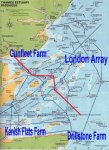
I sail on the east cost of the UK and I travel to France and back each year so I do have to watch the sandbanks. (typing that line I think I have answered my own question) Passage plan attached my route is red.

Is it worth the hassle of fitting one? They come up on ebay at around $200. Our son says why? the depth gauge works but I fancy a bit more info having gone aground twice thinking I know best (Who said women drivers?)

My question is "Is it worth getting one" bearing in mind that I have seen dry land above our position while crossing to France?
Thames Estuary windfarms.jpg
 
I don't have time to provide a long explanation right now - appointment with the boatyard. My recommendation would be 'DON'T GO THAT WAY'. Have you done that route before?

A forward seeing sounder might find, and probably would find, the sand of the Sunk Sand. Would it find the unmarked wreckage of the Middle Sunk beacon? I doubt that. A top of the range CHIRP fishfinder would find it but only once you are 'over it', which your bilge might find as well. The Port of London Authority didn't risk approaching its survey vessel when the SW Sunk beacon collapsed and its last survey of the Middle Sunk did not record the 'obstn' of the Middle Sunk wreckage.

Must dash - more later if you are interested.
 
I have done Foulgers gat once. And the other route about twenty times. When I went aground it was off Colne point. I was helping one of those times and I cut it too tight. I went south once past knock John and that took ages. The route I indicated is theist common but to get to the fisherman's I have been on the indicated passage just south.
 
Have used forward looking sonar a few times on different boats and frankly unless you are just creeping along at 1 or 2 knts the ones I've used don't give you enough time to react.
A friend also fitted one specifically as he was worried about hitting rocks off Sweden and Finland, he found that he got little time to avoid obstacles and any glitch or reading from fish or debris he found himself lurching at the wheel, going hard over just in case.

That said I have read that the new Navionics system is a lot better but not used one yet.
 
I have no experience of the forward looking sonar but I was interested but after research I didn't think it would be as much use as hoped.

On the route, best you don't follow that route. That is the Middle Sunk Sunk. The red line track over the Sunk Sand crosses a very shallow finger which crosses that red line to the north east. At best over that 'finger' there is 1.4m at CD, at worst 0.2 drying. And if you are over that you are heading towards the wreckage of the Sunk Beacon. The beacon was not an unsubstantial beacon; about 40ft x 40ft at waterline of steel girders 10m high. It collapsed leaving a stump of girders at LW springs and then completely disappeared. So you can imagine the possibility of encountering some wreckage via your bilge.

It is possible to dog-leg through the Middle Sunk. You need to go round the 'finger' to the north-east and then back over to go the other side (and clear) of the position of the wreckage. The most recent survey was by the PLA in 2015 (who kindly provided me their data) but interesting they did not notify any depth over the wreckage. Perhaps they could not find it or what to get close enough.

The best route is via the SW Sunk. Please have a look at my web site: http://www.crossingthethamesestuary.com/page29.html The second one down is the one showing the position. That was surveyed last year and will need confirmation this Spring (although I doubt it will have moved much). That swatchway is well clear of the wreckage of the debris of the SW Sunk Beacon which had disappeared earlier. There is also a chartlet for you to download regarding the Little Sunk which matches up with the Foulger's Gat opposite through the Long Sand.

Hope this helps.
 
When we were sailing the east coast, I was quite keen on the idea having had a few close scrapes with sand banks. I did a lot of research including talking to suppliers and installers and came to the conclusion that it would be pretty difficult on a sailing yacht. Most of the devices I could find were really intended for motor boats with relatively large areas of flat (more or less) hull underneath. Few sailing boats offer a suitable place to mount the scanner.
 
I have a fishfinder on our Sabre (fin keel), it is excellent. Does everything an echo sounder can plus more. The bottom trace gives you warning when it starts to shoal so is invaluable when creek crawling. I fitted the transducer by grinding a small flat with a powerfile on the centreline putting a big splot of silicone on the bottom of the hull & sticking it in with that. Wouldnt be without it.
 
I have a fishfinder on our Sabre (fin keel), it is excellent. Does everything an echo sounder can plus more. The bottom trace gives you warning when it starts to shoal so is invaluable when creek crawling. I fitted the transducer by grinding a small flat with a powerfile on the centreline putting a big splot of silicone on the bottom of the hull & sticking it in with that. Wouldnt be without it.

I too find the fish-finder useful particularly as I get a WiFi connection to iDevices with my version (Vexilar), But I think, forward and even sideways sonar is something entirely different.

http://www.pbo.co.uk/gear/5-forward-looking-sonar-tested-29321
 
Like a fool I went to look at the web site!
Now I'm terrified, makes crossing the Channel, Alderney Race, Bristol Channel and Corryvrecken and all the other 'dark places' look like a walk in the park.

Or is it just me?
 
Every pilot book from Cunliffe's Channel to East Coast Rivers makes it perfectly clear that their respective waters are among the most dangerous in the known world, that certain death awaits the skipper who travels them in more than a F3 and an ebb tide will set you upon the rocks/bar/shoals/whales/spikes sooner than you can say knife.
 
FFSonar was discussed over on the MoBo forum some while ago and some pretty sophisticated (and expensive ) kit was mentioned.
Mainly to avoid rather hard rocks in the "MED", its advantages were apparently debatable to say the least.
The subject faded away and to date nobody is leaping up and down announcing they have fitted the stuff and how wonderful it is !
 
Every pilot book from Cunliffe's Channel to East Coast Rivers makes it perfectly clear that their respective waters are among the most dangerous in the known world, that certain death awaits the skipper who travels them in more than a F3 and an ebb tide will set you upon the rocks/bar/shoals/whales/spikes sooner than you can say knife.

Oh, right then. Stand down the panic mode and back to normal.

Then again, you get wind against tide around Fairlight you'll rue the day you bought a boat and confirm that pots and lines go there to breed.

A chap in our club was saying that he'd heard of someone..........
 
Every pilot book from Cunliffe's Channel to East Coast Rivers makes it perfectly clear that their respective waters are among the most dangerous in the known world, that certain death awaits the skipper who travels them in more than a F3 and an ebb tide will set you upon the rocks/bar/shoals/whales/spikes sooner than you can say knife.
:D
 
Oh, right then. Stand down the panic mode and back to normal.

Then again, you get wind against tide around Fairlight you'll rue the day you bought a boat and confirm that pots and lines go there to breed.

A chap in our club was saying that he'd heard of someone..........

I had a bloke in the back of the cab who said he'd done the Orford Bar in a F4 over ebb but I reckon he was lying
 
Top