
Inverter Question?

I did just this on my boat. I connected my sterling 2500w inverter into the 13amp socket circuit on the boat, which allows me to run the microwave etc from the inverter. I did this by using one of these 16amp 230v non latching relays from RS http://uk.rs-online.com/web/p/non-latching-relays/2452396/. Wiring diagram attached (kindly supplied by another forum member when I enquired how to do this) My boat is older and doesn't have a newer domestic type RCD panel, the RCDs are separately wired and this is wired into the circuit between the incoming feed and RCD for the 13amp plug circuit. Default position, the relay connects the incoming mains 230v supply to the sockets, if your switch on the inverter, the relay senses this and switches over to disconnect the mains supply and connect the inverter. It works really well.

Best wishes

Puggy
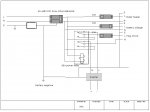
image.jpg
 
Safest way is to install a double pole 3 way switch ( 1, off, 2) and wire the inverter and shore power into that between the deck socket and the RCD. I use one of these - http://www.marathonleisure.co.uk/product.php?xProd=200486

Switching this way prevents the inverter and shore power being on at the same time and also stops the inverter feeding the deck socket which could spoil someone's day.

+1 This method works fine with my 600w inverter.
 
Very many thanks for all the replies. Well, most of them;-) Indeed i did get my males and females confused (oowerr mrs). I simply wanted to know if there was any reason NOT to connect the inverter to my shore power inlet. As suggested, I then would NOT also be able to plug in the shore power at the same time;-)
 
Works fine with my 3000w inverter as well. The switch needs to be a break before you make type

I should have said 'relay' instead of switch. Its a double changeover mains voltage type which is activated by the inverter thereby disconnecting the shore power should it happen to be connected and the inverter is switched on by accident.
 
I should have said 'relay' instead of switch. Its a double changeover mains voltage type which is activated by the inverter thereby disconnecting the shore power should it happen to be connected and the inverter is switched on by accident.

Which is impossible anyway if the inverter is plugged into the shore power socket.
 
That's why I don't plug into the sp socket - that's the point of the relay!!

I'm a bit confused (not unusual nowadays).

Plug into showpower input: Imposible to have shorepower at same time (unless you are mad and specifically fit a cable with 2 inputs and 1 output)
Relay system: Also impossible to have shorepower at same time (unless relay only affects part of the 240V system)

I was wondering if your relay only affected some systems (e.g. sockets, but not heater, charger etc.).
 
I did just this on my boat. I connected my sterling 2500w inverter into the 13amp socket circuit on the boat, which allows me to run the microwave etc from the inverter. I did this by using one of these 16amp 230v non latching relays from RS http://uk.rs-online.com/web/p/non-latching-relays/2452396/. Wiring diagram attached (kindly supplied by another forum member when I enquired how to do this) My boat is older and doesn't have a newer domestic type RCD panel, the RCDs are separately wired and this is wired into the circuit between the incoming feed and RCD for the 13amp plug circuit. Default position, the relay connects the incoming mains 230v supply to the sockets, if your switch on the inverter, the relay senses this and switches over to disconnect the mains supply and connect the inverter. It works really well.

Best wishes

Puggy

View attachment 51372
As drawn your circuit works the other way round... The relay coil is energised by the shore power (after RCD), disconnecting the inverter output.. Does the same job, but its connecting SP that causes the switch
 
That's why I don't plug into the sp socket - that's the point of the relay!!

Plugging an inverter, or a generator, into the shorepower inlet connector is the simple and safe solution. It only lacks the convenience of a permanent connection via a manual transfer switch or relay
 
I'm a bit confused (not unusual nowadays).

Plug into showpower input: Imposible to have shorepower at same time (unless you are mad and specifically fit a cable with 2 inputs and 1 output)
Relay system: Also impossible to have shorepower at same time (unless relay only affects part of the 240V system)

I was wondering if your relay only affected some systems (e.g. sockets, but not heater, charger etc.).

I don't need both. Shorepower supplies everything - charger, heater, microwave etc.

When there's no shorepower the 600w inverter supplies everything and the heater and microwave aren't used otherwise I'd have installed a larger inverter or a genny. (I have a Force 10 gas heater in this instance, and didn't use the m-wave much anyway so don't miss it)

I do have one socket connected directly to the shorepower supply so could if necessary use both, another reason for using the relay rather than plugging the inverter into the shorepower socket. Its not rocket science to wire up a relay between the shorepower socket, rcd input and inverter output - same as a changeover switch but with the relay coil connections also going to the L & N inverter terminals so the relay activates whenever the inverter is switched on.
 
Last edited:
Is there some benefit in one of multiple switches with a bar that makes you turn one off before the other on?

I have three sources - Genset, Inverter, Shore - only one can be on at a time.
 
Is there some benefit in one of multiple switches with a bar that makes you turn one off before the other on?

I have three sources - Genset, Inverter, Shore - only one can be on at a time.

You can use an industrial cam switch similar to this type:

http://uk.rs-online.com/web/p/rotary-switches/7051103/

This has 4 positions, 1 for each power source and OFF. You'll get one from your electrical wholesaler eg City Electrical Factors (CEF) Newey & Eyre etc

Just ask for a 2pole, 3 or 4 position cam switch. (Most 3 position ones are 2pso + OFF, so a 4position one will most likely be needed.) You'll need a housing / enclosure for it and 4 cable glands.

I use a 3 position one to switch my charger to different battery banks (its only a single output charger, which is no hardship since the engine battery normally doesn't need charging)

Alternatively an automatic system would use 3 relays. The first source to be switched on will 'lock out' the other 2 relays.

Using relays has the advantage that you could for example, have the inverter switch on automatically if the genny ran out of fuel or the shorepower suffered a power cut.
 
As drawn your circuit works the other way round... The relay coil is energised by the shore power (after RCD), disconnecting the inverter output.. Does the same job, but its connecting SP that causes the switch

Apologies I stand corrected. I did connect the way I describe as I reckoned there would be less stress on the solenoid as it would be less utilised.
 
Top