
Introducing hand priming pump into fuel supply line

Arcady

Well-Known Member
Joined
9 Dec 2010
Messages
673
Location
Guernsey
Visit site
Question: I am renewing our fuel lines between tank and engine to include a dedicated water trap and separate (switchable) primary filters. I was considering introducing a hand priming pump like the one below into the fuel line to aid filter changes, but am concerned about the ‘resistance' it might introduce into the system. As a simple test, I am surprised at the moderate amount of suction required to suck air through it. The engine is a 40 hp diesel with electric lift pump and it will already be lifting fuel approx 50 cm from the main fuel tank. Should I be concerned, or will the pump cope with this additional resistance?
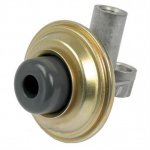
15-38HPP01-2.jpg
 
I suspect the engine lift pump will manage fine.

I use an outboard motor type priming pump, the second boat on which I've fitted one and wouldn't be without it. However my secondary filter housing, as provided by Volvo, also has a pump on it similar to your picture. I don't really use that one, the bulb pump is easier, but the engine pump is moving the fuel through both of them with no apparent difficulty.

Pete
 
Question: I am renewing our fuel lines between tank and engine to include a dedicated water trap and separate (switchable) primary filters. I was considering introducing a hand priming pump like the one below into the fuel line to aid filter changes, but am concerned about the ‘resistance' it might introduce into the system. As a simple test, I am surprised at the moderate amount of suction required to suck air through it. The engine is a 40 hp diesel with electric lift pump and it will already be lifting fuel approx 50 cm from the main fuel tank. Should I be concerned, or will the pump cope with this additional resistance?

View attachment 56339

That one is for fitting onto the side a CAV type filter. I have one on my genset feed and it works very well.
 
That one is for fitting onto the side a CAV type filter. I have one on my genset feed and it works very well.

Hadenough - that is exactly what I have in mind, thank you.

The opinion so far seems to be that the pump will cope OK. One of the advantages of the engine mounted electric lift pump is that it claims to automatically bleed the fuel lines anyway. I was unsure though whether it would cope with purging conceivably both the water separator and filter of air - hence the desire to fit the manual priming pump. Thoughts??
 
Hadenough - that is exactly what I have in mind, thank you.

The opinion so far seems to be that the pump will cope OK. One of the advantages of the engine mounted electric lift pump is that it claims to automatically bleed the fuel lines anyway. I was unsure though whether it would cope with purging conceivably both the water separator and filter of air - hence the desire to fit the manual priming pump. Thoughts??

No sure, I decided to stick with a mechanical lift pump when I upgraded my system last winter. I'm inclined to think than an electric pump would do the job on it's own. Why don't you see how the leccy pump handles bleeding first? You can easily retro fit the hand primer if it doesn't.
 
I was thinking of fitting a 12v pump and disconnecting the old fashioned mechanical fuel pump, that way once the pump is switched on, the diesel supply to the injector pump is under constant pressure. Which also has the advantage that when changing filters or servicing you don't have to mess about pumping the lift pump to get air out of the system.
I would obviously leave the original lift pump in place, complete with tubing and spare jubilee clips in case if the 12v pump ever fails I can swap back to the old system quickly.
Another advantage, is that in my boat the original mild steel fuel tanks were replaced with new Vetus Plastic ones which are obviously lighter, so a 12v pump would allow me to empty the diesel into containers, the plastic tank then when empty weighs about 20 kilos which can easily be lifted out for cleaning or checking if it has Diesel Bug in it.
 
Hadenough - that is exactly what I have in mind, thank you.

The opinion so far seems to be that the pump will cope OK. One of the advantages of the engine mounted electric lift pump is that it claims to automatically bleed the fuel lines anyway. I was unsure though whether it would cope with purging conceivably both the water separator and filter of air - hence the desire to fit the manual priming pump. Thoughts??

Our fuel tank is around 4 ft deep and the electric pump has no problem bleeding the system after filter changes. Don't see any need for anything additional which would just increase resistance.
 
Thank you all for your replies. On balance I think we'll keep it simple - and initially just see if the electric self-bleeding lift pump copes with priming the system. Failing that, I think I'll opt for a bulb type pump, which - as already pointed out - should be an easy retro-fit.
 
Arcady I put one of those on my system (Water trap followed by CAV) last year. On outlet side of CAV filter - works fine.
 
You need it on the inlet side of the cav filter - if you want to bleed out the head chamber of the Cav. They make them in inlet and outlet versions.
Inlet is better - as it has nothing behind it that needs bleeding - all the bleed point are ahead of it. - ie cav head chamber, secondary filter head, injector pump inlet etc.

If you have a top feed tank - then a primer of some type is almost essential, esepciallly if your tank is top feed - and - lower than the lift pump head. ( mine was like that - but I changed it to a positive feed. Still a top outlet though )
 
I fitted an identical pump to the input side of a CAV filter from which there is a 5m run to the engine, it has made filter changes etc & bleeding so very much easier -very pleased.
 
Peugeot 306 has a bulb pump in the fuel supply. Easy to get from a scrap yard. Very useful for any pumping function need to stat a syphon of fuel. (Like when the wife put petrol in the diesel tank).
 
Top