Interior Sadler 29 terrible paint job?

Stringers

New Member
Joined
29 Nov 2012
Messages
5
Visit site
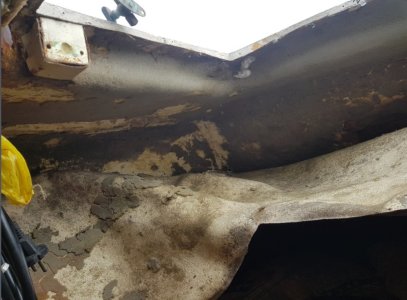
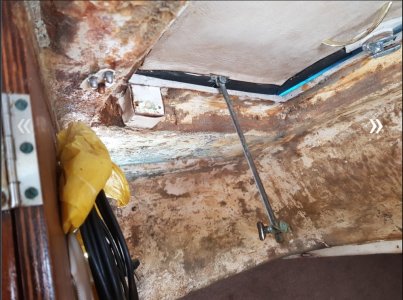
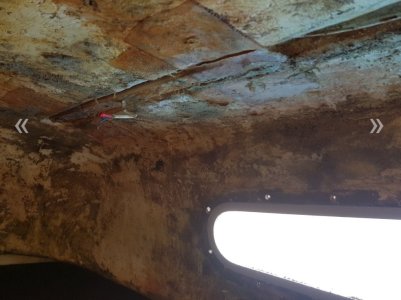
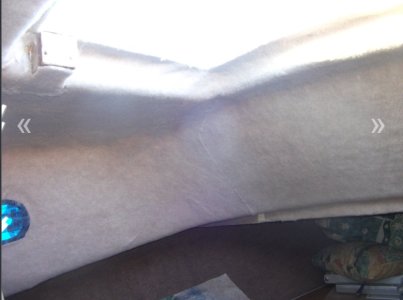
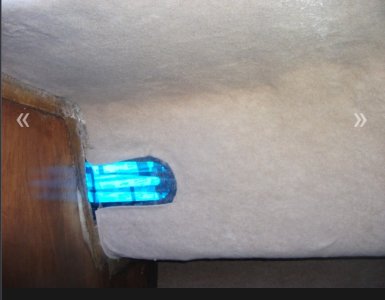
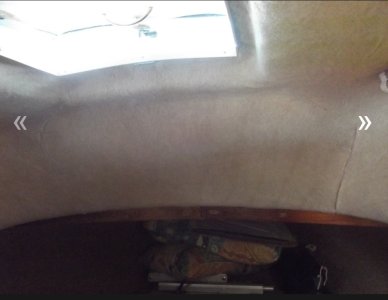
I'v recently bought a Sadler 29 which has had a terrible paint job throughout the interior - it's now flaking off. Any tips on what to do? My 2 options seem to be - 1, attempt to strip it all - the roof is textured finish so will take ages.. or 2. Epoxy prime and reapint with a decent 2 part poly paint.. or a mix of both. Everytimne I go onboard it's making me twitch. And it's a bloody mould magnet.
 
It’s probably the answer you don’t want…. But get sanding!

Maybe buy a good quality sander with a vacuum connection and decent dust extraction. Oh and lots of sanding discs.
 
If it were me, I’d sand off the loose stuff / perhaps wire brush the worst stuff off. Epoxy some wooden blocks to the glass and use these to affix headlining panels up
This.

Adding insulation in the space between the bocks will make for a cosy cabin and a big reduction in the otherwise inevitable condensation.
 
My memory of the Sadler 29 we once had was that the woodwork never looked as if it would ever need painting. The double skin hull was much better insulated than other boats of the time and mould was not a problem.
 
I would sand off the loose and get it back to well adhered .... then Van Lining ...

Its far better than the old Vinyl foam backed stuff ... it is nice to touch ... it aids insulation ... wet rag wipe to clean ... and a doddle to apply. I like panels - but its a lot of work to get it right.
Van lining is dead easy and not expensive.

I bought a 20m roll and it came with the recc'd number of correct high temp spray adhesive. eBay is full of it ... so not hard to get ..
 
I would sand off the loose and get it back to well adhered .... then Van Lining ...

Its far better than the old Vinyl foam backed stuff ... it is nice to touch ... it aids insulation ... wet rag wipe to clean ... and a doddle to apply. I like panels - but its a lot of work to get it right.
Van lining is dead easy and not expensive.

I bought a 20m roll and it came with the recc'd number of correct high temp spray adhesive. eBay is full of it ... so not hard to get ..
On the back of your (at least I think it was you) recommendation I’ve just bought 4way stretch fabric to make good after some grp work in the forepeak. I was planning on applying it to new paneling. Did you spray and stick direct to grp?
 
On the back of your (at least I think it was you) recommendation I’ve just bought 4way stretch fabric to make good after some grp work in the forepeak. I was planning on applying it to new paneling. Did you spray and stick direct to grp?

Yep - nothing between the lining and GRP - other than the old crap I could not remove. I expected to have luimps and bumps in the finished - but no - it all came out nice. You'd never know its not fully sanded back ...

I was lucky that the old vinyl provided templates for me ... but its not difficult without.

I'd upload pictures - but I use IMGUR which forum being UK based - means they wont show ... lets see if I can sort another way ... ( just downloaded and sorted ...)

Stripping the old vinyl :

stripping old vinyl.jpg

stripping old vinyl 2.jpg

stripping old vinyl 3.jpg

I scraped the loose and then sanded to reduce the edges of adhering crap ... then attached lining ...

lining 1.jpg

This next shows me working round the 'window' which then had lining under the alloy frame ..

lining 2.jpg

I made small mistake on the stbd side with the joint ... I could have sorted - but decided to leave it in the end ... the camera makes it look far worse by highlighting it ... in reality - you don't really see it ..

lining 3.jpg

That's the forecabin ... I still have main cabin and heads area to do as all was put back when I hit rocks and had to have keel repaired. Plan is to complete this summer.
 
I had a similar problem to Stringers' with a badly painted interior. There is no sensible way to paint over flaking paint. On the woodwork, I found that a carbide scraper did much better than sanding and it wasn't that bad a job really. I would expect same on smooth GRP. But if the roof scenario described is a textured-gelcoat fibreglass liner, I think that's a different, tricky situation and I am not sure what to suggest. You'd basically have to sand it flat which sounds not so good. The 4-way stretch is good on the bare glass you get behind the old headlining cloth for tricky shapes like V-berths, but I'm a bit doubtful on flaking paint on textured gel...
 
Yep - nothing between the lining and GRP - other than the old crap I could not remove. I expected to have luimps and bumps in the finished - but no - it all came out nice. You'd never know its not fully sanded back ...

I was lucky that the old vinyl provided templates for me ... but its not difficult without.

I'd upload pictures - but I use IMGUR which forum being UK based - means they wont show ... lets see if I can sort another way ... ( just downloaded and sorted ...)

Stripping the old vinyl :

View attachment 204352

View attachment 204353

View attachment 204354

I scraped the loose and then sanded to reduce the edges of adhering crap ... then attached lining ...

View attachment 204355

This next shows me working round the 'window' which then had lining under the alloy frame ..

View attachment 204356

I made small mistake on the stbd side with the joint ... I could have sorted - but decided to leave it in the end ... the camera makes it look far worse by highlighting it ... in reality - you don't really see it ..

View attachment 204357

That's the forecabin ... I still have main cabin and heads area to do as all was put back when I hit rocks and had to have keel repaired. Plan is to complete this summer.
Nice work, well done. Finally did you spray the adhesive onto grp or the cloth? And will I appreciate psychedelic music, incense sticks and tie-dyed clothing whilst doing the job?
 
TBH - its a while since I did the job ... but primarily I sprayed the lining ... but seem to remember that I did spray onto GRP in places I felt needed some help - but I don't think it was necessary. The adhesive gives you a 'reposition' time if you get it wrong on initial placement ... but as with most contact adhesives - that time is limited.

I made sure I had good ventilation as the adhesive solvent is quite noticeable. But I did not have any special clothing ..... note that if you do get adhesive on to clothes - its a b****r to remove ... so not advised to wear sunday best !
 
If the Sadler 29 is like my Sadler 32, it has a moulded GRP liner in most places aside from the varnished woodwork. Unlike the 32, the 29 has some foam injected between these liners and the hull and decks. The deckhead liners also have a smooth stippled effect moulded into them, I would guess that smoothing these down would be extremely arduous and best not attempted.

Maybe get as much of the old paint off as possible by scraping or wire brushing, by hand so as not to spoil the moulded textures too much, then prime and repaint? Wet and dry used wet could be used for areas with no texturing.
 
I've cleaned a lot of flaking paint from inside the cabin and done repainting last winter. I'm repeating it this year in the bilge. Find yourself some loong audiobooks. Ear defenders are also good to shield some of the reverberations in the GRP if you are using power tools.

I used Epoxy with West 410 filler to smooth out the GRP and it worked well despite me being at the end of my patience with the job.
 
Nice work, well done. Finally did you spray the adhesive onto grp or the cloth? And will I appreciate psychedelic music, incense sticks and tie-dyed clothing whilst doing the job?

The idea is you spray the contact adhesive onto both the grp and onto the back of the carpet and then let it dry for a couple of minutes.

You can then stick the two together, with a degree of being able to rip it off and start again.

It’s somewhat amusing watching someone try and use contact adhesive who hasn’t yet worked out it needs to dry first 😂
 
The idea is you spray the contact adhesive onto both the grp and onto the back of the carpet and then let it dry for a couple of minutes.

You can then stick the two together, with a degree of being able to rip it off and start again.

It’s somewhat amusing watching someone try and use contact adhesive who hasn’t yet worked out it needs to dry first 😂

Depends on the profile you are covering ... like many contact glues - when wet and first applied - you can put the two together to 'spread' the adhesive .. then quickly separate them.
Wiat till tacky dry - then apply.
 
Depends on the profile you are covering ... like many contact glues - when wet and first applied - you can put the two together to 'spread' the adhesive .. then quickly separate them.
Wiat till tacky dry - then apply.

If your using a spray adhesive you are doing something very wrong if you need to ‘spread’ it.

Thousands of videos on YouTube showing how to do it properly.
 
If the Sadler 29 is like my Sadler 32, it has a moulded GRP liner in most places aside from the varnished woodwork. Unlike the 32, the 29 has some foam injected between these liners and the hull and decks. The deckhead liners also have a smooth stippled effect moulded into them, I would guess that smoothing these down would be extremely arduous and best not attempted.

Maybe get as much of the old paint off as possible by scraping or wire brushing, by hand so as not to spoil the moulded textures too much, then prime and repaint? Wet and dry used wet could be used for areas with no texturing.
If the OP's Sadler 29 is like my Sadler 29, the moulded stippled effect GRP headliner has a similar effect to 40 grit sandpaper if you so much as lightly brush the top of your bald head against it :)... which sooner or later you will, if you're any taller than 5ft 11".

As my better half is unconvinced about the perpetually-bleeding/scabbed scalp look, I am considering options for cutting out/replacing some areas of the headlining. Unlike the inner mouldings lower down (ie the hull) on "foamed" Sadlers, the headlining isn't attached much to the outer GRP coachroof (and there isn't foam between the two). Indeed, having poked a matchstick up into a hole in the headlining (the hole was already there, of unknown history/intent) there seems to be about a two inch gap from there to the coachroof moulding, which would represent a very useful gain in headroom (particularly if the replacement headlining were also less abrasive). I would guess that the gap becomes less near the mast and main bulkhead, where they probably made the deck moulding thicker/stronger.

I was thinking painted or varnished tongue and groove planking for the central couple of feet, where you tend to stand, running the full length of the saloon (from main hatch to main bulkhead). Reading other posts above I'm now tempted to try the stretchy van carpet idea first, then do the T&G later if I don't like it or don't successfully make the van carpet resist gravity. Any advances on that? I would also welcome ideas on how to make a nice-looking transition between the area of new stretchy van carpet (or T&G) and the original headlining either side, some kind of cover strip I guess. Removing the headlining full width would be more complicated as further out to the sides there are internal grab rails fastened through it, etc.
 
If the OP's Sadler 29 is like my Sadler 29, the moulded stippled effect GRP headliner has a similar effect to 40 grit sandpaper if you so much as lightly brush the top of your bald head against it :)... which sooner or later you will, if you're any taller than 5ft 11".

As my better half is unconvinced about the perpetually-bleeding/scabbed scalp look, I am considering options for cutting out/replacing some areas of the headlining. Unlike the inner mouldings lower down (ie the hull) on "foamed" Sadlers, the headlining isn't attached much to the outer GRP coachroof (and there isn't foam between the two). Indeed, having poked a matchstick up into a hole in the headlining (the hole was already there, of unknown history/intent) there seems to be about a two inch gap from there to the coachroof moulding, which would represent a very useful gain in headroom (particularly if the replacement headlining were also less abrasive). I would guess that the gap becomes less near the mast and main bulkhead, where they probably made the deck moulding thicker/stronger.

I was thinking painted or varnished tongue and groove planking for the central couple of feet, where you tend to stand, running the full length of the saloon (from main hatch to main bulkhead). Reading other posts above I'm now tempted to try the stretchy van carpet idea first, then do the T&G later if I don't like it or don't successfully make the van carpet resist gravity. Any advances on that? I would also welcome ideas on how to make a nice-looking transition between the area of new stretchy van carpet (or T&G) and the original headlining either side, some kind of cover strip I guess. Removing the headlining full width would be more complicated as further out to the sides there are internal grab rails fastened through it, etc.
I assume that the construction of the 29 is very similar to that of the 34. By removing the centre hatch and its surround it is possible to see the space between deck and headlining, which is much as you describe.

I have never considered removing the headlining, so have not inspected the space to that end. However, I seem to remember that it tapers off at the sides. Where the lower shroud knees are attached (not sure if the 29 has these) the two mouldings are almost in contact. There are some photos on this page Sadler 34 lower and cap chainplates that may be helpful.
 
Top