Instrument Panel Material

Goldie

Well-Known Member
Joined
29 Sep 2001
Messages
2,312
Location
Nr Falmouth, Cornwall.
Visit site
The winter jobs list includes a re-vamp of the instrument panels both at the chart table and at the helm position (instrument pod on the binnacle). As all the holes/positions will be changing, I plan to replace the panels and current thinking is to use a satin finish black 'plastic' of some sort, akin to what the switch panels are made from. The questions please, are what is this stuff called, where do I find it and is it easy enough to get a good diy cut or does it need anything special for the 'pro' finish?

Many thanks in anticipation of the usual (mostly!) good advice and suggestions.
 
There was a thread on this subject some time ago, about 12 months, and I think GHA had made a spiffy panel, I'm sure Roger Shaw must have made a panel and I also recall Vyv made panel.

Sorry all a bit vague - but a search of the archives might work - or wait until someone posts.

Jonathan

My thread crossed with PVB, who has been much more useful as he has a link :)
 
Last edited:
Panels are originally made from a laminated plastic type material (occasionally aluminium) , Traffolyte being one of the better known brands, but many other available. The laminated layers allow it to be engraved. You could look around online to find a company that would make the panel and do the engraving. If you want to make the panels yourself, you won't need the laminated material, some normal coloured acrylic sheet would be fine. This can be cut, drilled, sanded etc easily, just don't go too fast and melt it.
 
I used a type of perspex with the back surface coated with, in my base black "paint". I then have the panel back engraved which can be filler with white paint or left open and back lit with LED's.

Truflite as Paul recomended is also good and I used to use that when I was designing industrial electrical panels.

Find a local engraver and discuss what you would like with them.
 
A local sign merchant supplied and engraved a black switch panel for my boat to my design. I then cut the holes for the switches and breakers with a bench drill. If I remember correctly, I stuck masking tape on both sides of the drill area to reduce the risk of unintentional damage to the edges of the holes.
 
I used teak faced ply with epifanes varnish to finish. Still looks like new 4 years later, although may not fair so well in the weather.

Original vinyl padded panel ...

Boadicea%20old%20dash.jpg


New panel ...

Boadicea%20dash.jpg
 
I had a small supplementary panel made by a local plastics company. They used the type of material described above, where removing the surface layer (black) reveals white beneath. The panel mainly consists of holes to mount the various instruments, they machined these out, added the white border and printing. Cost was very reasonable, less than £30 I think

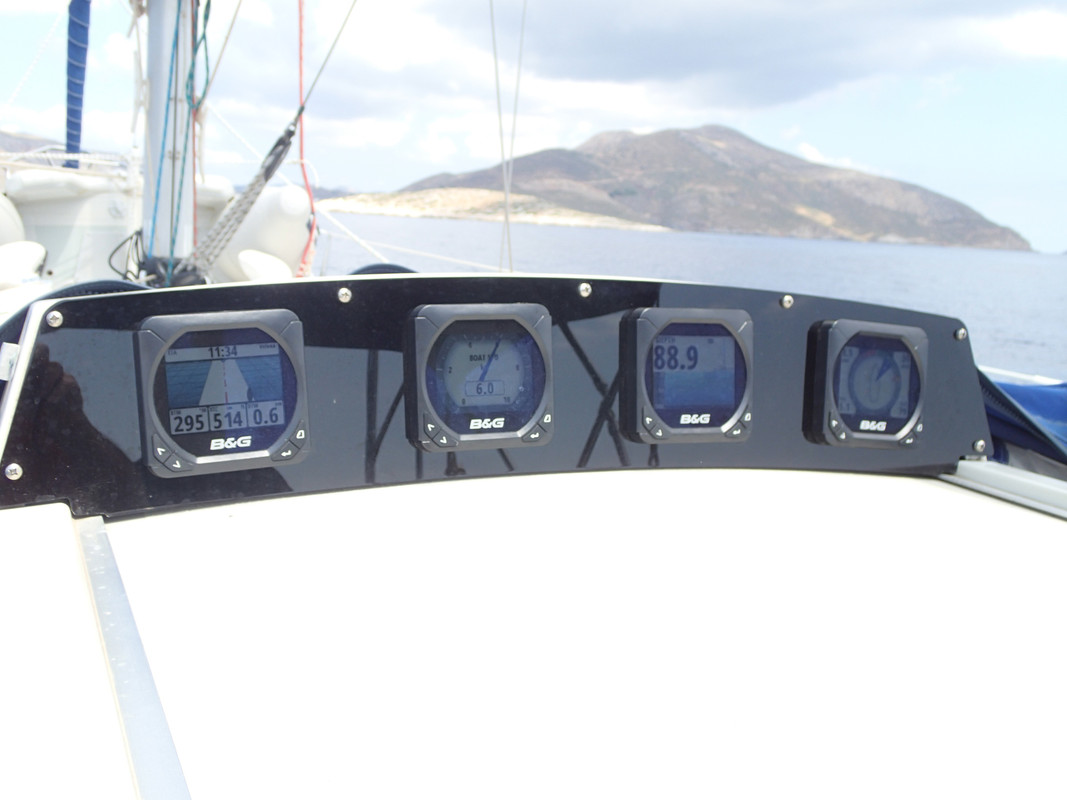
I used the same company to make me an exterior panel above the companionway for my new B&G instruments. This is in 10 mm perspex. All holes machined out by them, very tidy job and again, reasonable cost.
 
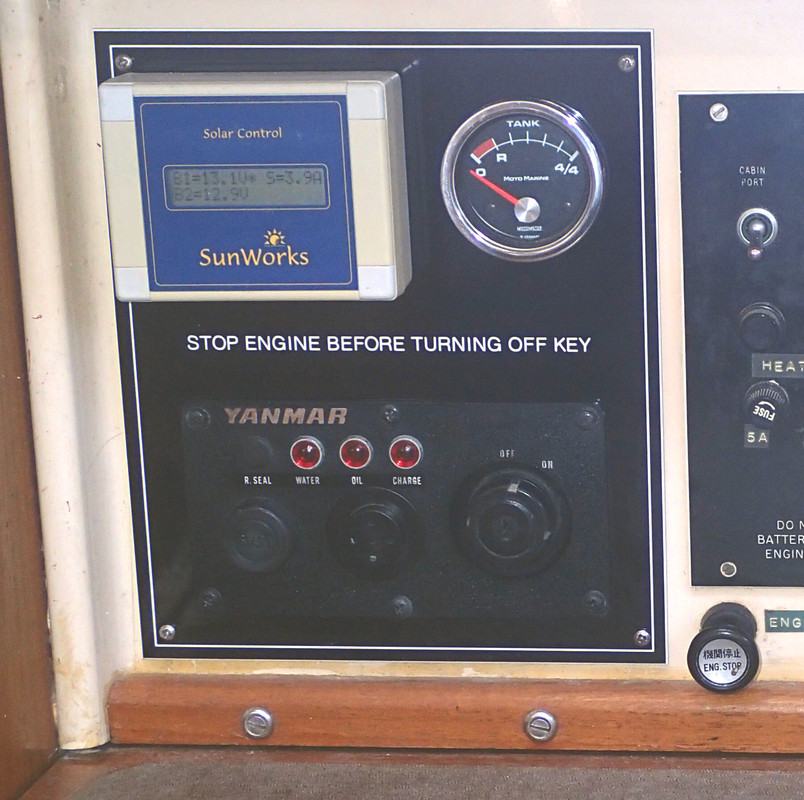
With the Yanmar there is no solenoid stop as there was previously with the original Bukh. Engine is stopped by pulling out the stop cable. Turning off the key with the engine running can lead to alternator failure.

Actually, that isn't usually the case. Turning the key of simply turns off the panel (alarms, lights, buzzers, gauges etc). The common belief that turning the key off with the engine running damaging the alternator (failed diodes due to over voltage) goes back to 1-2-B switches, where the alternator output was connected to the common terminal of the switch, allowing charge to go to whichever battery was selected, turning one of those off would invariably blow the alternator diodes. Even with a 1-2-B switch, turning the key off shouldn't cause a problem, as the alternator will still be connected to whichever battery is selected.

The only exceptions would be where turning the key off broke the circuit from the alternator to the battery. This would be extremely rare, unless someone has an oddball installation, or maybe someone has wired an old analogue ammeter through the key switch.
 
With the Yanmar there is no solenoid stop as there was previously with the original Bukh. Engine is stopped by pulling out the stop cable. Turning off the key with the engine running can lead to alternator failure.

For once I agree with Paul Rainbow. Its turning off the main battery switch disconnect the battery from the alternator power cable that could/will blow the diodes due to the back EMF generated by the reducing current flow.

On my boat I have an electrical actuator that operated the engine stop lever when the "ignition" is switched on/off. This electrical actuator is made from a wiper motor and takes a little time to stop the engine on switching the "ignition: is switched off.
 
Last edited by a moderator:
Actually, that isn't usually the case. Turning the key of simply turns off the panel (alarms, lights, buzzers, gauges etc). The common belief that turning the key off with the engine running damaging the alternator (failed diodes due to over voltage) goes back to 1-2-B switches, where the alternator output was connected to the common terminal of the switch, allowing charge to go to whichever battery was selected, turning one of those off would invariably blow the alternator diodes. Even with a 1-2-B switch, turning the key off shouldn't cause a problem, as the alternator will still be connected to whichever battery is selected.

The only exceptions would be where turning the key off broke the circuit from the alternator to the battery. This would be extremely rare, unless someone has an oddball installation, or maybe someone has wired an old analogue ammeter through the key switch.

I am not going to argue but very many people have wrecked their diodes this way. I have seen it suggested that it is actually turning the key back on again when the mistake was realised that causes the damage.
 
I am not going to argue but very many people have wrecked their diodes this way. I have seen it suggested that it is actually turning the key back on again when the mistake was realised that causes the damage.

Sorry Vyv, but both of those points are incorrect. The only way to damage the alternator is to break the connection between the alternator and the battery, the "ignition" switch doesn't do this.

How do you stop your car, you turn the ignition off. On older engines, such as those used in boats, all that happened was the stop solenoid was de-energised and the engine ground to a halt.

There are a great many Volvo engines out there that have electric stop solenoids, where the key position to energise the stop solenoid is to the anti-clockwise position of "off", in other words, you have to turn the key through "off" to be able to stop the engine. They made those switches for decades.
 
I am not going to argue but very many people have wrecked their diodes this way. I have seen it suggested that it is actually turning the key back on again when the mistake was realised that causes the damage.

Knowing the internal circuit of a typical alternator, it's hard to see how that would be the case.
ISTR driving a tractor which you stopped by turning the key back beyond 'off' to activate the stop solenoid. But maybe it had a dynamo, it was that old.
 
As I said, I am not arguing, only repeating what I have read and heard. The reason I had the panel engraved with those words was because Sadler put them on the original panel that I replaced. Presumably they had some reason for doing so.
 
As I said, I am not arguing, only repeating what I have read and heard. The reason I had the panel engraved with those words was because Sadler put them on the original panel that I replaced. Presumably they had some reason for doing so.

That would probably be to avoid running the engine with the temperature and oil pressure alarms disabled?
 
Top