
Installing big pump to deal with large boat leaks

  • Thread starter Thread starter jfm
  • Start date Start date
Hi jfm
MapisM has the right solution, and it's something I'm considering myself. By fitting a Y pice on the raw water intake will turn one or both engines into giant emergency pumps. It's a topic we have discussed between skippers in the bar in the early hours. just what is the best thing to do if your taking on a vast amount of water. I was even more suprised when being shown around the big Feretti ( The one outside at LIBS last year) that they have fitted just this system to their big boats.

I have considered just what I would do in an emergency God forbid. As most bilges just won't cope. It comes down to if you are compleatly flooded. slow the ingress down any way you can and possibly cutting through the intake between the sea cock and the strainer. or if low enough take the strainer cover off. They are usualy fitted just above the usual water line so this would work.

Let's just hope that none of us ever have to do it but it's great to have a plan. Two boats went down in menorca last year both with props or rudders knoked through the hull. On the usual bar talk after recovery and lift out one could have definatly bade a soft beaching or even the port if the owners had put some prior thought to the situation.

The bungs are a great Idea we have them on the school boat for training and the new Pred will have a set for all main inlets. also a 2'2' pice of ply and some pieces of wood so that a seat base cussion can be wedged down over a hole after a strike.
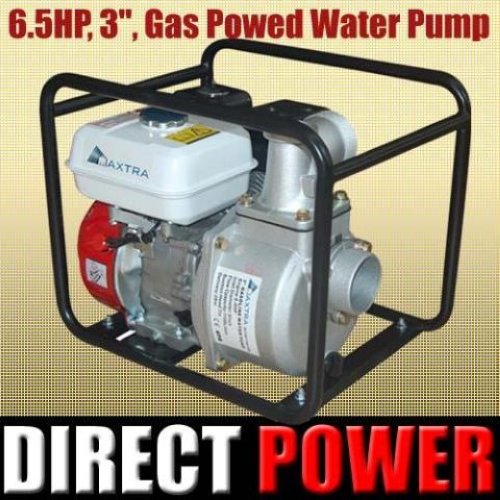
 
Good idea I'd have thought, portable petrol power would be best i'd say. how about this one?
5408601.jpg

on ebay
1,100 litres per min for £99 - you can't go wrong Petrol Pump

Just fire it up on the cockpit floor - or flybridge floor if it's a BIG hole........
 
Marry several technologies together. There are bow thruster systems available now that use main engine driven pumps to provide jets of water through bow ( and in some installations stern ) nozzles. Fitting an integrated system like that would give you bow thrusters, fire pumps, and massive bilge pump capacity.
 
I helped a sand barge out that was sinking and got talking to him.
In order to navigate the Trent they ground daily and the barge frequently springs a leak.

They use a sledge hammer to knock in rags/wooden plugs and that twin pack putty stuff that sets under water.

They then use a petrol pump as posted above (only he couldn't get it started hence we took one for him from another barge)


Re Y diverter valve on Raw water intake.

I cant figure out what happens when it works and runs out of cooling water, do you cook an engine ?
if you get a crew to watch it do you switch it back to sea and wait until you sink again ?
 
Have you still got the jetrib? If so, why not cannibalise it so you use the engine as a pump. You'd have the bit that sucks the water in and the bit that squirts it out.
 
Yep thought of that but ended up going for PTO on each engine and hydrolic thrusters.

I'm having an air compressor fitted in the engine room for inflating toys and for blasting around the engine room when cleaning etc. I wonder if there is any compressed air pumps??

The actual compressor is quite cheep and I can see many aplications for its use.

I think jfm's fire hydrant is a good idea we had this factory fitted to a 72 pred a couple of years back it must have gone through the hull at some point. and so by closing the sea cock and cutting through the pipe would have made that into a giant bilge pump. Good stuff if we come up any more we'll be flying .
 
Who cares if you cook an engine? your only going to be doing any of this if your on your way down and once the engine rooms flooded and your electrics are submerged in salt water the boat is quickly becoming an insurance write off. surely its about gust keeping afloat until help arives or being able to make way to a groundin spot or even better a travel lift.

Engine wont cook as it will have the same amount of water available form the engine room, rather than outside the boat.
 
I've thought about this in the past and came to the conclusion if its a seacock I'll bash a bung in it, if its anything else I'll cut the pipes off the engine sea-cocks and use the engines to pump water, that plus the bilge pumps. If its any worse then something else is required....

I've got a PVC damp course membrane on board that could be slid right under the boat.

Gallons pumped/£ the Y valves have got to be a go-er.

In your case, on a boat the size of yours with 17 kva on tap, I'd have two of the 3hp Machinemart ones on board, I think 3hp is the limit of single phase?
 
We hired one of those a year or so back to pump out the cellar. Noisy but it started 2nd pull and shifted all sorts of muck. It also rattled it's around the floor a lot so you may want a flexible mount. One thought - if you want to shift the amount of water coming in through a 3" hole won't you need at least 3" pump?
 
Agreed that using the engines as pumps will not give sufficient capacity to deal with a big hole but got to be worth fitting Y valves as extra layer of safety

DSCN0684001.jpg


At least engines should keep running until fairly well immersed and buy you more time

Agree with others that Clarke centrifugal pump not suitable for heavy duty bilge pumping as it can't handle solids and electric drive is a risk. Best solution IMHO is petrol driven portable pump as already proposed. Self contained and easy to move around
 
Switch back to sea if Y valve fitted or controll the pump power by having that engine in neutral and driving forward on the other. Most boats will give 1400 rmp in Neutral which can be overriden.

If the engine empties the engine room quick enough to be doing this then your not realy sinking.
 
engine revs, good thinking. /forums/images/graemlins/smile.gif
that was all that was stopping me fit a Y.

I will look seriously at fitting a pair now.
 
No-one seems to have mentioned the capacity of the engine raw-water pumps. Given the other 'obstructions' that are in the water system, I'm not surprised that the volume of water coming from the exhausts of most 'ordinary' boats doesn't seem as much as a decent electric bilge pump could manage. On our boat, all sea-cocks are on standpipes which takes the sea-cock above the waterline. Solves that problem but wouldn't do anything for a disaster like Hadyns of course.
 
Many many years ago, on a similar thread, someone posted (probably tcm, as right up his street) had found centrifugal type pumps online that could be fitted to shaft drives. Just sat there happily until water level rose that high, then spewed out several billion gallons per millisecond - well you get the idea anyway
 
If you read up to jfm's first post and then mapisM reply it would sugest that he is fitted with a couple of 800 hp Volvos probably Volvo D12s I remember somebody in the marina taking the cover off a strainer to see if the impellor was working !!! even on tick over and as it turned out three broken blades on the impellor the water was virtualy hitting the ceiling of the engine room. he wont try that again.
 
I'd agree that although engine seawater pumps may probably help things they won't flow a lot. Mine are pretty weedy - although having about 1" inlet hoses they only have about 1/2" inlet/outlet ports to the pumps which is probably equivalent to a 350 GPH electric bilgepump - useless.

Not helped of course by being on outdrives, Volvo don't actually fit seacocks before the pumps.... so if I cut the hoses I'll just sink even faster.

Nope I'd go with Ben's suggestion - cover the hole from the outside.

1. Grab the biggest nearby cover - my tonneau would be ideal at 4m x 2m and already has a handy hole in the middle for the prop pole to go through.

2. Thread a suitable size mooring line thru the hole and put a big stopper knot in the end.

3. Take a swim over the side -

4. Poke the rope through the hole in the boat/busted seacock

5. Helpful crew member pulls smartly on the rope, bringing it and as much of the mushroomed cover through said hole...

I rekon it'd slow the ingress of water down enough to allow the pumps to cope, and bung up anything from a hole a couple of inches diameter up to a big bugger a foot of so. Finally make the rope off to some where handy and motor as fast as possible towards somewhere shallow.

Come to think of it I seem to recall Hornblower doing something similar in a book I read once...
 
A seat cussion will work. just put a hole right through the middle with a big fat stop knot and do as you sugested. we all have seat bases and they are usualy ply backed so they are rigid with a padded vinal top to make a good seal.
 
Top