Hunter Sonata - What is the internal veneer?

Saraband

Member
Joined
9 Feb 2017
Messages
30
Visit site
I am looking at refurbishing the interior of my Hunter Sonata and have decided I need to replace the wood veneer, which has been painted over the past few decades. Looking at what is still left un-painted, the colour suggests it is a teak veneer, however the grain doesn't look very teak-like. Does anyone know what Hunter Boats used in their early boats?

Many thanks

Mark
 
Possibly Iroko, although teak might have still been available when it was built. There is another thread about teak like veneers and plywoods

Mine is certainly teak like looking, but I have the bigger one with the 'teak' table and chart table.
The 'lining' in the toilet compartment and elsewhere is a very thin plywood

Yachtsnet for the 26 shows the probable original colour.

Maybe try some veneers and see what colour you like best - mine is oiled, still looks good
 
Last edited:
Thanks.......iroko might explain why the wood is darker than I expected and without the normal graining of teak. I will look for the other post.

Thank you!
 
I raced quite a bit on Sonatas and I don't think many people chose them for the quality of their internal joinery. From memory probably a generic mahogany or teak type veneered ply.
Have you tried asking the Sonata Association?
A super little high performance racer.
 
I have a couple of threads running, this on PBO, plus the Hunter Association and also the Sonata Association.

The consensus view would appear to be that the factory completed boats were teak (or perhaps iroko) but many completed at home so some might have a mahogany-type veneer, especially if they didn't buy the Hunter Boat completion packs. I think I will be going with teak veneer, despite the price!

Thanks!
 
There are many different types of "teak" and "mahogany" veneers. Looking at photos of Sonata interiors, suspect they used Khaya like this thewoodveneerhub.co.uk/collections/decorative-wood-veneer/products/khaya-wood-veneer which was commonly used in the 70s and 80s.

Veneering vertical panels in situ is a challenge. First you have to get an absolutely perfect surface, second real veneers are best pressure bonded, Maximum width is usually under 50cm so you need joins on many panels. the danger is poor adhesion, bubbles or imperfections showing through the veneer. You only get one go at bonding and if it goes wrong it is always there to remind you. One possibility is to make your own panels with the 0.6mm bonded onto 2mm birch ply flat in the workshop and then stick them over the existing panels although this may mean you will need to do something about the edge trim.

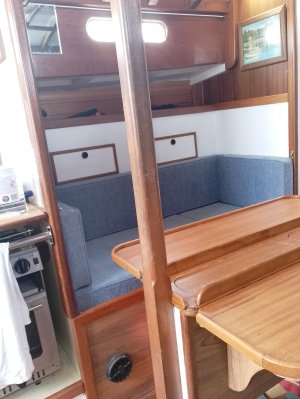
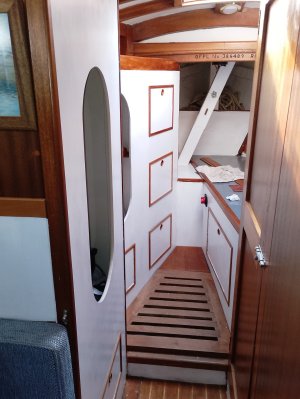
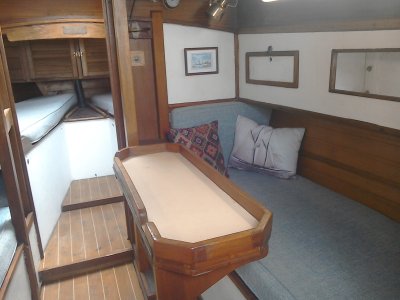
TBH once a veneered panel has been painted thee chances of getting it back are low. suggest you try stripping off the paint and see what the underlying veneer looks like. It is probably quite thick , maybe 0.8mm and will stand cleaning up and maybe staining to get n even overall colour before coating with a satin type finish. If, however it is not good enough for this probably best to paint it with satin white which will look good with the solid trim. I have done this on 2 boats as in the photos. Different style of boat but in my view is much better than poor veneer finishes. The first 2 were donee recently but the third was done in 1995 and the photo taken in 2019, Very durable finishes - Dulux Satinwood for the white and Ronseal polyurethane satin for the brightwork.
 

Attachments

  • IMG_20240716_131527.jpg
    IMG_20240716_131527.jpg
    558.4 KB · Views: 6
  • IMG_20240423_171611.jpg
    IMG_20240423_171611.jpg
    456.3 KB · Views: 6
  • IMG_20190718_181056.jpg
    IMG_20190718_181056.jpg
    525.5 KB · Views: 6
I’m sure you saw this recent post reply on HA about 26’s veneer?
“the original factory finish was usually real teak veneer spray finished with a satin clear varnish, probably acrylic, no stain was used on the teak.”
 
Top