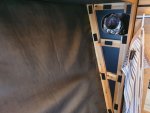
Hull linings sagging on my 2009 Squadron 55

statgar

Well-Known Member
Joined
27 Nov 2004
Messages
131
Location
Bristol UK
Visit site
Wishing all MBF members a very happy and fun-filled 2023, now here’s my problem.
The foam-backed hull linings on my boat have de-laminated, throughout the boat, and need replacing the material is a sort of black silk, all the rage 10 years ago but now really dated. The boat is in Greece where I just can’t find anyone to carry out the repair, I’ve had quotes from UK-based companies but they are prohibitive cost wise, sending people out and certainly shipping her back to the UK. I’m fairly handy myself and am looking to drive down with my tools and the fabric and get the job done. I have removed an inner porthole frame, head, and side panels that are all velcroed, which wasn’t that difficult neither does removal/replacement of the lining seem beyond me so here are my questions:
  • Is there anyone out there who has tackled this sort of job and can offer me advice or maybe come to Greece and do the job with my help?
  • Does the fabric need to be foam backed? I want to lighten the boat up and have found some really nice woven fabric used elsewhere on the boat on cabin partitions but it is not foam-backed.
  • Any suppliers who specialise in this sort of work from where I can source materials, adhesives, and other consumables/tools etc.
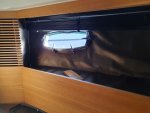
 

Attachments

  • 20221027_092435 - Copy.jpg
    20221027_092435 - Copy.jpg
    225.4 KB · Views: 87
  • 20221025_163156 - Copy.jpg
    20221025_163156 - Copy.jpg
    175.4 KB · Views: 87
  • 20221025_163203 - Copy.jpg
    20221025_163203 - Copy.jpg
    220.8 KB · Views: 83
  • 20221025_163230 - Copy.jpg
    20221025_163230 - Copy.jpg
    293.4 KB · Views: 81
I used a product called Nautolex and purchased it from INTERIOR LININGS Archives - C&J Marine

Although since found out I can purchase it cheaper after a Web search. Assuming the original panels are in good order, it's very much a DIY job.

If you click on my link, there's some photos of what and how we did it.
 
If a carpet type of lining would do, that's easily available in the UK and, presumably, the EU. Google "camper lining material" and you'll find all sorts of possibilities. Something self adhesive and stretchy would make life easier, but the insulation provided by the original foam was never more than minimal so, while some insulation would be nice, it isn't essential.
 
You could also put your request on the facebook Fairline owners website and also the Faceboook fairline boats old and new .
Couple of the contributors on there maybe able to Help ,Ed Engels specialises in that sort of work and Steve Kibble is always looking for a cheap holiday.
 
I agree with Stemar, van lining carpet is easily found and not difficult to work with. Look for the type that stretches in all directions and have a look at the many videos on Youtube. The recommended spray adhesive works well but you may find something a bit less sticky easier on the awkward bits, gives you the time to move, reposition, refit etc.
Insulation may be worthwhile, keep condensation down when it is cold and heat out when it is hot. Plenty available online, I used foil backed foam, easy to work with and not expensive.
Let us know how you get on!
 
Wishing all YBW forum members a very happy and fun filled 2023, now here’s my problem.
The foam backed hull linings on my boat have de-laminated, throughout the boat, and need replacing the material is a sort of black silk, all the rage 10 years ago but is now really dated. The boat is in Greece where I just can’t find anyone to carry out the repair, I’ve had quotes from UK based companies but they are prohibitive cost wise, sending people out and certainly shipping her back to the UK. I’m fairly handy myself and am looking to drive down with my tools and the fabric and get the job done. I have removed an inner porthole frame, head and side panels that are all velcroed, which wasn’t that difficult neither does removal/replacement of the lining seem beyond me so here are my questions:
  • Is there anyone out there who has tackled this sort of job and can offer me advice or maybe come to Greece and do the job with my help?
  • Does the fabric need to be foam backed? I want to lighten the boat up and have found some really nice woven fabric used elsewhere on the boat on cabin partitions but it is not foam backed.
  • Any suppliers who specialise in this sort of work from where I can source materials, adhesives, and other consumables/tools, etc.
Hi the foam backed material is probably the same that is used in a lot of cars ie jaguar etc normally light grey or beige, there is a good heat resistant spray glue available to fix it with,
You don't need to use foam back if there is some outher fabric you like just don't pick anything heavy.
Or with a very open weave as the glue may penitrate.
It's quite easy to do but a second pair of hands will be helpful.
There is a Co in Salford blackfriars Rd I think called seagals, they are very helpful if you tell them what you want to do.
They supply a big range of headlineing fabric and the spray glue etc.
Recovering car headlineing is a job I have done many times as a retired car trimmer. Regards Harvey
 
Suggest you have a look here hawkehouse.co.uk for advice, supply of materials and even short courses on how to do it. Foamed backed is used, particularly on the inside of GRP mouldings to cover the imperfections of the substrate - you can see that around your window frames. Plain vinyl can be used on ply panels with care to keep the panel clean as any little speck shows through. Backing is often used though to give it "depth". Be aware that this is not an easy job to get right as not only is the material difficult to handle in complex areas like your cabin sides but removing the old and cleaning the GRP is challenging. Smelly horrible job as is working with the new adhesive.

Having said that many people do DIY, but mainly because of the cost (man hours) for a professional to do it, particularly to the standard of the original. A trip round the Princess factory to see how the pros do it in pristine conditions is an eye opener, and they don't have a problem with removing all the old and cleaning up before they start. As you can see from the earlier suggestions there are materials that are easier to handle than vinyl, but may not necessarily fit with the Princess look.

Very few professionals will take on this type of job. As you have discovered owners are unwilling to pay the price at which the worker can make a decent living. Not too bad if the work comes to the workshop but working in a boat is far more difficult and therefore costly.
 
I am in the middle of replacing my lining, the boat was built in 1986, and am using closed foam 'gym mats' and covering that with a fabric from Vanlining.

The gym mats are black so no light passes through the hull, about 10 mm thick giving some good insulation, stuck on with glue. The Vanlining, is easy to work with.
 
Second what Tranona says about hiding any imperfections, the foam backing also softens all the edges and makes it all look better. I used leatherette without foam and every detail of the ply shows through to the surface. Also don't scrimp on the glue, make sure you use heat resistant glue, (I got mine from Hawke House too) thats probably why yours have broken down prematurely.
good luck
Also see Making headlining panels - Practical Boat Owner


SSG
 
When I re-affixed the linings on my Turbo 36 I proceed as follows ...

1 Carefully detach the coverings from their edge trappings, avoiding tears in any visible places.

2 Tug, peel or scrape away the perished foam layer and hoover up the debris.

3 B&Q laminate flooring 2mm foam underlay, cut to suit each section of the bulkhead. Affix this with a very high quality (at least 50 degree) carpet spray adhesive (be careful as any overspray is difficult to remove, so mask off and thoroughly cover around the spray site). This is a contact adhesive so coats are needed on both the fixed surface and foam - allow the coat a few minutes to surface dry then bring the material into contact, but one it is in contact the bond is instant, so get the positioning right first time.

I expect a second layer of foam could be applied to gain a softer finish.

4 Leave the foam a while to allow the bond to form, then repeat the adhesive process for the covering material onto the foam surface, then bury the edges behind the edge materials as found.

For me the job looked very neat, albeit upon 30 year old rippled white vinyl.
 
I’m in the middle of this job on a 43AC. I got the materials from Boyriven in Andover. They take your chosen vinyl and have the roll foam backed, takes 4-5 weeks.I found that if you want neat joints you have to take it back to how Fairline built it which involves removing door frames and cupboards and non structure walls as well as all the ceiling. I’m no expecting to take 4 months working about 4 days a week. That’s for all the vinyl walls and ceiling’s. I take all the removed panels home to do the work in my garage. No way would I have enough room on the boat
 
Most of the linings on my Sq58 had been done just before I bought it but I did both the bathrooms myself. Remove the panels and clean up the surfaces. There are some good YouTube videos explaining how to do it plus suppliers info. @jrudge did his himself (or with a little help maybe) and I am pretty sure there is a thread on here somewhere explaining how he did it. It's pretty labour intensive and I was quoted £20k four years ago to do the previous Sq58 I bought. Ed Engel was your man here, not sure if he is still doing it but I know he used to travel all over the Europe. He is ex Fairline and a master!
 
It isn't only Fairline.
Princess (and I'm sure, others) use the same fabrics.
It is the foam backing that breaks down.
We are doing ours in stages using the original fabric (new of course) that I purchased from Lang and Potter in Plymouth (the people who did the original job in the Princess Factory).
I am wondering if this is the right approach or if I should have sourced/designed a different covering without foam.
I was going to do the job myself but I have found a good local contractor who is going through the boat piece by piece.
 
This issue is not just a Fairline problem, YouTube channel MV Freedom has had to do ceiling panel repairs multiple times on a late model Nordhavn, the repair process is shown in great detail.
 
Wishing all MBF members a very happy and fun-filled 2023, now here’s my problem.
The foam-backed hull linings on my boat have de-laminated, throughout the boat, and need replacing the material is a sort of black silk, all the rage 10 years ago but now really dated. The boat is in Greece where I just can’t find anyone to carry out the repair, I’ve had quotes from UK-based companies but they are prohibitive cost wise, sending people out and certainly shipping her back to the UK. I’m fairly handy myself and am looking to drive down with my tools and the fabric and get the job done. I have removed an inner porthole frame, head, and side panels that are all velcroed, which wasn’t that difficult neither does removal/replacement of the lining seem beyond me so here are my questions:
  • Is there anyone out there who has tackled this sort of job and can offer me advice or maybe come to Greece and do the job with my help?
  • Does the fabric need to be foam backed? I want to lighten the boat up and have found some really nice woven fabric used elsewhere on the boat on cabin partitions but it is not foam-backed.
  • Any suppliers who specialise in this sort of work from where I can source materials, adhesives, and other consumables/tools etc.
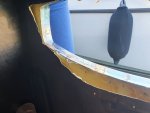
We are doing this job at the moment. Kayospruce sell the lining stuff with foam backing or not. We decided to use the old vynil as recommended by Hawk house, it cleans up good from the point of view of removing the disintegrating foam. The foam stuff, we spotted some yoga mats, dont laugh, at Decathlon. 6.5 mm by 1.7m by .5 m for three euros. Closed cell, etc, spec was good. Contact adhesive spray to hold on the well cleaned glassfibre sides. Stuck on in .5 m pieces. This time deciding on how to stick the vynil on to the sponge, probably a combination of double sided sticky from kayospruce and then roll the vynil around a batten and carefully spray contact adhesive on 6" inch strips to unroll it on to the figlass wall
 
I used a product called Nautolex and purchased it from INTERIOR LININGS Archives - C&J Marine

Although since found out I can purchase it cheaper after a Web search. Assuming the original panels are in good order, it's very much a DIY job.

If you click on my link, there's some photos of what and how we did it.
Thanks, Harvey looks like you've done a great job, I'll check out the Nautolex
 
If a carpet type of lining would do, that's easily available in the UK and, presumably, the EU. Google "camper lining material" and you'll find all sorts of possibilities. Something self adhesive and stretchy would make life easier, but the insulation provided by the original foam was never more than minimal so, while some insulation would be nice, it isn't essential.
Thanks, Steve I've got this stuff in my campervan but I need vinyl for the boat like this
 
Suggest you have a look here hawkehouse.co.uk for advice, supply of materials and even short courses on how to do it. Foamed backed is used, particularly on the inside of GRP mouldings to cover the imperfections of the substrate - you can see that around your window frames. Plain vinyl can be used on ply panels with care to keep the panel clean as any little speck shows through. Backing is often used though to give it "depth". Be aware that this is not an easy job to get right as not only is the material difficult to handle in complex areas like your cabin sides but removing the old and cleaning the GRP is challenging. Smelly horrible job as is working with the new adhesive.

Having said that many people do DIY, but mainly because of the cost (man hours) for a professional to do it, particularly to the standard of the original. A trip round the Princess factory to see how the pros do it in pristine conditions is an eye opener, and they don't have a problem with removing all the old and cleaning up before they start. As you can see from the earlier suggestions there are materials that are easier to handle than vinyl, but may not necessarily fit with the Princess look.

Very few professionals will take on this type of job. As you have discovered owners are unwilling to pay the price at which the worker can make a decent living. Not too bad if the work comes to the workshop but working in a boat is far more difficult and therefore costly.
Thanks for your advice, I have spoken with Alex at Hawkeshouse and he is most helpful. Your point about professional is well taken and I would be much happier going down that route but after 2 years of trying I just can't get anyone either in Greece or prepared to travel from the UK so I guess it will be down to me and a helper. Thanks again.
Terry
 
When I re-affixed the linings on my Turbo 36 I proceed as follows ...

1 Carefully detach the coverings from their edge trappings, avoiding tears in any visible places.

2 Tug, peel or scrape away the perished foam layer and hoover up the debris.

3 B&Q laminate flooring 2mm foam underlay, cut to suit each section of the bulkhead. Affix this with a very high quality (at least 50 degree) carpet spray adhesive (be careful as any overspray is difficult to remove, so mask off and thoroughly cover around the spray site). This is a contact adhesive so coats are needed on both the fixed surface and foam - allow the coat a few minutes to surface dry then bring the material into contact, but one it is in contact the bond is instant, so get the positioning right first time.

I expect a second layer of foam could be applied to gain a softer finish.

4 Leave the foam a while to allow the bond to form, then repeat the adhesive process for the covering material onto the foam surface, then bury the edges behind the edge materials as found.

For me the job looked very neat, albeit upon 30 year old rippled white vinyl.
Thanks Stephan most helpful I probably won't use foam backing as I want a textile like finish Hawkeshouse have suggested using a bonding adhesive on the plywood backing and a high heat contact adhesive on the fabric applying a centre strip first and moving outwards in 10 cm strips which makes sense.
Thanks again, Terry
 
Top