Huan Pine with Copper Sheathing, how to restore?

Seqvanae

New Member
Joined
17 Feb 2022
Messages
7
Visit site
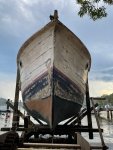
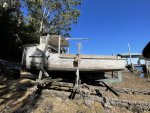
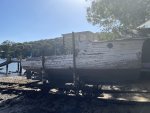
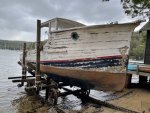
Hi, we have an 1870's fishing trawler that has been out of the water for a long time, nearly 2 decades stored on a slip with tidal submersion of the hull daily. We are prepping her for restoration & exploring the various options to seal the hull. The copper is damaged in parts, she will be recaulked & filled but the big question is do we apply epoxy or urethane prior to copper antifoul or not? She is made from Huan & Kauri Pine so the timber is in excellent condition considering her age. Copper sheets will be added to repair the damaged areas

Option 1: caulk, fill, apply copper sheets over larger damage & then apply copper antifoul

Option 2: caulk, fill, apply copper sheets over larger damage, apply epoxy & then copper antifoul

Option 3: caulk, fill, apply copper sheets over larger damage, apply polyurethane & then copper antifoul

Option 4: best advice???
 

Attachments

  • IMG_8806.jpg
    IMG_8806.jpg
    173.5 KB · Views: 55
  • IMG_8760.jpg
    IMG_8760.jpg
    246.6 KB · Views: 53
  • IMG_8918.jpg
    IMG_8918.jpg
    207.8 KB · Views: 56
  • IMG_8917.jpg
    IMG_8917.jpg
    139.6 KB · Views: 55
  • 273304124_10160256505737975_8500074794218464018_n.jpg
    273304124_10160256505737975_8500074794218464018_n.jpg
    154.4 KB · Views: 55
She has been wetted by the tide every day so why on earth would you apply modern epoxy or polyurethane to it? Epoxy only works if the wood is bone dry. On big sections of wood you cannot get penetration of epoxy behind frames keels etc, this means it isnt sealed so water gets in anyway defeating the object. Decades of contamination from engine oil, bilge water etc mean epoxy wont stick anyway.
If she is built of Kauri & Huon she doesnt need epoxy. Save your money & eat steak.
 
Huon Pine is not of course a pine but a Eucalypt with all the oils in it that implies. In Tasmania where it is from they have dragged logs out of swamps where they has been for 400 years and the wood is still in good condition. Kauri is also a long lasting wood from NZ and while if looked after will last a very long time.

I know nothing about repairing copper sheeting but I think as you seem to have found the wood will outlast the copper.

If I thought about having a wooden boat I would certainly want it made from Huon Pine.
 
As @Keith 66 says don’t go anywhere near it with epoxy! Re caulk the planks to ensure she is watertight. The copper sheathing is the anti foul so replace that or remove it all and paint with antifoul
 
I'd suggest contacting the Boat Building School, I don't recall its 'proper', name in Tasmania (I though it was at Dover....???). They build Huon Pine based vessels as part of the lessons and they will know chapter and verse. Normally they might want you to pay and join a class - but as you are restoring a Huon Pine hulled vessel - maybe you can sweet talk them. But if you have access to a Huon Pine hulled vessel - you will know all of this.

I'm no timber expert at all but I do know King Billy Pine hulls have been epoxied and glassed.

Jonathan
 
Last edited:
I'm no timber expert at all but I do know King Billy Pine hulls have been epoxied and glassed.

Jonathan
If you build new (and dry) then you can glass and epoxy. But once a wooden hull has been in the water (or wet on the hard) any use of glass or epoxy risks locking in the wet (and rot). It’s a big no-no.
 
If you build new (and dry) then you can glass and epoxy. But once a wooden hull has been in the water (or wet on the hard) any use of glass or epoxy risks locking in the wet (and rot). It’s a big no-no.

Common sense, with any wood

Slip the vessel, build a decent sealed tent and leave it to dry out? Though I doubt the vessel is worth the costs.

Jonathan
 
I don't see any copper sheathing on your photos??

Sheathing a wooden hull with copper was generally done to prevent worm (teredo, gribble etc.) and is seldom carried out nowadays. It's not a repair solution.

With any restoration project the first thing to do is clean the interior of the hull out so as to get access to the hull frames and planking, deck beams and decking etc.

Then, with a hull of this age and which has been kept wet, rake out all the stopping and caulking from the hull plank seams. Clean the planking off to bare wood externally – and internally if necessary.

Check the condition of the centreline structure: stem – keel – sternpost – external deadwoods – etc. etc. – and the respective fastenings.

Check the condition of the plank to frame, hood end and garboard fastenings – what material are they – what condition are they in.

Check the condition of the hull frames – these can often rot from the top because of fresh water leaks, rather than lower down in the hull.

Check the condition of the deck and superstructure – beams, coamings, carlings etc.

Make a repair plan – very briefly:

Repair/renew/refasten the centreline structure as needed.

Repair/renew any decayed frames.

Replace all suspect fastenings.

Make any necessary repairs to the hull planking, fit new planks/section of planking as needed. Attend to any hull plank seams that are too open (usually by gluing a spline to the edge of one plank). With a hull this age, you probably have to accept the some seams will be open on the inside – these can be caulked successfully if done carefully and if the gap is not too great.

Finally, once the centreline structure, all the frames, fastenings and planking (including the transom) are in a satisfactory condition, the hull plank seams can be re-caulked – either cotton or oakum – oakum below the waterline is good but not vital. Prime the seams before caulking. Stop the seams over the caulking – nowadays usually International red stopper on the bottom and white stopper on the topsides (hull above the waterline). Prime again and paint – decent marine paint system on the topsides and suitable antifouling on the bottom. No copper sheathing!

Do much the same with the decks and superstructure – clean down to bare wood, repair/replace any rotten structures; re-fasten as necessary and so on. You may want to lay ply over the deck planking, screwed down and bonded with epoxy. Can be covered with Dynel woven cloth set in epoxy. Same with the deckhouse roof. Other than that, and for minor repairs, I wouldn't be using epoxy much on a project of this sort.

Perhaps the most important thing is not to attempt to caulk the hull plank seams until you are certain that the planking itself, the frames, the centreline structure, and all the fastenings are in good condition and have been repaired/replaced as needed.

Cheers -- George
 
She has been wetted by the tide every day so why on earth would you apply modern epoxy or polyurethane to it? Epoxy only works if the wood is bone dry. On big sections of wood you cannot get penetration of epoxy behind frames keels etc, this means it isnt sealed so water gets in anyway defeating the object. Decades of contamination from engine oil, bilge water etc mean epoxy wont stick anyway.
If she is built of Kauri & Huon she doesnt need epoxy. Save your money & eat steak.

Hi, thanks for your post. I've spoken with several shipwright's & each have their own methods. The options I posted are the differing ways that have been presented to us. Epoxy will fill the damaged copper sheathing, we would need to bring her further up the slip & dry her before doing epoxy but it is applied to the copper sheathing not the timber. Any exposed timber will be patched with new copper. The hull is very clean, it wouldn't take much to prep for epoxy but I am happy to agree with you on this, which is why i am posting as I'd like others feedback on all options
 
Huon Pine is not of course a pine but a Eucalypt with all the oils in it that implies. In Tasmania where it is from they have dragged logs out of swamps where they has been for 400 years and the wood is still in good condition. Kauri is also a long lasting wood from NZ and while if looked after will last a very long time.

I know nothing about repairing copper sheeting but I think as you seem to have found the wood will outlast the copper.

If I thought about having a wooden boat I would certainly want it made from Huon Pine.
Yes you are correct! Both are amazing timbers, she is lucky to be made from such high quality timber
 
As @Keith 66 says don’t go anywhere near it with epoxy! Re caulk the planks to ensure she is watertight. The copper sheathing is the anti foul so replace that or remove it all and paint with antifoul

Thanks! Sounds good to me avoiding potent chemicals. Only I am still unsure about what is truly water tight as we can repair visible damage to the copper but having not been maintained for nearly 2 decades it would be ideal to do this right the first time & not have to re-do the entire hull after discovering it isn't as water tight as expected ie. is it fair to say the copper (once visible repairs are patched) is water tight or consider that the caulking underneath the copper may need to be replaced which is why some shipwrights say they would put expoy over the copper.

I am leaning towards marine filler with copper sheaths then 2 coats of copper anti-foul
 
I don't see any copper sheathing on your photos??

Sheathing a wooden hull with copper was generally done to prevent worm (teredo, gribble etc.) and is seldom carried out nowadays. It's not a repair solution.

With any restoration project the first thing to do is clean the interior of the hull out so as to get access to the hull frames and planking, deck beams and decking etc.

Then, with a hull of this age and which has been kept wet, rake out all the stopping and caulking from the hull plank seams. Clean the planking off to bare wood externally – and internally if necessary.

Check the condition of the centreline structure: stem – keel – sternpost – external deadwoods – etc. etc. – and the respective fastenings.

Check the condition of the plank to frame, hood end and garboard fastenings – what material are they – what condition are they in.

Check the condition of the hull frames – these can often rot from the top because of fresh water leaks, rather than lower down in the hull.

Check the condition of the deck and superstructure – beams, coamings, carlings etc.

Make a repair plan – very briefly:

Repair/renew/refasten the centreline structure as needed.

Repair/renew any decayed frames.

Replace all suspect fastenings.

Make any necessary repairs to the hull planking, fit new planks/section of planking as needed. Attend to any hull plank seams that are too open (usually by gluing a spline to the edge of one plank). With a hull this age, you probably have to accept the some seams will be open on the inside – these can be caulked successfully if done carefully and if the gap is not too great.

Finally, once the centreline structure, all the frames, fastenings and planking (including the transom) are in a satisfactory condition, the hull plank seams can be re-caulked – either cotton or oakum – oakum below the waterline is good but not vital. Prime the seams before caulking. Stop the seams over the caulking – nowadays usually International red stopper on the bottom and white stopper on the topsides (hull above the waterline). Prime again and paint – decent marine paint system on the topsides and suitable antifouling on the bottom. No copper sheathing!

Do much the same with the decks and superstructure – clean down to bare wood, repair/replace any rotten structures; re-fasten as necessary and so on. You may want to lay ply over the deck planking, screwed down and bonded with epoxy. Can be covered with Dynel woven cloth set in epoxy. Same with the deckhouse roof. Other than that, and for minor repairs, I wouldn't be using epoxy much on a project of this sort.

Perhaps the most important thing is not to attempt to caulk the hull plank seams until you are certain that the planking itself, the frames, the centreline structure, and all the fastenings are in good condition and have been repaired/replaced as needed.

Cheers -- George
Thank you for this detailed plan, this is exactly how we are approaching this so it is good to see this, thank you. So far the only damage is to her ribs which will be replaced, there is no sign of rot to any other parts of the hull. There is damage to the top sides from the cradle but this easily repaired like you said some epoxy up top
 
Well I still don't see any copper sheathing in your photos!

It's usually nailed on in fairly small sheets – say 450mm x 300mm – something like that. It generally had tarred felt under it, or tar of some sort.

It has no watertightness function – its principal function is protection from marine borers, with a secondary anti-fouling effect.

Watertightness of the hull is achieved by the caulking, with stopping over – provided the fastenings are sound. If they aren't, you'll just caulk the planks off the frames.

Epoxying over copper sheathing is not an effective solution to anything much. Epoxy doesn't even adhere to copper particularly well and needs special preparation (consult the Gougeon Brothers' WEST manual – which is a free download).

Cheers -- George
 
all of the hull is
Well I still don't see any copper sheathing in your photos!

It's usually nailed on in fairly small sheets – say 450mm x 300mm – something like that. It generally had tarred felt under it, or tar of some sort.

It has no watertightness function – its principal function is protection from marine borers, with a secondary anti-fouling effect.

Watertightness of the hull is achieved by the caulking, with stopping over – provided the fastenings are sound. If they aren't, you'll just caulk the planks off the frames.

Epoxying over copper sheathing is not an effective solution to anything much. Epoxy doesn't even adhere to copper particularly well and needs special preparation (consult the Gougeon Brothers' WEST manual – which is a free download).

Cheers -- George
the copper has black antifoul over the top, you can see where we have sanded it is bronze colour, this is copper. so you are advising to remove the copper & start over yes?
 
all of the hull is

the copper has black antifoul over the top, you can see where we have sanded it is bronze colour, this is copper. so you are advising to remove the copper & start over yes?
I am almost completely sure that there is no copper sheathing. I certainly can’t see it. There may be some sort of copper based paint or coating. Sheathing is very specifically the application of thin plates of high purity copper metal. usually they would be laid on top of a coat of tar or similar, and nailed on. If your boat were sheathed with copper we and you would see the separate sheets It is unmistakeable and I am really pretty sure you don’t have it. It’s main purpose was to deter attack by boring worms, and also to provide a scrubbable surface. It was not structural and did nothing much to deter ingress of water. The boat still needed caulking under the copper.

get the boat up somewhere covered. Clean it inside, remove all the old paint and muck and as much gear as possible from inside, and on deck.

then follow debenriver’s excellent plan in post #9.

I really don’t think you should be thinking about epoxy at this stage. it might be useful I guess if you have to do a scarf somewhere or maybe a ply deck - but I’m not even sure if it’s the best glue for your timber types. But at this point you are a long way off even thinking about epoxy.
 
I've only removed copper sheathing from a couple of yachts. You get left with thousands of small nail holes (this is on sailboats about 50' overall, so a bit larger than this hull), which we plugged with hardwood pegs glued in – a tedious job to say the least!

But you simply can't re-caulk or repair the hull without taking the copper off. Sometimes, on yachts particularly, if they were to be coppered, the plank seams were splined as it wouldn't be possible to re-caulk or re-stop them in the future once the hull was coppered.

I'm really puzzled because the underwater hull plank seams are quite visible and the stopping is cracked – especially on the two planks at the turn of the bilge on the last photo. You wouldn't normally see that if the hull was coppered – you'd be seeing the laps of the copper sheets and the nail heads. If the hull is indeed sheathed in copper, then it's been done very cleverly in a way I've not ever come across.

Also, unless the hull has a hard knuckle or semi-chine at the turn of the bilge amidships, I would say that the frames in that area are pretty suspect – or something not good is going on there – fastenings let loose perhaps. You don't say how the hull is fastened...?? If she is built on grown frames it would commonly be iron spikes – or copper spikes if it was a "quality" job. Given the age(?) of the boat it's likely that she has been refastened, possibly more than once.

Is the hull double-skinned – it looks a bit like that from what's visible of the fastenings?

The pair of rods each side of the wood keel and deadwood aft with a metal plate under the bottom are odd – I assume they are a later addition to hold the keel and deadwood together and up to the hull – that would bear investigating too.

And finally – is this boat really from the 1870's – it doesn't have that feel about it to me at all – it would have been steam propulsion at that time.

Cheers -- George
 
I am inclined to agree with the comments already made regarding copper sheathing and restoration. From the photos it looks like a few generations of paint over the hull planking and some movement along the seams.

Also agree that epoxy resin is not suitable over oily or wet wood. Suggest reading the West manual regarding moisture content for epoxy wood structures. Also, note that epoxy/wood hulls generally use none traditional timber that will absorb the resin.

Wood/epoxy builds aim to totally encapsulate each component so the moisture content of the wood remains constant. The very nature of wood means that it expands and contracts with changes in moisture content. Epoxy resin once cured is essentially rigid. As its not possible to completely encapsulate each component of an existing hull the wood will move under the rigid epoxy coating or sheathing resulting in the epoxy eventually failing in some way.

I have used epoxy and woven glass cloth to sheath wood rubbing strakes on a fibreglass hull, and also the wear areas of oars. In both cases over a fairly small cross section of soft wood. After a year or so parts of the glass cloth sheathings had split longitudinally for no obvious reason other than changes in water content of the wood.


apply polyurethane & then copper antifoul

My understanding is that polyurethane is good for topside coatings but not suitable below the waterline.
 
Top