HR 38 cutlass bearing removal

contessaman

Well-Known Member
Joined
29 Oct 2009
Messages
823
Visit site
Hope this has worked trying to type and upload photos with a tiny phone in the boatyard!

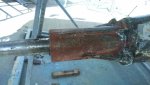
Can somebody please advise me how the cutlass bearing in is secured and removed?

Hopefully the picture will attach and somebody in the know can give me a pointer while I'm still at the boat!

Cheers
 

Attachments

  • 14707449488771420729319.jpg
    14707449488771420729319.jpg
    93.8 KB · Views: 3
It will be pressed in and probably secured by a socket head grub screw. Pretty sure you can unscrew the housing and then press the bearing out. Replacement is the opposite, making sure you get exactly the right size. You do not have to remove the shaft this way, assuming there is enough clearance aft of the shaft to remove the housing.
 
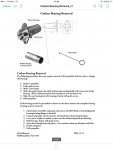
It's a standard Volvo Penta stern bearing, which screws on to a standard Volvo Penta shaft sleeve. There's normally a screw top and bottom to stop the housing turning, but it looks like the lugs have been ground off on yours. VP dealers should be able to supply an exact replacement for the cutless bearing insert.

View attachment 59320
 
Sorry if I'm being dull... Do you mean I should be able to grip that whole bronze housing and unscrew it? And the shaft will remain put? There's nothing in the inside of the boat for me to brace... So is it okay to just clout that fitting in an unscrew direction? Thanks for all this help peeps. It's a 200 mile round trip to the boat so if I can get it off and take it home today that will be awesome
 
I think it will be far from easy, as presumably it hasn't been touched for 30 years or so. It looks as if HR moulded some fibreglass over the area where the bearing screws on to the tube, so you may need to remove some of that first. As I recall, the shaft sleeve is buried in fibreglass inside the boat, and just the end of it will show (where the seal is fitted). If there's a boatyard where you boat is located, it might be worth asking them how best to tackle it.
 
All done! It does unscrew like you said. Tapping with a hammer did nothing but the marina yacht club leant me a giant stilson wrench which made fairly light work of breaking the seal. The two grub screws or whatever they are look in a sorry state but that's a job to attend at home. Worst case I'll get my mates at the workshop to drill them out, press out the cutlass bearing then re-tap the housing for some bigger bronze bolts. Thanks so much for all the help guys couldn't have done it without you. Now I can take it home and work on it in slow time. I'll take some more pictures of the shaft with it removed incase it helps somebody else and upload at a later date.

Cheers again
 
Gents,

Thanks again for your speedy replies and assistance while I was at the yard. I have the offending article at home now and a new cutlass bearing has arrived from ASAP. There looks to be what was once stainless grub screws holding the cutlass bearing in place. I started trying to drill them out but the bit started skating off so I quickly stopped before damaging the surrounding bronze. I will get a mate to do it on the milling machine and re-tap the fitting slightly larger. Question is... What material should I choose replacement grub screws from? Stainless? What about electrolysis? Brass? But I think the fitting is bronze.. But then the cutlass bearing shell is brass anyway. I've seen some titanium grub screws maybe that's the way to go? Grateful for your collective thoughts on this. Cheers.
 
Gents,

Thanks again for your speedy replies and assistance while I was at the yard. I have the offending article at home now and a new cutlass bearing has arrived from ASAP. There looks to be what was once stainless grub screws holding the cutlass bearing in place. I started trying to drill them out but the bit started skating off so I quickly stopped before damaging the surrounding bronze. I will get a mate to do it on the milling machine and re-tap the fitting slightly larger. Question is... What material should I choose replacement grub screws from? Stainless? What about electrolysis? Brass? But I think the fitting is bronze.. But then the cutlass bearing shell is brass anyway. I've seen some titanium grub screws maybe that's the way to go? Grateful for your collective thoughts on this. Cheers.

Stainless. No problem with the bronze and the brass contact is not in water. As you have discovered the problem is not them staying in place but coming out! The bearing will be a press fit so the screw is belt and braces.
 
Yee be needing one of these. ARRGH!

be1fae701837c06f050fa89633435a1f.jpg
 
Stainless. No problem with the bronze and the brass contact is not in water. As you have discovered the problem is not them staying in place but coming out! The bearing will be a press fit so the screw is belt and braces.

Okay, so stainless it is and I can cover the head of the gubscrew with sealant. Surely the bronze of the fitting and the naval brass shell of the cutlass bearing ARE in contact with the water? Should I be covering the cutlass bearing with grease or compound of some kind before pressing it into the fitting? This then leads me onto the subject of anode protection and what I should or shouldn't bond but that's probably for another thread. In fairness, I should probably just keep everything the way HR made it because the boat is as old as me and there's no sign of any of the stern gear being eaten away. I guess the only thing I've changed with this new engine is the insertion of an R&D flexible coupling. Don't know whether to opt for the earthing braid or not...
 
Yee be needing one of these. ARRGH!


be1fae701837c06f050fa89633435a1f.jpg

Yaaaaarrghh!!! Silence between decks! You swabs just be a helpin me change my cutlass and there'll be double rations of grog!

(Cue strange looks all round from the upper echelons of the yacht club as the angle grinder wielding pirate does his best John Silver impression)
 
Okay, so stainless it is and I can cover the head of the gubscrew with sealant. Surely the bronze of the fitting and the naval brass shell of the cutlass bearing ARE in contact with the water? Should I be covering the cutlass bearing with grease or compound of some kind before pressing it into the fitting? This then leads me onto the subject of anode protection and what I should or shouldn't bond but that's probably for another thread. In fairness, I should probably just keep everything the way HR made it because the boat is as old as me and there's no sign of any of the stern gear being eaten away. I guess the only thing I've changed with this new engine is the insertion of an R&D flexible coupling. Don't know whether to opt for the earthing braid or not...

I don't think HR would have bothered too much about electrolysis way back then, and it's lasted fine, so why bother now?

As for the earthing braid, do you have another anode, or just a prop anode? If the latter, you ought to bridge the flexible coupling.
 
I don't think HR would have bothered too much about electrolysis way back then, and it's lasted fine, so why bother now?

As for the earthing braid, do you have another anode, or just a prop anode? If the latter, you ought to bridge the flexible coupling.

There's a network of copper plate throughout the hull but I think that's more to do with seacocks and the SSB earthing plate. The bronze rudder stock and propshaft seem to be left to their own devices and have faired very well this way. With the shaft in a rubber cutlass bearing and a rubber dripless seal it does not come into contact with the bronze propeller tube which as you say appears to be glassed into the boat for life. There is a shaft anode, the sort that's a screws on over the prop but and theres a box of replacements on board that should last me half a lifetime. My engine on the other hand appears to have no anode and I can't see any place in the alloy bowman heat exchanger to fit one. As you say, R&D earthing braid probably the way to go then the one on the shaft protects the whole engine. Those prop nut anodes aren't the biggest lumps of zinc, but I'm a keen diver and don't need much of an excuse to get under the boat and inspect or replace it.
 
There's a network of copper plate throughout the hull but I think that's more to do with seacocks and the SSB earthing plate. The bronze rudder stock and propshaft seem to be left to their own devices and have faired very well this way. With the shaft in a rubber cutlass bearing and a rubber dripless seal it does not come into contact with the bronze propeller tube which as you say appears to be glassed into the boat for life. There is a shaft anode, the sort that's a screws on over the prop but and theres a box of replacements on board that should last me half a lifetime. My engine on the other hand appears to have no anode and I can't see any place in the alloy bowman heat exchanger to fit one. As you say, R&D earthing braid probably the way to go then the one on the shaft protects the whole engine. Those prop nut anodes aren't the biggest lumps of zinc, but I'm a keen diver and don't need much of an excuse to get under the boat and inspect or replace it.

Brass in bronze is fine. doubt there will be any sign of corrosion on the old one that has been in the boat for X years. No need for any anode for the housing as it is best (proper) bronze) and not in contact with anything else. Likewise the bronze rudder stock and the seacocks - which really do not need to be bonded to anything. The prop anode is probably adequate to protect the prop, although if you have replaced it with a cheap fixed 3 blade, you may find it erodes quicker than the original prop. The grub screw will disappear under coats of antifouling (if you are using conventional paint) so no need to put sealant in the head.

No need to bridge the coupling. The only reason for doing this is if you are protecting the prop with a hull anode using the gearbox and shaft as the electrical path. If the engine does not have an anode it does not need one. Raw water cooled engines tend to have them in the saltwater jacket, but fresh water cooled engines usually do not need one unless they have mixed metals in the heat exchanger like Betas or in the exhaust elbow like some Nannis. The engine does not need any protection. The prop anode is just for that and is connected to the prop and shaft by surface contact.
 
Last edited:
You could always fit the bearing as a clearance fit on epoxy, we advise this on all our bearings (which are Lloyds approved) If you can just slide it in by hand coat in epoxy and push it in, no press required, epoxy cracks away for removal or even easier on a P bracket you can heat it until epoxy softens. The hard composites also last longer than rubber we've found on commercial vessels. We make ours as a clearance fit in most cases unless customers insist on pressing them in. The benefit is that you make the ID to a known accurate clearance on the shaft size and this doesn't change when it's inserted. With a press fit it can be an easy or tough press fit which can squeeze the bearing below the designed clearance.

You can call them cutless or cutlass as both names have become generic for a water lubricated shaft bearing (usually rubber), strictly speaking Cutless is a brand name of one make using rubber as the bearing material. Other (more advanced) materials are available from elastomeric polyester composites to phenolic composites.
 
I realise that this is now an oldish thread but I though it worthwhile to add this for archive use.

View attachment 60510

Hey thanks for that. Its all back together now I'm pleased to say.
Got an engineer mate to sort it all for me. The old bearing was fibre not brass cased. But he machined the bronze fitting for me to make it an interference fit for a standard 45mm od brass cutlass bearing so now I can get replacements from ASAP for 25 quid not Volvo Penta for 3 times that. Heating the bronze fitting in an oven and cooling the bearing in a freezer and it lightly tapped in place now its going nowhere, grub screws just belt and braces.

By the way my new propeller came from c&o engineering excellent service couldn't recommend enough and 200 quid for a brand new bronze 3 blader all machined to match my old shaft seems very good value.

As for cutless vs cutlass I've got far more important things in life to worry about so I'll call it cutlass, raise a glass of rum with a hearty yaaarrrgghh and join the rest of the world who gets it wrong. Predictive text changes it to cutlass anyway so it must be right(!)
 

Other threads that may be of interest

Top