how does fuel come out of tank

pcleary

New Member
Joined
25 Feb 2009
Messages
22
Visit site
i now have cleaned all sludge replaced the fuel and filters the problem is now no fuel is coming out of tank even though i have bled it for a good while so my question is how does the fuel come out of the tank if the outlet pipe is at the top of the tank ---i have an etap 26 ---is it a gravity feed or does the fuel lift pump do all the work
 
There is a dip tube that goes to near the bottom of the tank. If this is lower than the engine the pump will draw fuel out. If higher, gravity will help, but you probably need the pump as well.
 
Make sure that all joints on the way to the lift pump including filter seals are airtight or you will be wasting your time. If the lift pump worked before you cleaned the tank then it is not likely to have failed.
 
I answered your previous query on the Etap forum earlier tonight, but things seem to have moved on. If blowing back through the supply pipe towards the tank doesn't work then there's a blockage somewhere and there's not much alternative to methodically undoing all the joints in turn to find it. My fuel tap has a very small passage and I've found it blocked on two occasions. Excessive sealing compound is another favourite blocking agent.

One thing is puzzling: you say you've bled it, but have you got the primary filter full? If so, how did you manage it if no fuel is coming out the tank? I found that I could not get fuel up to the primary filter by operating the lift pump and I used a small piece of tube to blow down the tank breather with the filter bleed screw open. That worked, provided the tank was near full, but unless you've piper's lungs it's damn hard work. Fitting the primer bulb between tank and filter made life much easier.
 
I answered your previous query on the Etap forum earlier tonight, but things seem to have moved on. If blowing back through the supply pipe towards the tank doesn't work then there's a blockage somewhere and there's not much alternative to methodically undoing all the joints in turn to find it. My fuel tap has a very small passage and I've found it blocked on two occasions. Excessive sealing compound is another favourite blocking agent.

One thing is puzzling: you say you've bled it, but have you got the primary filter full? If so, how did you manage it if no fuel is coming out the tank? I found that I could not get fuel up to the primary filter by operating the lift pump and I used a small piece of tube to blow down the tank breather with the filter bleed screw open. That worked, provided the tank was near full, but unless you've piper's lungs it's damn hard work. Fitting the primer bulb between tank and filter made life much easier.

Until i fitted a priming bulb i used a dinghy pump to pressurize the tank. Remembering to tape up the vent pipe first & then remembering to remove the tape when job done!!
 
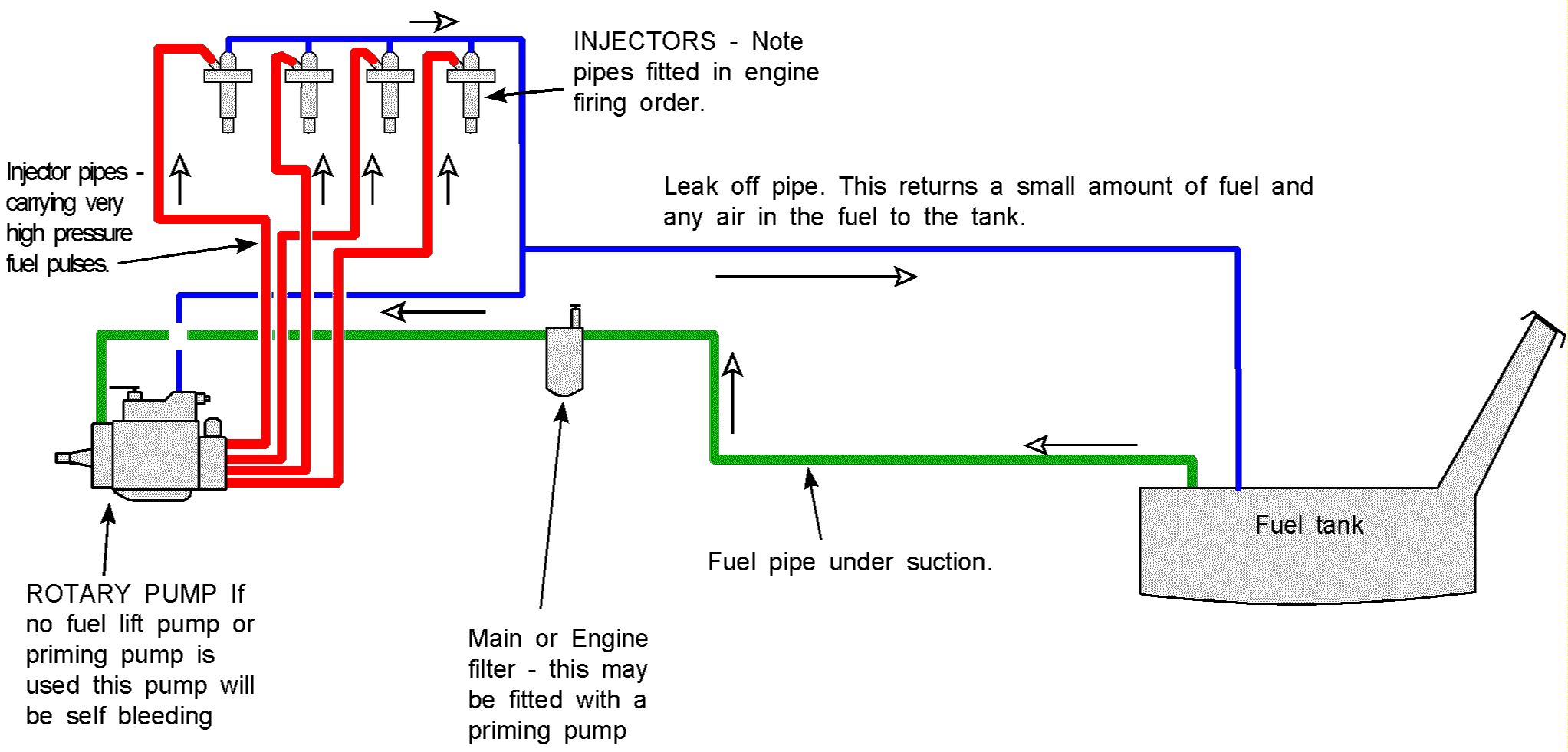
What engine and fuel line layout do you have? Diesel or petrol?

Lines must allow free flow and be absolutely tight, as mentioned. Not least for safety.

Diesels are very sensitive to air trapped in the high pressure lines because it serves as a damper to the (small) high pressure pulses, hence prevent the fuel from 'moving forward'.

Image5.gif
 
Quick way: disconnect feed to engine and suck pipe hard until your mouth fills with diesel. Then reconnect and pump on lift pump with bleed screw open.

Otherwise you can fill each filter with fuel and then vigorously pump the lift pump which will take ages as it needs to generate 'negative pressure' and the air in the system will expand rather than flow.

If you are smart you will fit a bulb such as you find on the fuel line of an large outboard engine. This way you don't need to swallow diesel and it makes the job quick and easy. It is much better if the fuel tank is a little above the engine as you can create a syphon if it is not then you will struggle without a bulb as air will keep trying to enter the system.
 
It is much better if the fuel tank is a little above the engine as you can create a syphon if it is not then you will struggle without a bulb as air will keep trying to enter the system.

And that's the rub... where's the outlet in the top of your tank in relation to your lift-pump? As others have mentioned, that outlet pipe goes to within approx 25mm from the bottom of your tank so if you fill your tank to the top you are at least giving yourself a chance because then you'll have a head of fuel near your outlet. Once you've created a syphon your lift pump will pull your fuel for you, but not before.
 
yes you got it right i couldnt get any fuel to the first filter (i call it the water separater filter ---its the first one) so can you explain again how do i fill that filter
 
Depends on the filter but you can just pour diesel in the top of some. I think the best way is still the sucking of the fuel line where it enters the engine. I don't know what level your tank is and this will affect things. Just think of the fuel acting like water. It will travel down hill so of you want to fill something you start from the top. A syphon allows you to go up hill in a tube as long as the down hill side is further and full of fluid. The weight of the fluid in the downhill side draws the fluid up the other. This is how most boat engine fuel supplies work. The tank is slightly above the engine and thus the fuel is drawn up the short height of the tube in the tank by the fuel flowing down towards the engine. A way to know that a syphon is working is with the sucking technique. If you get fuel out by sucking then it should continue to flow of its own accord. If you lift the end of the tube up it will slow down until you lift it higher than the bottom of the tank when it will start to flow backwards.
 
Top