How can you tell the difference between a real and knock off Rocna?

Zagato

Well-Known Member
Joined
2 Sep 2010
Messages
2,813
Location
Chichester Harbour
Visit site
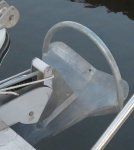
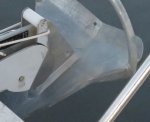
I looked at a Rocna anchor this weekend for the first time and was shocked at the state of the welding. The anchor which was the only one in Force4 had been ordered and reserved for a customer but he didn't want it in the end according to the salesman.... I wonder why. I remember reading about Rocna copies a while ago and did some googling but found nothing apart from I believe the original company or the manufactures for the anchors was now a Chinese firm. A video shows the anchors being made in a jig and welded by a robot. The actual weld on the anchor I saw looked OK but it was all over the place, far from robotic straight lines unless the robot was having a bad day!
 
I purchased my rocna from Jimmy green marine a few years back. The welding on that looked OK I seem to remember. I will see if I have pictures on my main pc of it. Presently using a tablet.

Edit - Found a picture and the welds look fairly neat to me but I'm not an expert!
Rocna Close Up.JPG Rocna Close UP 2.JPG
 
Last edited:
Rocna, genuine, anchors are made in Ningbo, China. The licence to manufacture and market is held by a company called CMP. CMP is a Canadian company with a cross section of interests in the marine market. CMP have had a manufacturing facility in China for both their anodes (for which they are very well known) and their anchor chain. They sell the chain under their Titan brand. I think they original manufacturer chain in Canada and moved production to China a number of years ago. Test on their chain have been good. Test on their shackles less good (but they may not make them and only merchant - I don't know. It is worthy of note their Yellow pin shackles are good, excellent, but their Black Pin shackles are to a short ton specification not metric ton (check the website). The difference is not great but selling to an Imperial Spec in Europe (and Oz) seems questionable to me. The suggestion has been that the anchors, chain etc etc is made in one huge factory - I don't know - there maybe a number of independent units (does it matter?). It would be most unusual to have chain making, shackle making, anode making, galvanising all on one site (though I would expect them to be 'fairly' adjacent).

Returning to Rocna. At our sizes, I recall upto 55kg, the flukes are cast (they may now cast the bigger flukes as well). Casting is cheap but expensive to set up. It is unlikely anyone copying will invest in the moulds. if you look under the upturn at the heel of a genuine Rocna it has the logo, a Kiwi, the word Rocna and the anchor weight. If these are missing - walk away. If these are evident its is 95% sure it is genuine. The casting is good all the letters and logo are clean and sharp.

Videos of machines welding are good marketing - they don't necessarily, but might, reflect, real life. They might weld the bigger anchors automatically, the smaller ones might be done by hand??

I am not aware of any complaints of Rocna manufacturing quality for years.

Jonathan
 
Thanks for the feedback, interesting, I wonder as you say if it is only the bigger ones that are done by robot as 'Boathooks' 15KG welding is a world away from the 10KG one I saw. The welds are dead straight, flat by the looks of it and smooth. I.e. the flukes and the shank. They don,t even looked welded... welding has a rippled effect if not smoothed over sometimes. I will look at some at Marine Superstore at the weekend.

I would be happy to get mine from Jimmy Green, always been happy with their advice and service... Boathook you have a good one there...

EDIT, looking at Google images some welds are smooth, some are rippled, some are a bit blotchy but all look absolutely fine, anchor weight between 10-15KG makes no difference. The one I saw at the weekend was clearly appalling, it is obvious why the buyer rejected it. I run a car restoration business and would not be happy if my welder did that sort of work!
 
Last edited:
Neeves.
Interesting comments about the markings. I will have a look hopefully next week to see whether there are any. It has a number stamped on the shank and I will have a better look to see whether the flukes are cast as well. So far I've been very happy with it.
 
Pretty full proof production shown 8mins into Rocna video! I wonder if they are all done now like this... the one I saw was not great, not sure how a robot could go so far amiss... it should be sent back really! Hope to pick up a nice one on Sunday, the chandlers have a few in stock so will be interesting to compare.

 
If in doubt, Inspect the Manson while you are at it, looks a generally stronger anchor to me. I have a Rocna, will look at the welds with renewed interest.

I would expect that Force 4 etc would be sourcing the real thing, but it's tough to prove it. With luck you will have just picked a dodgy one off.

.
 
Neeves.
Interesting comments about the markings. I will have a look hopefully next week to see whether there are any. It has a number stamped on the shank and I will have a better look to see whether the flukes are cast as well. So far I've been very happy with it.

Anchors made in NZ and maybe some of the very early anchors made in Shanghai had a fabricated shank, plate was cut up and welded to form the shape we know so well. I don't recall when they started casting the fluke - but casting was the motivation to move production to China. Initially (and maybe now) all the anchors smaller than 55kg had a cast fluke and anchors bigger than 55kg continued to be fabricated. I don't actually recall if the 55kg were cast or fabricated - and I don't know what they do now - whether they extended the casting to larger flukes. The bendy shank saga started during the early days in Shanghai. Fabricated anchors did not have any embossing in the fluke, they had a smooth heel.

The manufacturing geography was, made in Auckland, all fabricated, transferred to Shanghai (bent shank time, introduction of the cast fluke), CMP took over and transferred production to Ningbo (not far from Shanghai).

When CMP sorted out the implications of the bendy shanks they offered to replace them all, free of charge, and I'd guess that most of them were collected, melted down to make - something else.

If you have a very old anchor it will be perfectly genuine - but will have no embossing. If its that old I would suspect that the galvanising will look very ordinary :( You can tell if its fabricated - you can see the weld lines. The cast flukes are smooth.

The shanks have always been cut from steel plate.

Many reputable manufacturers stamp a number, somewhere, so that if there is a complaint they can trace to the batch.

I have never seen a copy Rocna, in the flesh. I do get offered them by nefarious people - but their images never show the underside of the heel.

I reiterate - I have not heard nor seen complaints of Rocna since CMP took over. I have not actually heard of anyone buying a copy Rocna, they may exist , copies, but they would be a bit like hen's teeth.

Jonathan
 
Last edited:
Some Rocna copies are available...
"Channel Anchor (Rocna Type)
Our ‘Channel Anchor’ is a faithful copy of the original Rocna which is described as a true multipurpose anchor that sets and holds in most seabed's from soft mud to hard sand, clay, seagrass and kelp."
 
I have only seen three fake Rocna anchors and one of these may have been some kind of repair rather than a copy, but I suspect we will see more in the future so we need to be on the lookout.

Here is a photo of my genuine New Zealand made Rocna. This was before the cast flukes so plenty of welds are visible:
eGA3O5c.jpg

Personally, I think it is unlikely a well known large chandler would try and sell a fake Rocna as genuine, but it is disappointing that the welds on the genuine product were poor.
 
You can see at the rear edge of the shank, the back of the crown, the weld line where the ballasted toe is welded to the rear of the fluke. There is another weld line in the short centre of the upturn of the heel where the plate has been folded up and then joined with a short weld, just above the hole for the tripping line.

On the cast fluke these welds, weld lines are now missing. The only welding now is to attach the shank and the roll bar.

The weld at the back of the crown also clearly shows the big difference between Mantus and Rocna - Rocna has ballast and Mantus has no ballast. Even a 7 year old would accept this makes a difference :)

These early anchors have no embossing under the upturn at the heel. All the cast anchors will miss that weld line and will have the embossing - unless they are copies.

It will be interesting to learn more detail of the anchor that caused the thread to be raised.

I would not be surprised if some anchors might be welded by hand - machines do break down.

Jonathan
 
Top