HMS Queen Elizabeth.

I read a report that the carrier cannot arrive or leave Portsmouth in more than 20 knots of wind, which means it's likely to be stuck there for much of the winter.

I suspect the carriers will only visit Portsmouth, on average, a couple of times a year when in service. For the Christmas/ New Year break and possibly Summer leave.
They cannot dry dock them there so longer maintenance periods will have to be somewhere else. No Idea where. Even Rosyth is a squeeze.
Anyway the number of days with an average wind speed of 20 knots or more is not that many if that is the restriction.
 
She is currently off St. Albans Head doing 26 knots so presumably she's going to wait somewhere.

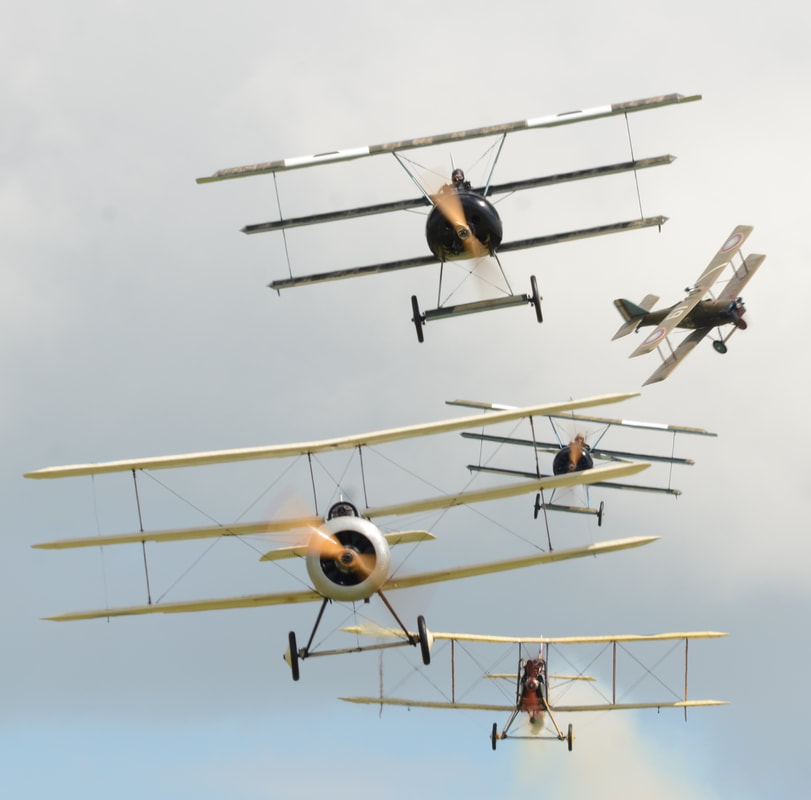
I noticed some strange manoeuvres off Portland earlier. Some aircraft landing ready for the grand entry into Portsmouth perhaps /

All they could find available though:


awy-9607-2-1_orig.jpg


and they are due at Biggin Hill on the weekend

Photo from The great war display team website
 
Not sure if this has been posted:

We now have some more precise details on HMS Queen Elizabeth's maiden entry to Portsmouth early tomorrow.

If conditions for an entry are good, the ship will leave Outer Spit Buoy at 0649 and pass Round Tower at 0709.

The entry will be accompanied by a flypast of Fleet Air Arm Merlin and Wildcat helicopters, plus Hawk jets of 736 NAS from Culdrose.

The carrier is due to begin berthing at the new Princess Royal Jetty about ten minutes later, though the whole process - including getting the specially-built brow across - could take up to two hours.

The entry has been practised many times - and in many different weather and tidal conditions - in the Bridge Simulator at HMS Collingwood.

The simulator's manager, David Goddard, and Lt Barry Crosswood, HMS Queen Elizabeth's 2nd Navigator, have provided the following details

The approach channel to Portsmouth has been widened from its original 210 metres to 450 metres, and the channel has been straightened as much as possible to avoid large course alterations.

From full ahead to full astern, it takes roughly two nautical miles to bring the 65,000-tonne carrier to a stop. The entry therefore will be "slow and methodical".

The navigable channel dredged for the carrier is 100 metres wide.

The ship's beam (width) at the waterline is 40 metres.

The width of the flight deck is 70 metres and with the islands offset 25 metres to starboard, they actually sit over the water.

The most critical part of the entry will be as the ship passes through the harbour entrance between the Round Tower and Fort Blockhouse (on the Gosport side) - just 210 metres across.

To visually ensure that the ship remains within the channel, three pairs of navigation lights - Goddard's Beacons, named after the bridge simulator manager - have been positioned at the northern end of the harbour.

These beacons take into account the offset of the bridge; the Captain and Navigator will use these to judge where the ship lies in relation to the centre of the channel and whether the ship is drifting to one side or the other. The bridge should be aligned with the middle pair of beacons.

The wind limit is 15kts. The carriers will normally enter and depart the harbour around the time of high water and when the strength of the tidal steam in the harbour entrance is slack (at the minimum strength).

The decision to enter harbour will probably be made before passing between Horse Sand and No Man's Land Forts, and will take into account the wind speed and direction, the tidal conditions, the sea state, and the range of visibility - the beacons need to be visible from the bridge.

Six tugs will be escorting the ship into harbour to assist as required and manoeuvre the ship on to her berth in the naval base. Once the ship passes Outer Spit Buoy they are committed to entering harbour.

If you're planning on coming to view the historic occasion, road congestion is expected near the Portsmouth/Southsea seafront and some roads, especially in Old Portsmouth. See here for details: https://www.portsmouth.gov.uk/ext/travel/queen-elizabeth-carrier.aspx
 
Looks like a few roads closed on the seafront and in Old Portsmouth then... and cars already parked could be removed... Worth checking the link in the post above..
 
I still don't understand why, with all this technology that can use GPS to position within centimetres, they still need to eyeball some leading lights to get the world's most advanced carrier into a harbour.
 
I still don't understand why, with all this technology that can use GPS to position within centimetres, they still need to eyeball some leading lights to get the world's most advanced carrier into a harbour.

Doubtless with modern military positioning technology it could be done by electronic means alone. Indeed it could be done entirely automatically.

Thats fine right up until the moment something in the complex systems fails.

Sometimes the old traditional methods are the simplest and the best and leading marks work and don't go wrong (well, not unless somebody moves them or something but you;d have a job shifting the socking great piles they've put in for this job!)
 
Well there's talk on G-Captain of merchant ships going back to radio direction finder systems like Loran to have handy as Plan B, in case GPS gets jammed by some Bond Villain like Kim El Wotsit.

However the cynical Scottish half of me can't help looking at those elaborate leading marks and thinking ' that was a nice contract for somebody '...:)
 
I still don't understand why, with all this technology that can use GPS to position within centimetres, they still need to eyeball some leading lights to get the world's most advanced carrier into a harbour.

I've read that the leading lights in the north of the harbour and south of the harbour entrance are to help guide the vessels through the narrow entrance when entering and leaving the harbour, but I've also heard talk of them being used by aircraft on the carriers to guide them onto the carrier when it is in harbour (hearsay from one of the contractors installing the lights). Is this correct? Will the lights also be used for aircraft to land on the carrier while it is in harbour? And if not, is there any chance aircraft will be allowed to land on / take off from the carrier while it is in harbour (sounds a bit risky, and I suspect local residents won't be too impressed)?
 
I still don't understand why, with all this technology that can use GPS to position within centimetres, they still need to eyeball some leading lights to get the world's most advanced carrier into a harbour.

My take on that is it's not just in case the systems fail at a critical moment but they give you spatial awareness. It's all very well having eyes glued to a screen but I tried following my chart plotter leading lines into Alderney one night and it was nigh on impossible. The moment I used the actual leading lights it was easy-peasy. (Twas just a test simulating fog)
 
Is this correct? Will the lights also be used for aircraft to land on the carrier while it is in harbour? And if not, is there any chance aircraft will be allowed to land on / take off from the carrier while it is in harbour (sounds a bit risky, and I suspect local residents won't be too impressed)?
The F35s are VTOL. The MOD dumped the electromagnetic catapult plans to save money (hence the ski jump). Landing and take off should not be too bad in the Harbour (on the carrier!) - if it's permitted from a public safety perspective. I'd love to see her, come in, but don't think I can get there tomorrow morning.
 
I'm afraid the aircraft landing on while in harbour sounds like BS to me for several reasons, partly involving safety - squadrons traditionally fly on or off slightly offshore as a carrier goes or returns - and chiefly, modern aircraft have much better kit than and travel too quickly - even semi-hovering jetborne - to use leading marks !

The Sea Harrier had a guidance system onto the smaller CVS carriers, it was called MADGE and quite secret at the time - we had the trial setup at Dunsfold, consisting of a lot of wires say 100' long held just above the ground on wooden pegs.

One day a very excited foreman called me ' grab your camera, the MADGE has been sabotaged ! '

I thought this sounded a good one, then when we got there he said ' the b*****s knew not to cut the live wires ' - underneath each cut was a little pile of ' currants ' - I asked ' have you by any chance considered rabbits ? '

" D'Oh ! "
 
Whilst on HMS Hermes alongside in Grand Harbour, a Vixen catapulted off the deck and landed at nearby RAF Luqa. We crabs were well impressed!

Unfortunately, HMS QE doesn't have a catapult and the RN any Vixens.
 
Last edited:
Whilst on HMS Hermes alongside in Grand Harbour, a Vixen catapulted off the deck and landed at nearby RAF Luqa. We crabs were well impressed!

Unfortunately, HMS QE doesn't have a catapult and the RN any Vixens.
Did you see this event?
We were always told in Hermes that we had to be steaming into wind at no less than 20 knots for a successful launch.
 
Did you see this event?
We were always told in Hermes that we had to be steaming into wind at no less than 20 knots for a successful launch.

I was outside the mess at Luqa with a bunch of Fishheads who told us what was going to happen. They suggested we went up to the roof.

Hermes was definitely alongside in Grand Harbour and we saw the Vixen appear low, as if it had just launched and wiz around to land at Luqa gaining minimum height in the process. FlyCo, the pilot, picked up in the bar about 30 mins later.

Can't see how it could have been a set up.‼️
 
Last edited:
Top