Wansworth
Well-Known Member
For mooringup and unmooring a 24 light displacement yacht from a marina berth,hig topsides and guard rails added problem



What problem?For mooringup and unmooring a 24 light displacement yacht from a marina berth,hig topsides and guard rails added problem

ThanksMainly suck it and see!
I imagine a Dufour 24 will manoeuvre easily, especially if you can turn the outboard.
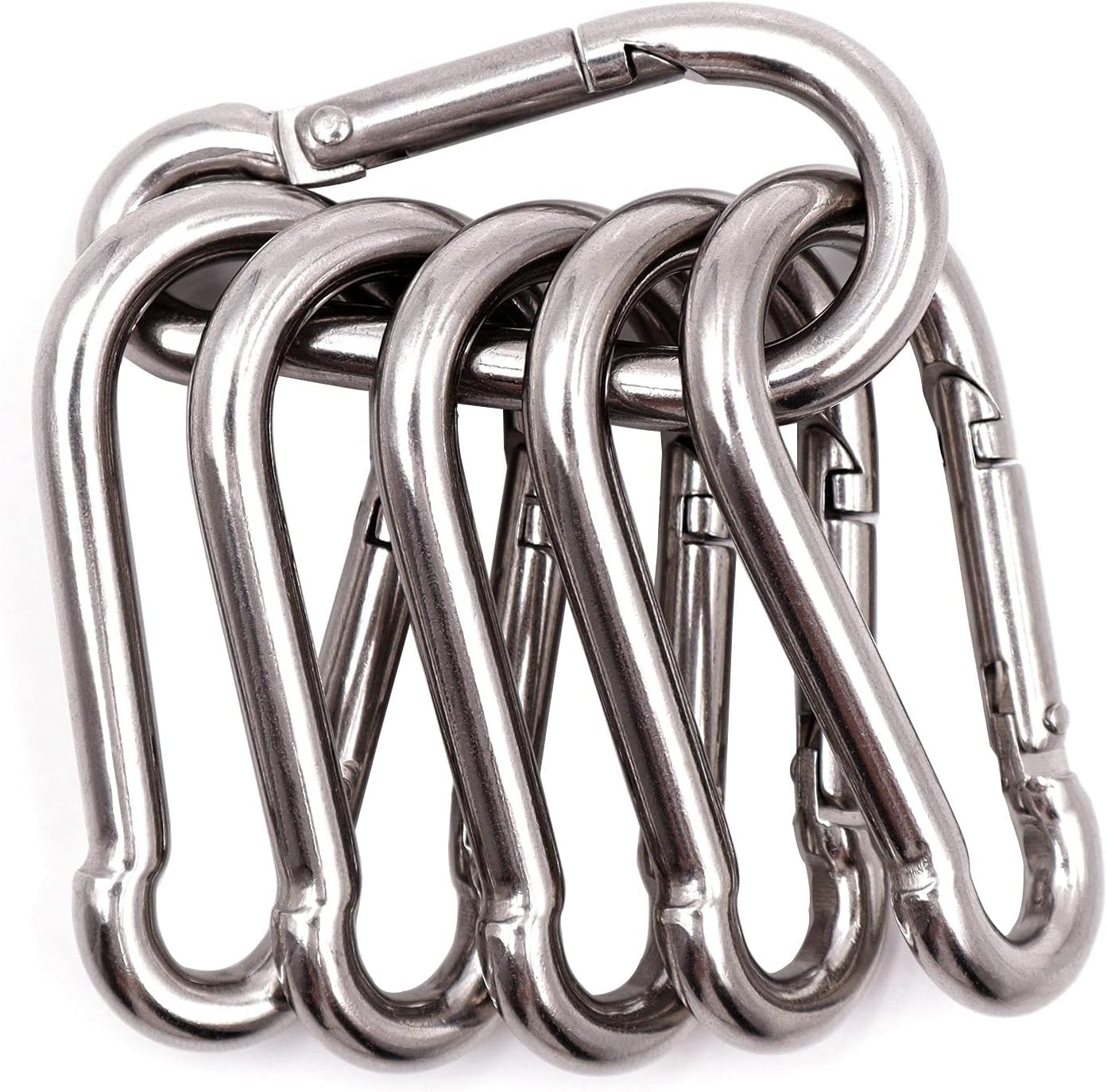
For the guardrails (which also might make it easier for your wife boarding) you can put pelican clips on the ends of the wires so that you can quickly disconnect and lower them to the deck (where they can roll under foot, so beware).
For casting off it might (or might not!) be useful to make up appropriate length lines attached to the pontoon cleats (ideally on the underside if the cleats suits), and these can be dropped on the pontoon when you leave. If conditions are benign you might be able to pick these up with a boathook on your return (another trick is to hang them on flexible poles from the pontoon so you can reach them by hand. But also have longer lines at the ready aboard, in case that works better or you can reach the short lines on the pontoon.
Another potential wheeze when casting off is a line from the boat to the pontoon, where it has a type of slip knot (forgotten name - search online) and then back to the boat. One side of the line is under tension and will hold the boat until you pull the 'loose' second line, which collapses the knot and frees the whole line to be brought back aboard.
Particularly useful for coming alongside, as I think was highlighted in an earlier thread, is a line with the loose end in the cockpit running forward and threaded from amidships (centre cleat if you have one, otherwise threaded through genoa car, failed or stantion base) and then brought back outside everything and over to the cockpit with a fixed loop run the end. The loop can be held open by threading a bit of plastic tubing (bit of garden hose?) over the rope within the loop. Loop is then dropped over a cleat, the spare pull in to the cockpit at the other end, and the boat held against the pontoon by gently forward power and appropriate use of the rudder or turned outboard.
But do not worry too much about it. It will all come back to you, and it really doesn't matter if you have a few bumps or scrapes, or have to have several tries at coming alongside. Don't fret about it, laugh at yourselves instead.
Ask the previous owner how he would do it.
Or has he put you on ignore already


Highwayman's hitch?where it has a type of slip kno
No need to fuss the old boy. He'll learn from his mistakes, and he's far enough away to cause us little concern.
Oooh, where's the Live-stream of your first attempts??
………discovered Ihavewifi on the marina berth


Get rid of it and buy a yacht with a low freeboard and take the guardrails off.For mooringup and unmooring a 24 light displacement yacht from a marina berth,hig topsides and guard rails added problem
Yes in my youth little fourtonner didn’t have guard rails ,but I am a wee bit unsteady these daysGet rid of it and buy a yacht with a low freeboard and take the guardrails off.
Seriously, Duncan Wells' book "Stress-Free Sailing: Single and Short-handed Techniques" will answer all your questions.
Get rid of it and buy a yacht with a low freeboard and take the guardrails off.