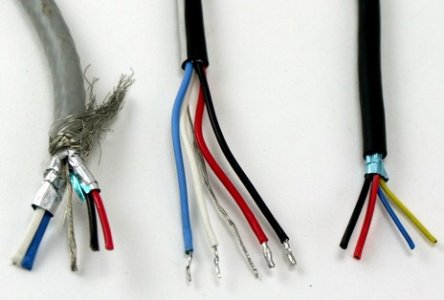
Helm to Flybridge wire connection colour

Only for certain colours, for instance, green cannot be used to carry current and yellow cannot be used as a DC positive. Much of the wiring in a typical engine harness will have striped wiring anyway.

My point is that the engine manufacturers themselves don’t even bother to follow the standards.

Take a look at this random loom for a Volvo engine

Volvo Penta EDC splitter loom W873921 -

They’ve broken all sorts of ‘rules’ in that tiny little loom.
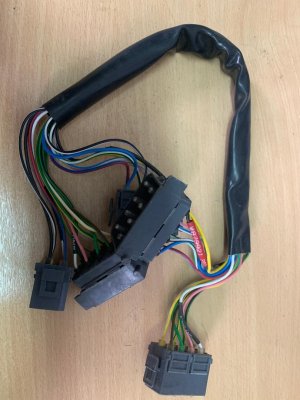
1704045301622.jpeg
 
Last edited:
My point is that the engine manufacturers themselves don’t even bother to follow the standards.

Take a look at this random loom for a Volvo engine

Volvo Penta EDC splitter loom W873921 -

They’ve broken all sorts of ‘rules’ in that tiny little loom.

View attachment 169878
Actually, wiring as supplied by the engine manufacturer is not covered by the ISO that i quoted from.

Bear in mind, my original post was in response to the age of the OPs boat, there will have been changes since then, as reflected in the current ISO
.
 
Looking at the current ISO there is no mention of "engine manufacturer wiring", so it may be that they do now need to comply ?

The only mention of engine wiring in the latest ISO relates to outboards :

This document does not cover the following:
— electrical propulsion systems of direct current less than 1 500 V DC, single-phase alternating
current up to 1 000 V AC, and three-phase alternating current up to 1 00 V AC, which are addressed
by ISO 16315;
— any conductor that is part of an outboard engine assembly and that does not extend beyond the
outboard engine manufacturers supplied cowling;

— three-phase AC installations that operate at a nominal voltage not exceeding 500 V AC, which are
addressed by IEC 60092-507.
 
Looking at the current ISO there is no mention of "engine manufacturer wiring", so it may be that they do now need to comply ?

The only mention of engine wiring in the latest ISO relates to outboards :

This document does not cover the following:
— electrical propulsion systems of direct current less than 1 500 V DC, single-phase alternating
current up to 1 000 V AC, and three-phase alternating current up to 1 00 V AC, which are addressed
by ISO 16315;
— any conductor that is part of an outboard engine assembly and that does not extend beyond the
outboard engine manufacturers supplied cowling;

— three-phase AC installations that operate at a nominal voltage not exceeding 500 V AC, which are
addressed by IEC 60092-507.

Does N2K wiring also get an exemption?

DeviceNet cables break the standard by using white as a low voltage line (and using blue for a non AC voltage).

Raymarine cables break it for the same reasons.

Simmer cable uses yellow for a signal line and blue as a DC voltage wire.

One assumes these standards bodies do not talk to one another…

1704047231417.jpeg
 
Pauls point is that if brown / blue /green is used for DC voltages that the wires could b confused with mains voltage carrying wires or the other way round main voltage cable could be confused with DC current carrying cables.

I can understand that but as 7.7 states that the cables for ac and dc must be kept separate by specified methods as in section 7.7 various sub sections and epically

a) For a multicore cable or cord, the cores of the d.c. circuit are separated from the cores of the a.c. circuit by an
earthed metal screen of equivalent current-carrying capacity to that of the largest core in either circuit.

b) The cables are insulated for their system voltage and installed in a separate compartment of a cable ducting or
trunking system. As I suggested in separate conduit /trunking

c) The cables are installed on a tray or ladder where physical separation is provided by a partition.
As I suggested in separate conduit /trunking

d) A separate conduit, sheathing or trunking system is used.
As I suggested in separate conduit /trunking


The 7.7 section confirmed that if separation of ac and dc so despite what you say the standards allow cable colours as long as they are seperated of clearly marked

You don't seem to accept that different people may have different interoperation of the standards from you

And please don't shout as its just make me and others you are trying to bully us into accepting your way is the only way
 
Does N2K wiring also get an exemption?

DeviceNet cables break the standard by using white as a low voltage line (and using blue for a non AC voltage).

Raymarine cables break it for the same reasons.

Simmer cable uses yellow for a signal line and blue as a DC voltage wire.

One assumes these standards bodies do not talk to one another…

View attachment 169879


As none of those cables will carry mains ac voltage and have separating sheats IMHO all is in order. If there was a requirement to not have brown blue . green in multicore able the suppliers would not have brown /blue/green colour cores
 
The 7.7 section confirmed that if separation of ac and dc so despite what you say the standards allow cable colours as long as they are seperated of clearly marked

You don't seem to accept that different people may have different interoperation of the standards from you
I find it difficult to believe that you cannot grasp something to simple as :

Conductors with green, or green with a yellow stripe, insulation shall not be used for current carrying
conductors.


and

Black or yellow insulation shall not be used for d.c. positive conductors.

How is that open to interpretation ?

I thought you were smarter than that.
 
Does N2K wiring also get an exemption?

DeviceNet cables break the standard by using white as a low voltage line (and using blue for a non AC voltage).

Raymarine cables break it for the same reasons.

Simmer cable uses yellow for a signal line and blue as a DC voltage wire.

One assumes these standards bodies do not talk to one another…
You seem to have nothing better to do than to trawl the internet to somehow disprove the standard that i have posted here.

Devicenet cables do not use white for low voltage. Red and black are the current carrying wires, in compliance with the ISO. White and blue are CAN wires, so they do not breach the ISO.

Seatalk cables are red, shield and yellow. Yellow is a data wire, so again, no breach of standards.

If you have any further complaints about breaches of the standards, i suggest you write to someone who is involved with those standards. I have simply posted some extracts from the standards, i don't write them and i didn't expect there would be people with nothing better to do with their time but to scour the internet for irrelevant images to somehow disprove what the standards say.
 
So on our Fairline Corniche the gauges from helm to Flybridge don't seem to change over when we switch over. Having looked on the electrics the person before has used old house wire connection on one and speaker wire in the other. Does anyone know what colour wire should be used to connect the switches.
The gauges, presumably oil pressure, coolant temperature and tacho, are part of the engine installation so wouldn't you use the same colour coding as used by the engine manufacturer regardless of any conflict with the ISO standard.

You don't say what engine you have but as an example Volvo Penta use:
  • red for an unswitched positive supply,
  • black for the negative,
  • red/blue for a positive supply switched by the ignition switch
  • blue for the gauge illumination
  • light blue for the oil pressure signal
  • light brown for the temperature signal
  • grey for the tacho signal
Other engine manufacturers use different colours.

12volt Planet have a comprehensive selection, especially in 1.0mm²

If this wiring runs from the lower helm position to the upper position it might be prudent to run it in an outer sheath or a flexible conduit.

BTW the current ISO standard, which covers both low voltage AC installations and extra low voltage DC installations, is ISO 13297: 2021. It replaces previous editions of ISO 13297, covering low voltage AC installations and ISO 10133, quoted earlier in the topic and covering only extra low voltage DC systems. ( I am not suggesting any major changes in the wording though)

.
 
Last edited:
I find it difficult to believe that you cannot grasp something to simple as :

Conductors with green, or green with a yellow stripe, insulation shall not be used for current carrying
conductors.


and

Black or yellow insulation shall not be used for d.c. positive conductors.

How is that open to interpretation ?

I thought you were smarter than that.

Paul I do hear and understand what you are trying to say

If anyone uses a black or yellow insulated cables for carrying any instruments signal it is NOT used for D. C positive conductors as VicS stated.

Conductors with a green or green with a yellow stripe will carry a current if a earth fault conditions occurs until the fuse blows of the CB trips.

In my case the size of the cable needs to carry whatever the fuse of CB rating is

Now it could be interoperated from that standard that a 0.5 sq mm cable could be used for a protective earth

Again an instrument signal is simply a voltage signal and negable current. NOT what the standard is saying
 
Paul I do hear and understand what you are trying to say
I'm not trying to say anything, i've simply posted the relevant sections of the ISO.
If anyone uses a black or yellow insulated cables for carrying any instruments signal it is NOT used for D. C positive conductors as VicS stated.
Heavens above, the standard states that black or yellow must not be used for DC positive, not that hard to understand, surely ?
Conductors with a green or green with a yellow stripe will carry a current if a earth fault conditions occurs until the fuse blows of the CB trips.
That's a silly distortion of "current carrying".
In my case the size of the cable needs to carry whatever the fuse of CB rating is

Now it could be interoperated from that standard that a 0.5 sq mm cable could be used for a protective earth
It absolutely cannot be interpreted as such. The PE wire must be at least as big as the current carrying wires and the minimum size for current carrying wiring is 1mm sq
Again an instrument signal is simply a voltage signal and negable current. NOT what the standard is saying
 
The gauges, presumably oil pressure, coolant temperature and tacho, are part of the engine installation so wouldn't you use the same colour coding as used by the engine manufacturer regardless of any conflict with the ISO standard.

You don't say what engine you have but as an example Volvo Penta use:
  • red for an unswitched positive supply,
  • black for the negative,
  • red/blue for a positive supply switched by the ignition switch
  • blue for the gauge illumination
  • light blue for the oil pressure signal
  • light brown for the temperature signal
  • grey for the tacho signal
Other engine manufactures use different colours.

12volt Planet have a comprehensive selection, especially in 1.0mm²

If this wiring runs from the lower helm position to the upper position it might be prudent to run it in an outer sheath or a flexible conduit.

BTW the current ISO standard, which covers both low voltage AC installations and extra low voltage DC installations, is ISO 13297: 2021. It replaces previous editions of ISO 13297, covering low voltage AC installations and ISO 10133, quoted earlier in the topic and covering only extra low voltage DC systems. ( I am not suggesting any major changes in the wording though)

.
Post 31, where i quoted from the older ISO, was in response to comments regarding the age of the OPs boat. Post #38 and subsequent posts make it clear, again, that the quotes are from an older ISO, i chose the oldest ISO i have, to demonstrate that those "rules" have been in place for a long time. I have various ISOs, including the latest and the colours remain the same.

It would be acceptable to use the same colours for instruments as the original harness because it would have complied when the boat was built. One issue is, the OP states that each engine has two switches, but has never said (despite my asking twice) what the switches do. It's unlikely that each engine needs two switches to turn the gauges on.

A typical twin engined mobo of that era would have key switches for ign, pre-heat, start and stop, with the ign position powering the instruments, so it's anyones guess what the OPs switches are doing and if they need bigger main power wires, with 1mm wires for the gauges themselves. The OP has also failed to state whether the boat is 12v or 24v, which is important information when calculating wire sizes.
 
I'm not trying to say anything, i've simply posted the relevant sections of the ISO.
But you are not interpreting the standard correctly in terms of signal wiring

Heavens above, the standard states that black or yellow must not be used for DC positive, not that hard to understand, surely ?

Yes but we are not proposing black /yellow as a dc positive we are saying that black / yellow could be used for signal wiring

After all the original post was about helm to flybridge wiring colours Does anyone know what colour wire should be used to connect the switches. The switches could be switching anything including the engine instruments and controls

That's a silly distortion of "current carrying".

So what is the definition of current carrying cable.

You seem to suggest below that it must be minimum 1.0 sq mm again what is the definition of current carrying wires

It absolutely cannot be interpreted as such. The PE wire must be at least as big as the current carrying wires and the minimum size for current carrying wiring is 1mm sq

You seem to interoperate the ISO standard cover ALL wiring including instrument / control wiring where as its clear that its mainly covers power carrying conductors otherwise the Engine or any other instrument /control wiring must not include any brown/blue/green coloured insulations. but it does.

SIMRAD
attachment.php


Example Garmin GPS 126 wiring (note different uses of color - nmea 0183)

Pin Colour Function

1 Red 10 - 40 volts DC
2 Black Ground
3 Blue NMEA Out Goes to Yellow ( this is the only cable you need to connect to the radio.)
4 Brown NMEA in
5 White No connection
6 Green No Connection
7 Yellow Alarm Low

Clearly the instrument suppliers do not need to comply with the ISO you quote other wise no boat with these instruments would comply with the EU or UK specifications.

Paul you need to stop digging as you are just interpreting the standards fir something it was not intender.

The standards are for AC and or DC power supply cables but not for every kind of cables usage
 
But you are not interpreting the standard correctly in terms of signal wiring
The standard requires no interpretation, it's perfectly clear to stop foolish people wiring things up incorrectly.
Yes but we are not proposing black /yellow as a dc positive we are saying that black / yellow could be used for signal wiring

After all the original post was about helm to flybridge wiring colours Does anyone know what colour wire should be used to connect the switches. The switches could be switching anything including the engine instruments and controls
Moving goalposts. You've switched to a new tack to try and cover your previous nonsense. Helm to flybridge wiring includes DC power cables and you have no idea what the OPs switches do.
So what is the definition of current carrying cable.
Isn't this blindingly obvious, "cables that carry current" no ? To suggest that the PE is a current carrying wire because it might carry current in the event of a fault is ludicrous. You might as well say that your washing machine is a current carrying wire, because it to can carry current if there is a fault. Current carrying cables are those that are designed to carry current.
You seem to suggest below that it must be minimum 1.0 sq mm again what is the definition of current carrying wires
I'm not suggesting anything, i'm telling you that the ISO for AC wiring states that the PE must be rated the same as the current carrying wires, at a minimum. Furthermore, AC and DC wiring must be of a minimum of 1mm sq. No need for your interpretation, it is very clear.
You seem to interoperate the ISO standard cover ALL wiring including instrument / control wiring where as its clear that its mainly covers power carrying conductors otherwise the Engine or any other instrument /control wiring must not include any brown/blue/green coloured insulations. but it does.
I have posted extract from the DC and AC wiring ISO, no mention of data cables. In fact i already covered N2K cables in post #48. Note that they use red and black for power, in accordance with the DC ISO, the other wires are data, so not covered by the ISO, as i said previously.
SIMRAD
attachment.php


Example Garmin GPS 126 wiring (note different uses of color - nmea 0183)

Pin Colour Function

1 Red 10 - 40 volts DC
2 Black Ground
3 Blue NMEA Out Goes to Yellow ( this is the only cable you need to connect to the radio.)
4 Brown NMEA in
5 White No connection
6 Green No Connection
7 Yellow Alarm Low

Clearly the instrument suppliers do not need to comply with the ISO you quote other wise no boat with these instruments would comply with the EU or UK specifications.

Paul you need to stop digging as you are just interpreting the standards fir something it was not intender.
No need for your foolish talk of interpreting the standards, which you try and do at every opportunity because you think you know better than everyone else. The standards are written so that there is no need, or scope, for interpretation, otherwise foolish people will do things in random ways and the standards would be pointless, a lot like this thread that you have derailed.
 
I give up you cannot accept any alternative view and you seen the consider you are always current and cannot accept anyone else can have an alternate view.

You do it your way and others will do it their way
 
I give up you cannot accept any alternative view and you seen the consider you are always current and cannot accept anyone else can have an alternate view.

You do it your way and others will do it their way
It has nothing to do with my way, your way or anyone elses way, all i have done is posted the standards, as usual, you think you are so smart that you know best and want to "interpret" the standards.
 
So what is the definition of current carrying cable.

You seem to suggest below that it must be minimum 1.0 sq mm again what is the definition of current carrying wires
From the current ISO :

19 Conductors, AC systems
19.1 Conductors and flexible cords shall have a minimum rating of 300 V to 500 V. Conductors and
flexible cords shall be multi-strand copper, with cross-sectional areas no smaller than those determined
using Table A.1.

NOTE A conductor used for equipment grounding is not considered a current-carrying conductor when
referencing Table A.1

19.3 The protective conductor shall have a cross-sectional area equal to that of the live conductors.
 
From the current ISO :

19 Conductors, AC systems
19.1 Conductors and flexible cords shall have a minimum rating of 300 V to 500 V. Conductors and
flexible cords shall be multi-strand copper, with cross-sectional areas no smaller than those determined
using Table A.1.

NOTE A conductor used for equipment grounding is not considered a current-carrying conductor when
referencing Table A.1

19.3 The protective conductor shall have a cross-sectional area equal to that of the live conductors.

Again you don't seem to understand or answer my questions
You simply quite a standard without any definitions.

You say " A conductor used for equipment grounding is not considered a current-carrying conductor "

Ok but again what is the definition of a current carrying conductor

This is fundamental to a user of the standard to determine what is a current carrying conductor we know that an equipment grounding is not but what is
 
Again you don't seem to understand or answer my questions
You simply quite a standard without any definitions.

You say " A conductor used for equipment grounding is not considered a current-carrying conductor "
I don't say anything, i've quoted the ISO, which makes it very clear.
Ok but again what is the definition of a current carrying conductor

This is fundamental to a user of the standard to determine what is a current carrying conductor we know that an equipment grounding is not but what is
It is blindingly obvious to all except you and if you don't know what a current carrying conductor is, you have no business wiring anything up, although that probably suits your user name. I have no desire to take part in your pointless, silly games, every other person reading this thread knows what's what, happy 2024.
 
Again you don't seem to understand or answer my questions
You simply quite a standard without any definitions.

You say " A conductor used for equipment grounding is not considered a current-carrying conductor "

Ok but again what is the definition of a current carrying conductor

This is fundamental to a user of the standard to determine what is a current carrying conductor we know that an equipment grounding is not but what is
AFAICS there is no definition of "current carrying conductor" in the relevant ISO standards ( unless it has been introduced in the latest version of ISO 13297 )

PR cannot therefor answer your question nor can any of the rest of us.

My interpretation of the expression would be that it is either of the live conductors of a low voltage AC system and the positive and negative conductors of an extra low voltage DC system but that probably does not go far enough. Perhaps I should add " or any conductor connected to them " ???

Google tells me that its is defined by the IEC as "a conductor which carries the electric current under normal conditions"
 
Last edited:
Top